Current Affairs
Tasmania’s Rail Network: Much Opportunity, Many Problems
The light rail and tourist rail debates continue across Tasmania with not a lot of facts being presented to the general public.
I have had my own interest in a rail tourism venture but that has long been extinguished as a consequence of dealing with TasRail on a commercial basis.
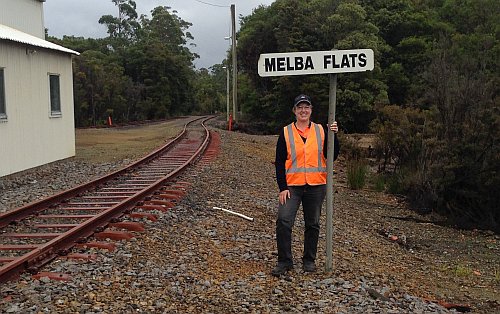
I write also from ten years experience as a rail contractor. Due to what is termed ‘route knowledge’ TasRail staff are restricted to specific areas of access to track and as such my wife and I are the only two persons in the state to have travelled the entire network since 2016. This included both operational and non-operational lines, on six separate occasions.
I therefore read with interest the light rail debates put forward in the north-west and the Hobart northern suburbs which has generated much public interest.
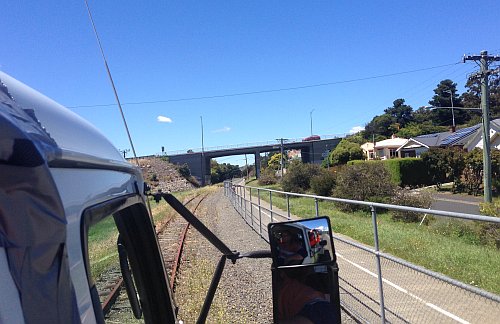

The Derwent Valley Line is another story, however. A very beautiful section from Boyer to Maydena, it is in very poor condition with condemned bridges and dodgy sections of rail. It is barely accessible by Hy-Rail. What confronted us on our initial run through that section in late 2016 was quite unbelievable. Even the photographs are confronting. The good work of the Derwent Valley Railway Restoration Society over many years keeps hopes alive of a tourist rail revival, however, this would be a multi-million dollar upgrade investment before trains would be able to run once again.
Sections of the North-East Line are impassable by Hy-Rail with condemned bridges, fallen trees and missing rail. Again, there is a picturesque line and tunnel near Lebrina with a local group working hard to save a section for a rail tourism operation. Such is the terrain that even construction of a bike trail would be difficult with steep embankments both sides of the rail. TasRail have removed the access points to the North-East Line at the intersection with the Bell Bay Line at Coldwater Creek.

The section of the Western Line from Burnie to Wiltshire, that serves Peter Mudford’s light rail debate, is also impassable in most sections due to neglect. The cutting through Sisters Hills is one of the largest rail cuttings in the Southern Hemisphere.
Briefly, the Tasmanian rail network is spectacular from the rugged west coast through the agricultural lands of the north-west and midlands to Lake Tiberias and the Ryndaston Tunnel. Leaving the tunnel it emerges into the Coal River Valley and onto Campania, Tea Tree and Brighton. The Fingal Valley Line out of Conara Junction has much to offer as it follows the South Esk River to historical Avoca and into the coal mining town of Fingal.


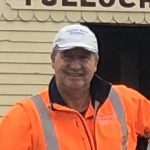
Tullochgorum Station is on the Fingal Line.
It’s great shame that only contractors and train drivers get to see our beautiful Tasmanian landscape from a vastly different perspective.
The Federal Government have gifted TasRail over $500M in recent years, and continue to do so. Obtaining any funding for non-operational lines is improbable in the foreseeable future. TasRail is also a major show-stopper when private operators propose main line access.
The only possibility of light rail in Tasmania, with the exception of the Hobart suburban, is to operate on Main Line, ie: currently operational lines. There is an abundance of windows for other rail operations with minimal TasRail trains running in comparison to other states.
Although TasRail is owned by the state government, this state government show no authority, and as a consequence the tail wags the dog. Finally, whilst ever the state government have the West Coast Wilderness Railway for sale then consideration for other rail tourism operations will be given scant regard.
-
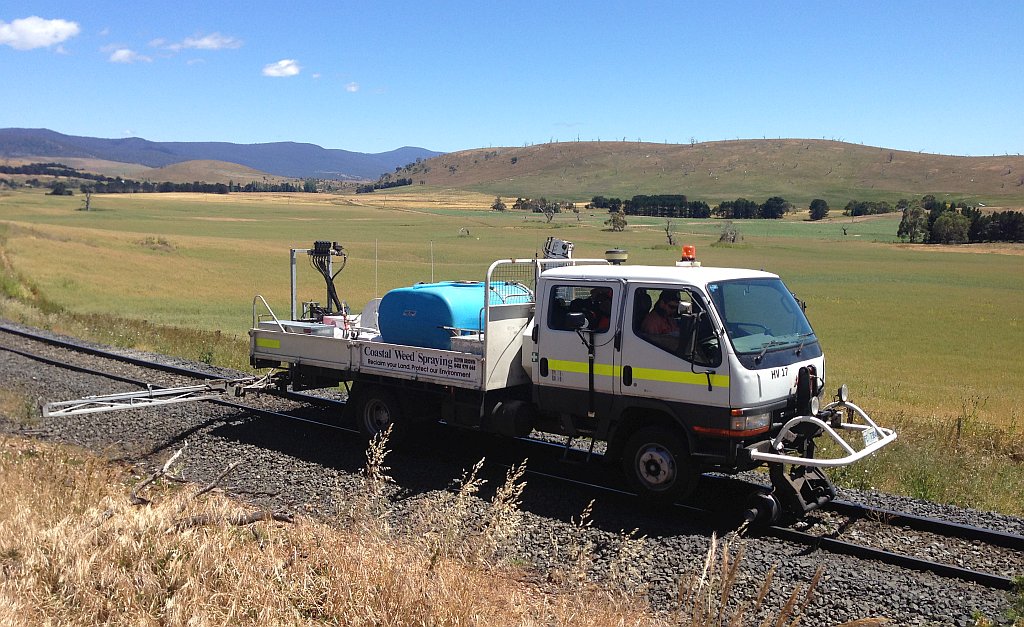
The HyRail operating on the South Line at York Plains.

Kevin Brown commenced environmental weed management in 1995. A carpenter by trade he prefers the wide range of destinations and the magnificent Tasmanian scenery. Some organisations, including GBEs, are more aware of their environmental responsibilities than others. Protection of threatened flora and fauna is a major focus of his work.
All images © Kevin Brown 2020.