“Is it difficult making wine?” someone once asked Clare Valley wine producer Dr John Wilson.
“Not at all,” came the blunt reply from behind the tasting bar.
“Any fool can make wine. The hard part is selling it. It requires a special sort of fool to sell wine.”
Katrina Myburgh smiles and says that’s an all-too-familiar tale. As former senior vice president and head of marketing at an internationally renowned PR agency, she’s well aware of the challenges small scale producers face in getting their harvest babies out of the cellar and into consumer tasting glasses.
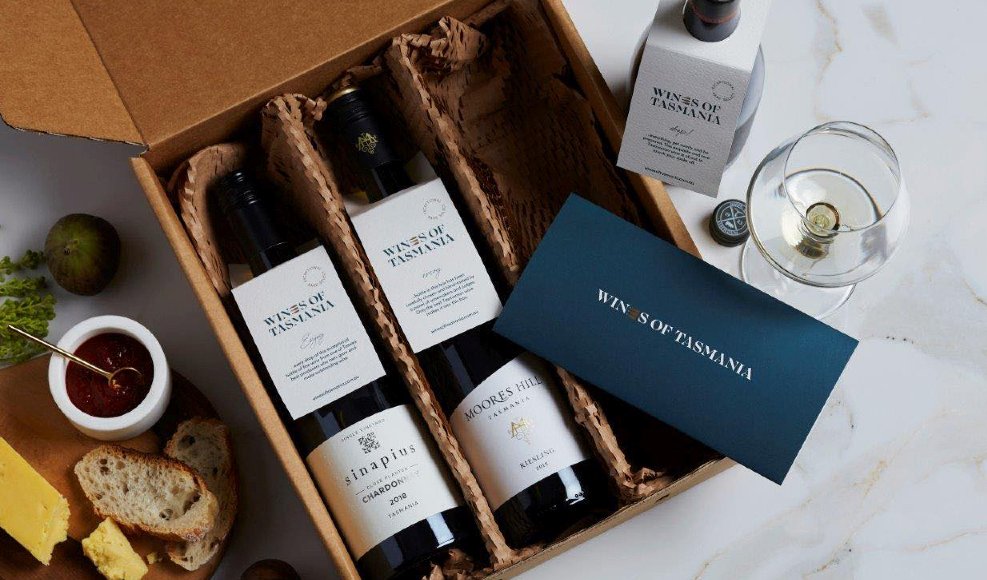
These days, Myburgh is founder and CEO of Wines of Tasmania. Based in Launceston, the company is a fresh-faced, locally owned start-up that launched a new website and business plan two months ago. Its key focus is the online sale and marketing of premium Tasmanian wines.
Wine assessment in action. Image courtesy Renee Hodskiss.
Sound familiar?
“We’re not just an online wine shop,” Myburgh says.
“We’re more like a genuine cellar door experience, where you come to know real, hard-working Tasmanian families who are experts in their craft and are authentic and passionate about everything they do.”
Myburgh’s plans for Wines of Tasmania began to take shape back in March, just as the state was closing its borders and vineyard cellar doors with the arrival of COVID-19. She was convinced the proposed new venture could fly better and spread its wings further if it was powered by the energy and creative talents of stakeholders already fully engaged with the industry.
“Despite the unfolding global pandemic, I believed many of the current trends in the global wine market – such as growing consumer preference for quality over quantity and increasing engagement with online shopping – could work in favour of Tasmania’s cool climate wine producers,” Myburgh recalls.
“And with Tasmania being so remote from the rest of the world, it meant a digital platform was going to be necessary to reach those discerning wine lovers – those who didn’t already know about Tasmanian wine and wouldn’t have otherwise had access to the State due to travel restrictions.”
Wines of Tasmania producer members. Image supplied.
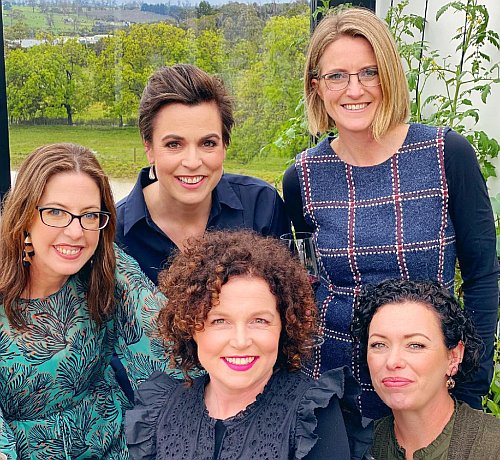
Myburgh’s focused and clear-cut proposals found a ready audience among the handful of producers she consulted – Fran Austin and Shane Holloway (Delamere), Rebecca and Tim Duffy (Holm Oak), Fiona Weller and Julian Allport (Moores Hill) and Linda Morice and Vaughn Dell (Sinapius). All lived and worked in the north of the State and signalled their willingness to collaborate on bringing a new marketing initiative to fruition.
“Everyone understood that working together with a small number of like-minded people who had similar business aspirations and similar quality products would ultimately result in each stakeholder being better off, because they would have had a much broader reach into bigger markets for their wines,” Myburgh says.
“When you look at the size and nature of the companies that were going to be involved in the venture, I don’t think there are many other parts of the country where you could make something like this happen at the level of a whole region like Tasmania.”
In late May, the unimaginable occurred. The group’s well organised and highly productive planning and groundwork suffered a tragic blow. Sinapius Vineyard’s Vaughn Dell died peacefully in his sleep from an undiagnosed heart condition. The 39-year-old was the father of two young girls and the driving force behind the ambitious project he and Morice founded together back in 2005.
Dell’s untimely death brought home the need for Morice to continue to market and sell Sinapius wines in order to provide for her young family.
“We’d never resorted to using bells and whistles or a whole lot of marketing fluff to sell them,” she explains.
“Our strategy had been simply based on people experiencing our wines and then loving them enough to tell someone else.”
Masked assessment bottles. Image courtesy Renee Hodskiss.
Those same core principles underpin Wines of Tasmania.
Myburgh says, “We offer our subscribers carefully curated wine selections from all over the state.
“Wines change each month. Subscribers can purchase red, white, sparkling or mixed packs, according to their needs, interests and wine-buying budgets.
“We have an annual subscription, with subscribers choosing the frequency of their online purchasing. There are no lock-in contracts. People can cancel at any time.”
Every bottle offered for sale is selected on merit.
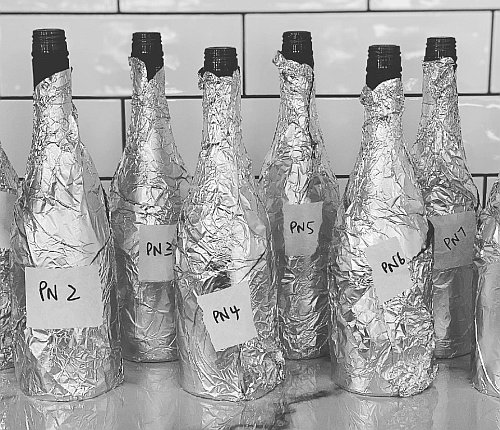
“We use a panel of judges comprising no less than five people to taste and assess each wine,” Myburgh explains.
“That gives us the confidence of knowing every product we sell meets our exacting standards of quality and enjoyment.
“The panel includes senior winemakers who judge regularly at national wine shows, as well as everyday fine wine drinkers. To ensure panel assessments are free from bias, details of wine identity and origin are not divulged to its members.”
Every bottle sold gets a necktag with its own unique QR code. When scanned with a smart phone, it allows buyer access to the Wines of Tasmania website for a wealth of information about the wine and its Tasmanian producer.
An online subscription would make an ideal seasonal gift for lovers of stylish, cool climate wines.
ADVERTISEMENT – ADVERTISEMENT – ADVERTISEMENT
New guidelines for alcohol consumption
What goes up must come down.
That’s the takeaway message from the December 8 release of revised guidelines for alcohol consumption in Australia by the National Health and Medical Research Council.
The new guidelines replace a previous version published in 2009 and reflect four years spent reviewing the evidence on the harms and benefits of drinking alcohol.
According to Professor Paul Kelly, Australia’s Acting Chief Medical Officer, each year there are more than 4,000 alcohol-related deaths in Australia and more than 70,000 hospital admissions. Alcohol is linked to more than 40 medical conditions, including breast and bowel cancer.
The guidelines comprise three key recommendations.
 The first is that healthy men and women should drink no more than 10 standard drinks a week and no more than 4 standard drinks on any one day. A standard drink, regardless of container size, is one that contains 10 grams of pure alcohol. That’s equivalent to roughly 285ml of full-strength beer, one can of mid-strength beer, around 100ml of sparkling or table wine, or a single shot of alcoholic spirit such as whisky or gin.
To reduce the risk of injury and other harms to health, the NHMRC also recommends persons under the age of 18 years should drink no alcohol at all.
Finally, the guidelines recommend women who are pregnant or planning pregnancy should not drink alcohol. Not drinking alcohol at all is safest course of action for women breastfeeding their infants.
The recommendations are supported by the extensive analysis and reviews available on the NHMRC’s alcohol health advice page. These include systematic reviews on the health effects of drinking alcohol, statistical modelling, and data on Australian drinking patterns.
The reviews confirm data released in 2019 by the Australian Bureau of Statistics that while beer consumption has declined by 0.7 percent over the past five years, the consumption of wine and spirits increased by some 5.0 percent. Cider increased by 11.8 percent.
A report released in October 2020 by Wine Australia noted that domestic off-premise wine sales increased in value by 7.0 percent during 2019-2020, while on-premise venues were closed for at least a quarter of the year.
Hobart’s Mark Smith wrote his first weekly wine column back in 1994. Now more than 1700 features and 25 years later, he continues to chart the successes of Tasmania’s small scale, cool climate wine industry with regular contributions to some of Australia’s leading industry publications.
PICK OF THE CROP
Mark gives you his honest opinions about the best wines available right now from Tasmania’s wine makers.
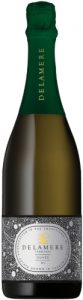
NV Delamere Cuvée $35
Tasmania’s north-east around Pipers Brook comprises possibly the best sparkling wine terroir in the country, with carefully managed vineyards there yielding fine fizz of tremendous elegance and finesse. Delamere’s multi-vintage blend of Pinot Noir and Chardonnay is crafted using traditional methods and includes a small proportion of base wine dating back to 2006. Little wonder it’s so deliciously complex yet so light and fresh in the glass. Like all good sparkling, there’s very satisfying texture and persistent flavour to enjoy. The wine provides stylish drinking at a very affordable price. www.delamerevineyards.com.au
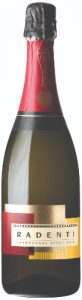
MV Freycinet Radenti R3 Chardonnay Pinot Noir $55
Claudio Radenti has been making bottle fermented sparkling at Freycinet Vineyard since 1993. That puts the property’s Radenti brand among Tasmania’s longest established sparkling wine programs. It’s also among our best. This blend from the 2012, 2013 and 2014 vintages reflects Radenti’s thoughtful approach to making super premium fizz. Its Chardonnay dominance allows the wine to really dance lightly across the palate, while extended ageing on its yeast lees gives texture and roundness to Pinot Noir’s contribution. The wine’s overall freshness hints at a long cellar life. www.freycinetvineyard.com.au
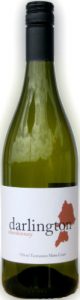
2019 Darlington Chardonnay $28
Paul and Louise Stranan have been welcoming guests to their east coast property at Orford since 2005. The vineyard’s bright, sunny aspect and modest yields makes it well-suited to Chardonnay. The variety is a family favourite and in recent times winemaker Alain Rousseau has given it gentle exposure to quality French oak. White peach, melon and a hint of ripe fig in the well-priced 2019 vintage open proceedings, while fine oak tannins add length and structure to the finish. This is a wine of restraint rather than opulence. www.darlingtonvineyard.com.au
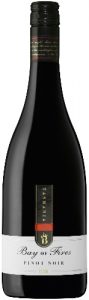
2019 Bay of Fires Pinot Noir $60
Accolade’s Bay of Fires brand has played a key ambassadorial role for the Tasmanian wine industry over the past two decades. Its Pinot of Provenance Trophy at last year’s Royal Hobart Wine Show’s was awarded on the strength and consistency of its 2010, 2014 and 2017 wines. The 2019 release is the product of an excellent vintage across much of Tasmania. The wine offers some engaging spicy/savoury nuances to complement the variety’s anticipated red fruit flavours. Intriguing foresty/woodsy notes provide further interest. Pour it alongside your Christmas duck. www.bayoffireswines.com.au
ADVERTISEMENT – ADVERTISEMENT – ADVERTISEMENT