I was extremely honoured and humbled to receive the Excellence in Women’s Leadership Award (TAS).
For me, this award is not about me, but what it represents for others in our community. I was caught up in a breeze of change, and so I see this award as representing the change that I have been lucky enough to be a part of. An award that represents a change towards having different leadership voices in our community that reflects the changing face of Hobart today.
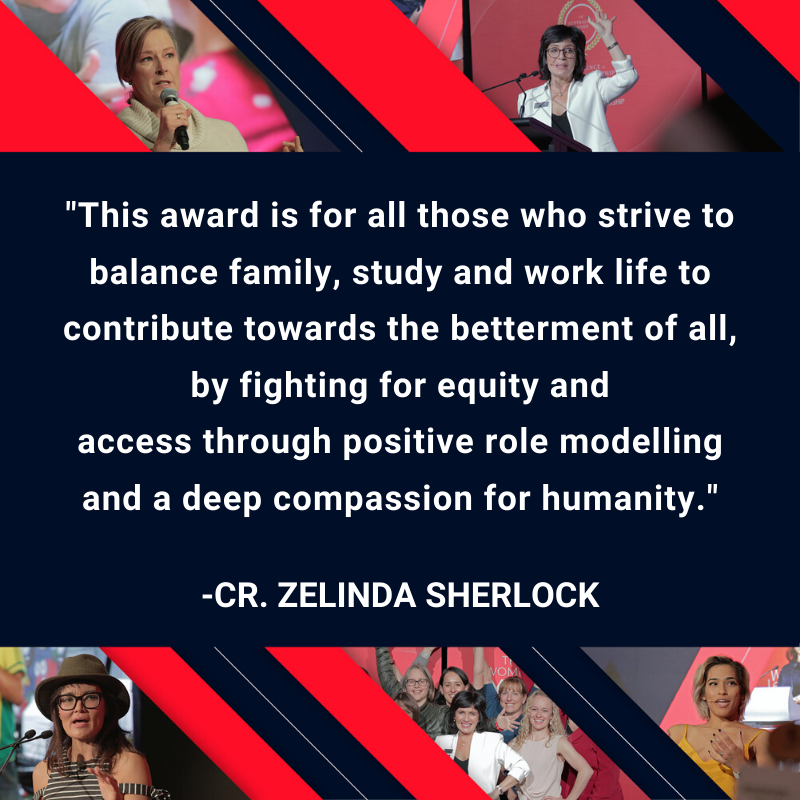
This Award is for those women who try to balance family, work and study life – and their own personal dreams and passions – and still get up every day to give it their best. This Award is for those women who face racism, bullying and discrimination – and still get up every day to give it their best. This Award is for those women who do not feel the warmth from the blanket of feminism – and still get up every day to give it their best.
I lived away from Hobart for about 17 years. I have been back home for about 3 and a half years now. I suppose the challenges I have faced, and I’m sure many new Councillors may have too if they did not come from that political career, is that working in a political setting is unlike any other work environment.
Why you may ask?
Well, it is simple really, what you and I expect in terms of professionalism, decorum, rational discussion, team meetings/collaborations, escalation processes of unprofessional or inappropriate behaviours, etc. are not always part of the realm of the political domain – in my experience. It is a domain peppered with potential adversarial dialogue over the smallest issue – like stepping into a conflict zone that you had no idea was a chamber of conflict to start with! From my initial naïve perspective – this was shocking. In contrast, the staff at the Hobart City Council should be highly commended for how they conduct themselves and their level of patience – I have absolute respect for the HCC staff, the executive, and officers – and what they try to achieve.
Securing a seat on Council was something that was never planned. It was something that came to fruition, upon my return to Tasmania – from a fire that was ignited by wanting to strive for better, for equality – that started at the state level.
Of course this vision of equality, may be considered a utopian ideal. It is arguable that inequality has existed since the dawn of humankind. Indeed, my own lived experiences affirm that.
Surely, we can concede that neither one of us started the race of life from the exact same – equal position. It is through this understanding, through understanding the systems that we inevitably operate in – that drags one back into the reality of realising that while we may have been created equal – indeed by many things out of our control – we are not strictly equal. In this knowing, what we need to be aiming for is equitable solutions because we can always strive for better, guided by principles of equity.
For me, approaching my tasks on Council, I try to the best of my ability to be as informed as possible. I try to educate myself on the various perspectives and positions, so I can make an informed decision. Dominantly, I like to approach my political life as I would any other part of my professional life – with facts and evidence – not rhetoric and misleading/cherry-picked information. I also try to educate by providing as much information as I can – sure that is tedious for me to write – and tedious for others to read, but that’s my job and it is the community’s job too, to educate themselves (if they are interested in the issues) before making uninformed statements that do not reflect a holistic understanding of an issue.
But, if we are only reading a little bit, and only educating ourselves on the issue to a certain degree, from a certain perspective – how can we comment with full knowledge? Well the answer to that is pretty clear – we cannot – and so I try to inform myself as much as possible. If we want to elevate and move into a contemporary era of politics where we are not delivering our mode of information through the form of the ‘old school’ divide and conquer rhetoric– we must actively educate and inform ourselves from a holistic perspective.
This is my approach, no matter how boring it is – I like to make my decisions not steered by ideology – but grounded in a holistic understanding of issues – and not deploy the transparent ‘us’ and ‘them ‘ narrative that appears to be so popular in politics.
I am then guided by my own internal evaluation processes to make a decision, once I am informed from different points of view. I also have many people I talk to, associate with and are friends with who are left, right, centre…far-left, even racist and bigoted friends – because I want to know all the views before I decide for myself. Being able to interact with community members with different ideas, from different cultural, academic and personal backgrounds, walks of life, expertise – is my approach on how I achieve that.
While there are many ways that we could potentially create opportunities – what I advocate for is two-fold:
(a) I would like organisations, companies, government – the community – to be honest. Have those uncomfortable and challenging conversations about access and opportunities, in a respectful manner. Having opposing views is natural and healthy – but how we communicate within this difference is key. Denying or defending that we do not live in an unequal society or a racist based one or one that doesn’t carry bias at different levels – is not realistic or honest. I would advocate that those in positions of power, in positions to make change need to do a cultural audit – a diversity audit – an inclusive audit, and see how many people you have in your top decision-making positions from diverse backgrounds. Be sure to have a diverse panel during short-listing of interviewees and the interview process – but if you do not have that diversity in your organisation, how are you going to achieve that during the recruitment process? Just be honest – shame and guilt potentially achieves nothing other than a defensive reaction to the realities of our world, thus often stifling practical change.
(b) Once these honest conversations occur – organisations, companies, etc. can potentially set-up pathways that create equity by scaffolding an individual’s access or opportunities into leadership or other roles. This can potentially be achieved through professional development, education courses, developing pathways, training courses etc. to support people by creating equitable modes of access and opportunity. This also requires having a broad range of positive role-models. As a small professional example on diversity, we have many strong women in local government, but we have very few women in local government that come from a non-Anglo/non-European/non-Nordic background. My lived experience as a marginalised woman growing up, is very different to perhaps many others currently on Council – that is not a negative, that is a reality – that’s just honest. Apparently we live in a multicultural country – we were built on multiculturalism – so where is all this diversity in leadership positions? Research has illustrated that diversity creates resilience – but incorporating equitable modes of encouraging diversity at different levels, first requires honest conversations that can then inform practical measures of providing equitable solutions.
Essentially, we are not all the same. That’s honest – that’s fact. Now what do we do in that knowing? Diversity can be a beautiful thing. Diversity can educate and create resilience. Diversity can vitalise our communities – I mean just look at Hobart today in contrast to Hobart in the 1980s – it is dynamic, vibrant and sparkled with diversity. Difference does not need to be relegated to the back of the bus so to speak – it can be harnessed through respect to advance our communities.
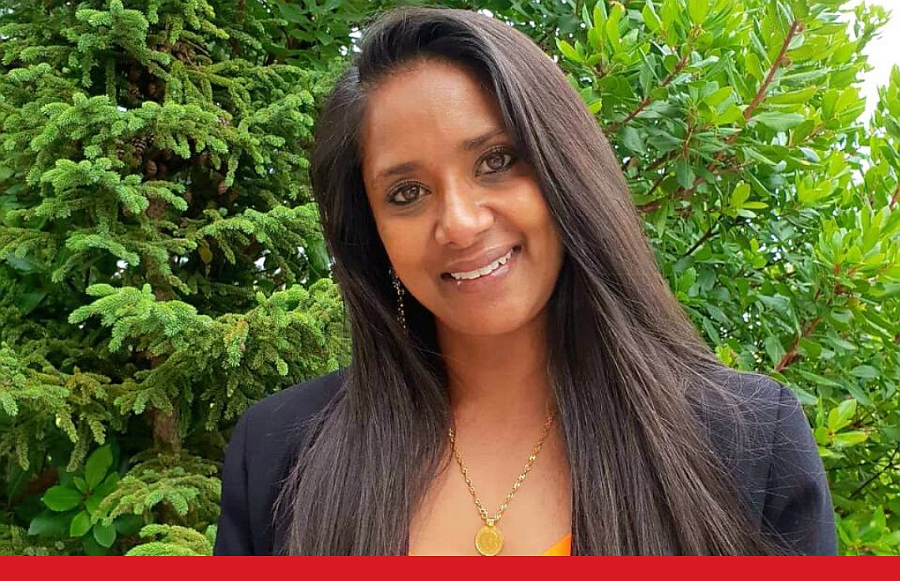
Zelinda Sherlock is a mother of two. She is a Councillor and the Community, Culture and Events Committee Chair at the Hobart City Council. She is also the Education Officer at the Migrant Resource Centre Tasmania (Multicultural Youth Tasmania program) and the EAP Unit Coordinator and Teacher for UP Education at the University of Tasmania.