
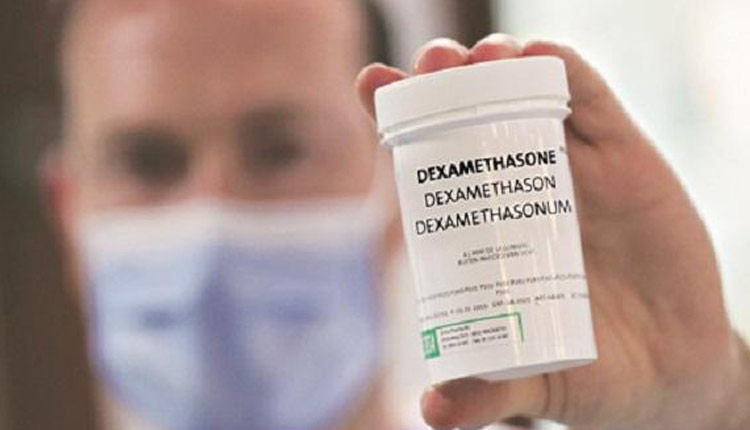
Treating critically ill COVID-19 patients with corticosteroids, including dexamethasone,
Australian experts comment on what the new understandings mean.
Professor Greg Kyle is Professor of Pharmacy (Head of Discipline) at the Queensland University of Technology.
“This study pools together seven studies looking at the effects of corticosteroids on survival in critically ill COVID-19 patients. It shows a benefit across three steroid drugs.
Why do these drugs work?
These drugs dampen down the immune system response to COVID. In some people with COVID, the immune system generates a hyper-response, for reasons that are not clearly understood. This severe reaction results in the body attacking itself and generating severe symptoms and death. The steroids calm this reaction down – just like pruning a hedge. We don’t want to kill the hedge (that is, completely stop the immune system), we want to trim it back so it is not running rampant, but rather is controlled and still able to function.
Can we use these drugs as a preventative for COVID-19?
The short answer is ‘No’. These drugs (like hydroxychloroquine) are immunosuppressants – that is, they suppress the immune system. They are useful when the immune system is running rampant, but using them in an otherwise healthy person will suppress their immune system and might leave them more vulnerable to an infection – including COVID or any other pathogen, for example influenza. All drugs also have side effects, so we need to make sure that the benefits of use will outweigh the risks associated with their use.”
——–
Dr Gaetan Burgio is Group Leader in the Department of Immunology and Infectious Disease at the Australian National University.
“Today [Thursday] an important meta-analysis on seven randomized clinical trials on corticosteroids, a cheap and readily available treatment for COVID-19, was published in JAMA. This study was commissioned from the WHO to provide clinical guidance on the use of corticosteroids for COVID-19. This meta-analysis on 1,703 COVID-19 patients shows that administration of systemic corticosteroid treatment regimen for critically ill patients reduces the mortality at 28 days, compared to placebo or standard of care without serious adverse events. The benefit is higher for patients receiving oxygen rather than mechanical ventilation at the start of this treatment regimen.
This meta-analysis confirms the results from the UK RECOVERY trial that showed a reduction of mortality on critically ill COVID-19 patients in ICU. Overall this report, and previous trials, provide important and significant evidence for a wide adoption of systemic corticosteroid administration to COVID-19 patients at hospital receiving respiratory support. Following this report, I would anticipate recommendations from the WHO to widely implement the use of systemic corticosteroids for critically ill COVID-19 patients requiring oxygen as a standard of care.”
——–
Professor Bruce Thompson is Dean of the School of Health Sciences at Swinburne University.
“For us to move forward and live alongside COVID-19 we will need not only a viable vaccine, but also effective treatments for a virus that has significant morbidity. The results from this study are very timely, as they provide compelling data on a potential treatment for COVID-19.
——–
Clinical Professor Ian Seppelt is a Senior Specialist in Intensive Care Medicine at Nepean Hospital.
“This report from the WHO Rapid Evidence Appraisal for COVID-19 Therapies (REACT) Working Group represents ‘best practice’ in systematic evaluation of evidence in a rapidly evolving situation. Researchers from all trials of corticosteroids in COVID-19 actively participated by providing data as soon as possible, before the primary studies had been fully analysed and reported.
The result is robust and we can now confidently state that corticosteroids should be used in critically ill patients with respiratory failure due to COVID-19. There remain questions of which steroid should be used (and the studies examined dexamethasone, methylprednisolone and hydrocortisone) and precisely what dose should be used, and future research should be targeted to answer these questions.”
——–
Dr Elena K. Schneider-Futschik is a NHMRC Peter Doherty Fellow in the Cystic Fibrosis Pharmacology Laboratory in the Department of Pharmacology and Therapeutics at the University of Melbourne.
“The authors conducted a prospective meta-analysis, which are a number of randomised clinical trials that are included before the results of any of those studies become known.
The study herein pooled data from seven clinical studies from 12 different countries to estimate the association between the use of corticosteroids compared to usual care or placebo and the 28-day all-cause mortality in critically ill patients. On the one hand, pooling the results from seven different studies paints a bigger picture than looking at one study; however, as the different studies are fundamentally quite different, this makes the analysis of the pooled study not as straight forward.
In this study, different corticosteroids in low and high concentrations (dexamethasone at low and high doses, low-dose hydrocortisone, and high-dose methylprednisolone) were used.
Based on the results of the UK-based Randomised Evaluation of COVID-19 Therapy (RECOVERY) trial the Task Force for the Australian guideline for the clinical care of people with COVID-19 recommend the use low dose dexamethasone (6 mg daily intravenously or orally) for up to 10 days in adults with COVID-19 who are receiving oxygen (including mechanically ventilated patients); but currently have a conditional recommendation against using dexamethasone in adults with COVID-19 who do not require oxygen therapy.
In this study, the authors leave a major question unanswered: What is the optimal dose?
Low-dose corticosteroids have been shown to be beneficial. But using high-dose corticosteroids for COVID-19 has been associated with the risk of secondary infections, long-term complications and prolonged virus shedding.
Corticosteroid treatment is a double-edged sword but the evidence shows that severely ill patients benefit from corticosteroid treatment.”