Media release – The Wilderness Society, 16 August 2020
STT’s 2nd FSC-fail sends market signal Tasmanian logging still equals native forest & wildlife destruction
-
Tasmania’s government-owned logging agency ‘Sustainable’ Timber Tasmania’ fails FSC Full Forest Management certification audit for second time: 10 major non-conformances
-
Ongoing absence of FSC certification is a market signal is that STT-logged wood is not sustainable, ethical, transparent or has social licence
-
Failed audit highlights need for Gutwein Government to ensure high conservation value forests are adequately protected in secure reserves
Sustainable Timbers Tasmania’s (STT) Friday-evening release of its latest FSC audit report shows that the state government logging agency, Forestry Tasmania (the auditors queried the fact its legal name remains Forestry Tasmania):
-
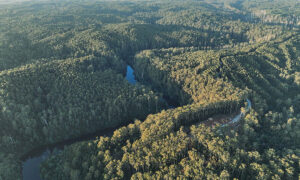
Continues to log old-growth forests
-
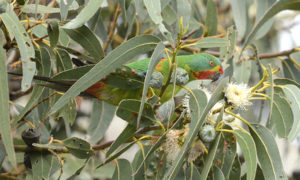
Continues to log and mismanage swift parrot habitat
-
Is failing to manage High Conservation Values across the landscape.
“Tasmania’s Gutwein Government has flunked a major opportunity to raise Sustainable Timber Tasmania’s practices to the world-best practice level required by the global gold-standard of FSC forestry management,” said Tom Allen for the Wilderness Society Tasmania.
“With a whopping 10 major non-conformances by STT, investors, markets and consumers demanding ethical and sustainable FSC-certified wood will now plainly see a big black cloud over Tasmania’s forestry industry and that its wood—and the products made from it— remain synonymous with forest destruction,” said Mr Allen.
The independent FSC auditors found that STT continues to log foraging and nesting trees for the Critically Endangered swift parrot.
Tom Allen said: “In a ham-fisted attempt to distract from its yawning conservation failures at STT, the Government also released details on Friday of a “Public Authority Management Agreement (PAMA)” that it says will exclude about 10,000ha of “potential nesting habitat from harvesting within land managed by STT.”
The FSC auditors noted that while welcome, the PAMA “covers a small area” and “does nothing about logging of swift parrot habitat outside this area.”
“The risk is that this conservation-lite sop could actually lead to the intensification of the logging of swift parrot habitat beyond the PAMA-area’s boundaries,” said Mr Allen.
FT/STT’s auditors note that this PAMA does “not preclude further loss of breeding and foraging habitat for the swift parrot within PTPZ land” and that it covers only “a small proportion of the [swift parrot’s] mainland breeding range.”
Tom Allen said: “Trying to distract from these yawning failures by releasing a weak PAMA plan to try and protect a small area of swift parrot habitat from logging shows the Gutwein Government is more interested in playing games with swift parrots than saving them.
“What’s needed are secure native forest reserves that protect rainforests, old growth, and endangered wildlife like the swift parrot. STT’s latest audit shows that formalising protection of the Future Potential Production Forests forests should be an urgent priority for the Gutwein Government.
“If the Gutwein Government is genuine about supporting a truly sustainable Tasmanian forestry sector, it will recognise market expectations that STT obtain FSC Full Forest Management certification, and meantime put in place measures to prevent a repeat of the non-conformances found in this audit.
“Meanwhile the island’s FSC-certified plantation industry goes from strength to strength and it’s hard to see how the markets won’t continue to move away from STT’s tainted products.
“While the market for FSC-certified wood continues to grow, VicForests and Sustainable Timber Tasmania’s FSC certification problems mean these government-owned anachronisms are drifting further away from growing markets at the very time commercial viability, sustainability, and social licence have never been more important.
“If Premier Gutwein is the Tasmanian premier on whose watch the swift parrot goes extinct, it will largely be because he failed to use this FSC audit opportunity to put in place a still-missing swift parrot management plan and end the logging of threatened species habitat and high conservation value forests, including old growth—which is what’s required,” concluded Tom Allen.
Table of failures and observations by STT’s FSC auditors, SCS (full audit report is available here).
|
MAJOR NON-CONFORMANCES: |
|
Major non-conformance 1: failure of threatened species and habitat management of swift parrot (p51) (Relevant FSC criterion 6.4.4 the rare and threatened species and their habitats in the Management Unit are protected, at operational and landscape level, including through the provision of conservation zones, protection areas, connectivity, and other direct means for their survival and/or viability, such as species recovery programs.) Auditor comment/s: Swift parrots are “extremely mobile and follow food resources” and that “the location and extent of area occupied by the swift parrot may vary dramatically from year to year. However, swift parrot has also been found to return to breeding sites and individual hollow bearing nest trees over time.” Auditor notes logging “of potential nesting trees and foraging trees”. Sight of an identified swift parrot nest site classified as ‘low density’ by STT, or determined ‘harvestable’. For example, Coupes BB025A and SO034A were both harvested but were observed to have had potential swift parrot habitat, which was confirmed in consultations with swift parrot experts. It is the audit team’s judgement that the ‘low density foraging trees’ as determined in these cases by the STT-FPADPIPWE framework, are still critical swift parrot habitat. Thus, the conclusion reached through observations of the audit team, as was confirmed by multiple experts when interviewed, is that STT is negatively impacting swift parrot habitat through harvest of these habitat areas. “Expert recommendations against harvesting in these areas were given by a swift parrot expert, as confirmed in documentation and interviews. These recommendations to STT staff, and other relevant Tasmanian agencies, were considered but recommendations for no-harvest were not followed.” FT/STT “does not protect critically endangered habitat as required using the Precautionary Approach and Best Available Information as defined in the FSC-Australia FM Standard. As such, we must conclude that STT is not in conformance to Indicator 6.4.4.” |
|
Major non-conformance 2: STT unable to show logging of old-growth forest is not at threat level (FSC criterion 9.1.1 An assessment is completed consistent with Annex G that records the location and status of High Conservation Value Categories 1-6, as defined in Criterion 9.1; the High Conservation Value Areas they rely upon, and their condition.) Auditor comment/s: “STT did not demonstrate sufficient monitoring of significant changes to baseline old growth data, and thus the resulting datasets at the management unit level are not complete enough to support such claims. Without the assurance of accurate mapping and identification of old growth within the estate, it was determined by the audit team that STT has not provided sufficient evidence to support contentions that harvesting old growth within the estate is not a threat at the landscape level.” |
|
Major non-conformance 3: Failure to properly manage threats to swift parrots (p57) (Ref FSC criterion 9.2.1 Threats to High Conservation Values are identified as required in Annex G, Section 1.8 Threat Assessment.) Auditor comment/s: “The implications of sugar glider (Petaurus breviceps) predation [on swift parrots] analysis and documentation was… insufficient.” Referred to “a positive correlation between predation by sugar gliders and decreasing mature forest cover”. “In the absence of a Swift parrot Management Plan for the STT estate, or other documentation of the analysis of sugar glider predation and other threats relative to forest management activities and natural disturbances, the audit team concludes that the requirements of this Indicator have not been met. That is, we conclude that STT has not appropriately identified and acted in consideration of threats to the Critically Endangered swift parrot.” |
|
Major non-conformance 4: Failure to develop a swift parrot management plan (p58) (FSC criterion 9.2.2 Management strategies and actions are developed to maintain and/or enhance the identified High Conservation Values and to maintain associated High Conservation Value Areas prior to implementing potentially harmful management activities.) Auditor comment/s: “A STT-specific Swift Parrot Management Plan must be developed for the STT estate, reflecting the status of swift parrot as a Critically Endangered species. STT has not demonstrated that management approaches sufficiently maintain and/or enhance swift parrot habitat.” |
|
Major non-conformance 5: Ignoring expert advice (p59). (FSC criterion 9.2.3 Affected and interested stakeholders and regional experts with knowledge of the conservation of HCVs are consulted in the development of management strategies and actions to maintain and/or enhance the identified High Conservation Values. Verifiers: Documentation of correspondence, interviews, and data provision from stakeholders. Documentation of responses to stakeholder comment and information.) Auditor comment/s: “Several examples of expert recommendations not being taken under advisement or meaningfully applied within the development of strategies for the management and protection of the swift parrot within the regulatory framework of the State of Tasmania forest practices system. |
|
Major non-conformance 6: Continued logging of old growth forests through use of the inadequate JANIS methodology (p59) (FSC criterion 9.2.3 Affected and interested stakeholders and regional experts with knowledge of the conservation of HCVs are consulted in the development of management strategies and actions to maintain and/or enhance the identified High Conservation Values. Verifiers: Documentation of correspondence, interviews, and data provision from stakeholders. Documentation of responses to stakeholder comment and information.) Auditor comment/s: Use of the JANIS system for use in the context of landscape level analysis as the basis for threat assessments of harvesting old growth on STT managed public lands is not ‘sufficient’. |
|
Major non-conformance 7: Continued logging of swift parrot habitat (p61) (FSC criterion 9.3.1 The High Conservation Values are maintained and/or enhanced, including by implementing the strategies developed.) Auditor comment/s: “STT is not sufficiently maintaining or enhancing swift parrot habitat as assessed during the audit. In order to do so, STT must demonstrate protection of habitat for a critically endangered species as required using the Precautionary Approach and Best Available Information as defined in the FSC-Australia Forest Stewardship Standard. “It is unclear how STT will protect habitat for the swift parrot, how STT has defined swift parrot habitat, and whether STT’s landscape-scale mapping (internal, informal reserve system) will materially improve protection of known habitats. “There is no publicly available Swift Parrot Management Plan that clearly outlines exactly how STT intends to protect swift parrot habitat, and how STT will manage the threat associated with the introduced predator, the sugar glider.” |
|
Major non-conformance 8: Failure to monitor High Conservation Values (p62) (FSC criterion 9.4.1 A program of periodic monitoring assesses the following, consistent with Annex G: 1) Implementation of strategies; 2) The status of High Conservation Values, including High Conservation Value Areas on which they depend; and 3) The effectiveness of the management strategies and actions for the protection of High Conservation Values, to maintain and/or enhance the High Conservation Values.) Auditor comment/s: “STT forest management program does not currently meet this indicator” and nor does, by implication, does material assessments provided by the Forest Practices Authority and DPIPWE. “STT must ensure that swift parrot habitat needs are accurately identified, and protections are instituted such that evaluation and monitoring systems are able to detect deficiencies in program effectiveness, particularly relative to maintenance of Critically Endangered species such as the swift parrot.” |
|
Major non-conformance 9: Failure to monitor changes to High Conservation Values, including old growth forest. (p63) (FSC criterion 9.4.3 The monitoring program has sufficient scope, detail and frequency to detect changes in High Conservation Values, relative to the initial assessment and status identified for each High Conservation Value.) Auditor comment/s: “STT must ensure that monitoring of rare, threatened, and endangered old growth, e.g. ecologically mature forests in relatively undisturbed condition, is sufficient to support maintenance, enhancement, or restoration of such ecosystems; or determining when non-RTE ecologically mature forests become threatened at a finer spatial or temporal scale currently offered. STT must update the old growth mapping in response to disturbance from fire, must demonstrate consideration of other forms of large-scale natural disturbances, such as forest insect and diseases, and then assess such impacts on the conservation status of old growth forest communities. |
|
Major non-conformance 10: Misleading use of FSC logo (p65) FSC criterion FSC-STD-50-001, 1.1.5 regarding proper use of logo Auditor comment/s: “Improper logo use found in STT’s Forest Management Plan – Revised April 2019 and Sustainable Forest Management Policy of February 2018. |
|
MINOR NON-CONFORMANCES: |
|
Minor non-conformance 1: Increase in frequency of injuries (p49) FSC criterion 2.3.5 The trend and severity of incidents are generally decreasing over time. Auditor comment/s: “The frequency of injuries has increased in the last two years” and “there are safety problems [revealed] through internal investigation”. |
|
Minor non-conformance 2: Failure to protect habitat (Ref: 6.6.3 Management maintains, enhances, or restores plant communities and habitat features associated with native ecosystems, to support the diversity of naturally occurring species and their genetic diversity.) Auditor comment/s: “Insufficient retention of either hollow bearing trees or coarse woody debris (CWD) at the within-stand level following clear felling and high intensity prescribed burning. This lack of retention was notable when there was evidence of likely hollow bearing trees and/or CWD through occurrence of very large stumps (2-3m diameter) present within the stand” |
|
Minor non-conformance 2: Stakeholder relationships and transparency of FT/STT activities (p53) FSC criterion 7.6.3 Affected stakeholders are provided with an opportunity for culturally appropriate engagement in monitoring and planning processes of management activities that affect their interests. 7.6.4 On request, interested stakeholders are provided with an opportunity for engagement in monitoring and planning processes of management activities that affect their interests. Auditor comment/s: “Lack of transparent communication to stakeholders of the STT landscape planning tool about how landscape environmental values are being evaluated and managed… STT must undertake further stakeholder consultation related to the methodology and implementation” regarding its landscape planning context tool”. [There are] persistent misunderstanding of the interested and affected members of the public regarding the harvest of large, old trees as justified through the use of the landscape planning context tool.” |
|
Minor non-conformance 3: STT does not yet have written software code to enable sales system to differentiate between CW [Controlled Wood] and FM FMU [Forest Management from STT’s Forest Management Unit] wood products as part of their chain of custody system. (p55) FSC criterion 8.5.1 A system is implemented to track and trace all products that are sold by the Organisation as FSC certified. Auditor comment/s: “STT must develop written software code to enable sales system to differentiate between CW and FM FMU wood products as part of their chain of custody system.” |
|
Minor non-conformance 4: Information about species and logging of old growth forest is not provided for all products, specifically export species as required by this indicator. (p55). FSC criterion 8.5.2 Information about all products sold is compiled and documented.) Auditor comment/s: “STT did not demonstrate sufficient monitoring of significant changes to baseline old growth data, and thus the resulting datasets at the management unit level are not complete enough to support such claims. Without the assurance of accurate mapping and identification of old growth within the estate, it was determined by the audit team that STT has not provided sufficient evidence to support contentions that harvesting old growth within the estate is not a threat at the landscape level. Until such time as STT has provided sufficient and accurate assurances of protections at the landscape and of rare, threatened or endangered stands at the forest level, old growth on the estate must be protected. STT has not properly identified old growth as HCV in conformance with this indicator.” |
|
Minor non-conformance 5: Failure to minimise environmental/habitat damage from forest management activities (p64) FSC criterion 10.11.4 Harvesting practices minimise damage to standing residual trees, residual woody debris on the ground and other environmental values identified in Criterion 6.1 and Cultural Sites identified in Criterion 3.5. Auditor comment/s: “Management activities do not protect standing residual trees within harvest areas. Examples of such were residuals trees damaged in adjacent stands and streamside reserves during burning operations”. |
|
OBSERVATIONS: |
|
Observation 1: STT is still legally called FT (p48) FSC criterion, 1.3.1 All activities undertaken in the Management Unit are carried out in compliance with: 1) Applicable laws and regulations and administrative requirements. Auditor comment/s: “STT should examine all documentation and paperwork to determine if Forestry Tasmania (FT) should be replaced with Sustainable Timber Tasmania (STT) for legal or administrative reasons as well as clarity of communications. |
|
Observation 2: Gender equality and contractors (p48) FSC criterion 2.2.1 Systems are in place that promote gender equality and prevent discrimination in employment practices, training opportunities, awarding of contracts, processes of engagement and management activities. Auditor/s comments: “contract language for contractors promoting gender equity and to prohibit discrimination could be improved.” |
|
Observation 3: Incomplete training records (p50) FSC criterion 2.5.4 Up to date training, education and competency assessment records are kept and maintained for all workers Auditor comment/s: “STT was not able to provide the auditors with full training records for Forest Practices Officers (FPOs) and contract operators.” |
|
Observation 4: Compensation paid for damage to stakeholders by forest management activities and fire management (p50) FSC criterion 4.6.4 Fair compensation is provided to local communities and individuals for damage proven to be caused by negative impacts of management activities. Auditor comment/s: “The Auditors also reviewed two STT letters to stakeholders confirming the payment of compensation for negative impacts of STT’s management activities (fire impacts).” |
|
Observation 5: Environmental impacts of management activities (p54) FSC criterion 8.2.1 The social and environmental impacts of management activities are monitored consistent with the applicable elements of Annex F. Annex F. Part j): The impacts of infrastructural development, transport activities and silviculture on rare and threatened species, habitats, ecosystems, landscape values, water and soils.) Auditor comment/s: “Streamside buffers were unintentionally burned… there may also be cases where such fire escapes happen but are not noted.” |