Tas That Was
Tas That Was – Bellerive

History
The indigenous Mouheneener people used to roam the coastline where Bellerive is today. We know this because shell middens have been found in the area.
Bellerive was colonised by Europeans during the 1820s. It was known at this time as ‘Kangaroo Point’, because large numbers Kangaroos were often seen on the shore.
The area rapidly expanded. Farming and slaughterhouses became the main businesses, and several hotels had been built by 1834. Roads to nearby farming districts were also constructed.


The area was renamed ‘Bellerive’ during the 1830s; the name means ‘beautiful shore’ in French. The village had become the hub of eastern shore contact with Hobart by this time.
A police station was built in 1842 from local sandstone. Most of the original structure has remained intact to this day. It is currently used as a community arts centre.
The Bellerive Primary School was also built in 1842. In 1851, St. Mark’s Chapel was constructed.
In 1885, a fortress was built at Kangaroo Bluff. Known as Kangaroo Battery (see photo below), it was constructed to serve as a means of defence, but was never actually used. It is now a public park.
A post office was built in 1897. It now houses both the Sound Preservation Museum and the Genealogical Society of Tasmania.
The Bellerive Historical Society has prepared a historical walk with online notes and audio guide. They also have a display at The Bellerive History Room, co-located with Baldie’s Clip Joint at 8 Cambridge Road. The display of photographs and historical material is open during normal business hours.
Bellerive’s modern life
A small shopping and business district near the waterfront remains the hub of Bellerive. The nearby Bellerive Yacht Club, founded in 1926, now boasts a 120-berth marina. It organises the annual Bellerive regatta.
In recent years, the Clarence Council has developed the waterfront area so that it is able to hold regular events, like markets and festivals.
According to the 2016 Census figures, Bellerive was home to 4,507 people with a median age of 47. There was an average of 2.1 people per household across the suburb’s 2,267 dwellings. 92 people identified as Aboriginal and/or Torres Strait Islander.
The most common ancestries in Bellerive were English 35.1%, Australian 28.5%, Irish 9.8%, Scottish 7.6% and German 2.8%. Only English was spoken at home by 89.0% of people. Other languages spoken at home included Greek 0.8%, Mandarin 0.5%, Nepali 0.4%, Vietnamese 0.3% and Punjabi 0.3%.

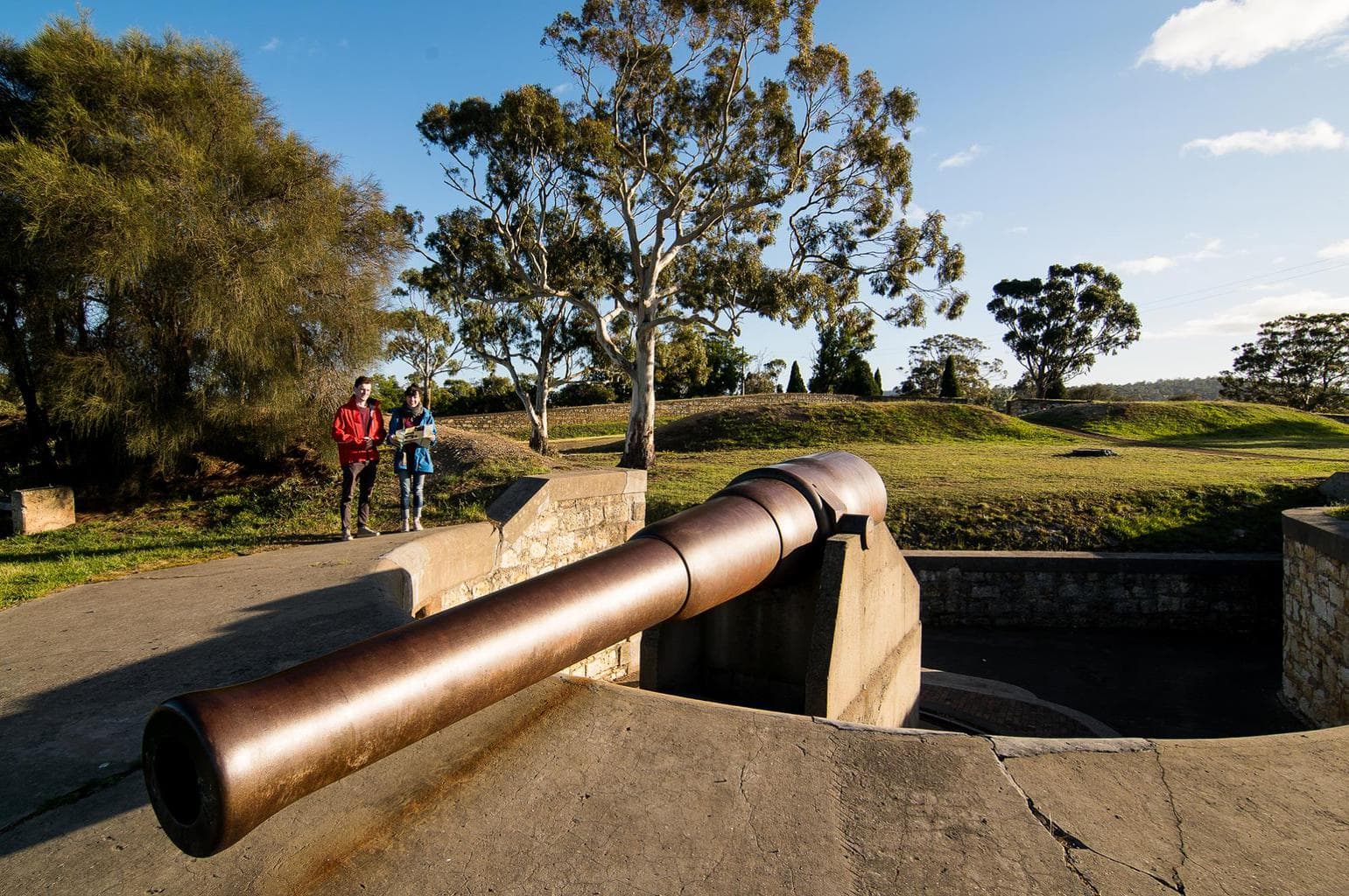
Kangaroo Battery.
Bellerive Oval, a.k.a. Blundstone Arena
Bellerive’s first recorded football match was played in 1884 on a patch of land between Beach, Church, and Derwent Streets. Residents had been using this patch of land for cricket long before this, though.
It became council property in 1913, and it was opened as Bellerive’s recreational ground a year later.
In 1977, it was decided that the recreation ground would become the new headquarters for the Tasmanian Cricket Association. New grandstands, training nets, a hill, a new surface and centre wicket, and a three-level members’ pavilion were constructed. The new oval, Blundstone Arena, was officially opened in 1986.
The Arena has been refurbished several times since it opened. The most recent refurbishment took place in 2015 with the construction of the Ricky Ponting Stand. The Oval’s capacity is 19,500.
The ground traditionally hosts Australian Rules football during the winter and cricket during the others. It also hosts other events occasionally.

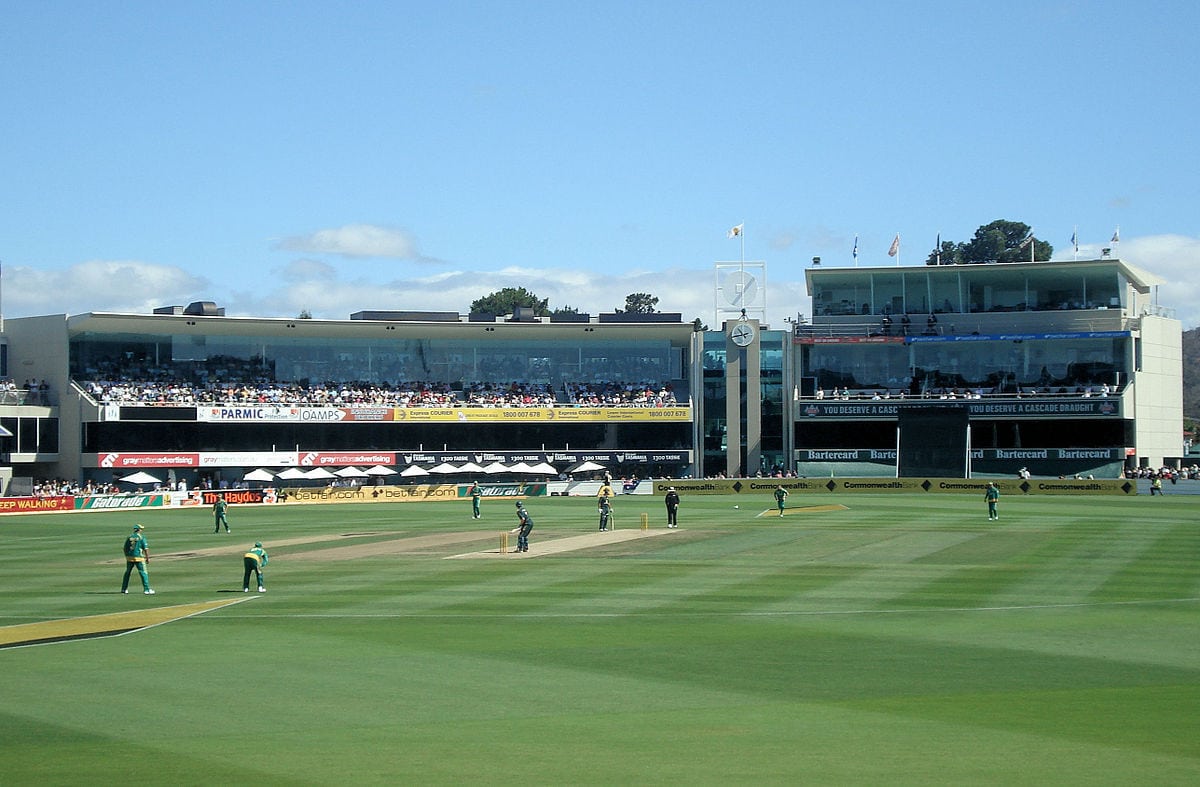
A cricket match being played at Blundstone Arena.
* * * *
Tas That Was is a column that includes:
- anecdotes of life in Tasmania in the past;
- historical photographs of locations in Tasmania; and/or
- documentaries about locations in Tasmania.
If you have an anecdote or photograph you’d like to share with us, please send it to submit@tasmaniantimes.com.