
New research from Anglicare seeks better support for vulnerable families involved in legal matters about child safety – including a boost to Legal Aid funding so all parents can be represented by a lawyer in court.
The report recommends improved access to legal advice and representation, the appointment of specialist magistrates, and that Tasmania explore moving to a therapeutic, problem-solving court model.
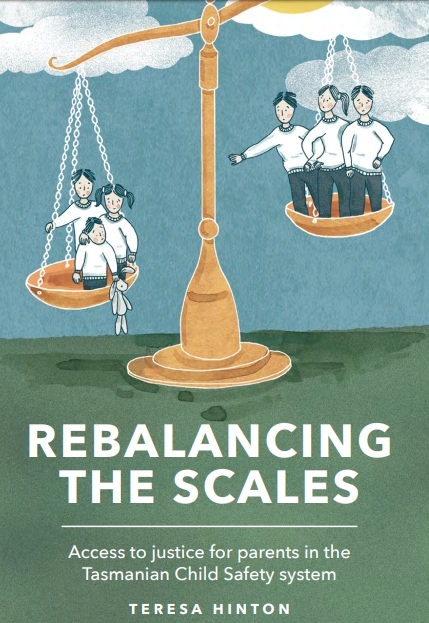
Rebalancing the Scales: Access to Justice for Parents in the Tasmanian Child Safety System investigated the work of the Children’s Division of the Magistrates Court – a court closed to the public. This court’s role is to make decisions “in the best interests of the child” about a variety of complex legal, social and welfare matters. This includes decisions about the removal of children from their parents’ care.
The research found a high level of dissatisfaction amongst lawyers and parents about the effectiveness and fairness of the current system.
The research by Anglicare’s Social Action and Research Centre (SARC) was informed by interviews with 36 parents and 45 members of the legal profession. The report also drew from a review of reforms being trialled in child safety-related legal systems across the world.
The research revealed a high-pressured environment where the rising demand for out-of-home care, poor access to legal representation and an adversarial atmosphere combine to undermine the intent of the Children, Young Persons and Their Families Act 1997, which is to preserve and reunify families where at all possible.
SARC’s Senior Research and Policy Officer Teresa Hinton said better wraparound support was needed for all families in the child safety system.
“As one of the lawyers in this project told us, child protection is not a fight to be won but problems to be resolved,” she said.
“We know that a significant proportion of parents can look after their children safely and well if they have a network of support. The right support can reduce the number of children and young people entering out-of-home care, which in turn delivers social benefits that will flow across generations.”
A parent interviewed for the research describes her experiences with the child safety and court systems as frustrating, lonely and unsupported.
“I have felt voiceless, empty and helpless and I have not understood my rights,” she explains. “My focus now is on helping to create positive change. Like all parents, I want the best for my children and I feel very strongly that this can only happen if parents have access to Legal Aid funding, good legal advice and a support or social worker before, during and after their appearances in court.
“I have become an informal ‘go-to’ person for other parents who are struggling with the system and looking for information and support,” she added. “And while I love this opportunity and help out where I can, I think this demonstrates that the current system is not supporting parents with the compassion and advice that they need. This is contributing to poor outcomes for parents, and most importantly, for our children.”
Recommendations
Rebalancing the Scales recommendations include:
· investing in processes to divert families from the justice system
· requiring that all parents have appropriate legal representation and expanding Legal Aid funding to meet this need
· improvements to the court environment
· the use of specialist magistrates wherever possible
· further investments in the professional development of those working in the child safety system
· exploring the establishment of a therapeutic, problem-solving court.
 Senior Counsel Marcus Turnbull, representing the Family Law Practitioners Association, was involved in the research project from its inception and endorses its recommendations.
“This is the most important report into child safety in decades,” Turnbull said. “I am hoping that this is the catalyst for real change to create better outcomes for Tasmania’s most vulnerable children.”
According to Turnbull the legal community recognises that there is considerable room for improvement in the way the child safety system and Magistrates Court operate. “We believe parents deserve better access to Legal Aid funding and representation, and support the call for the expansion of Legal Aid funding and a move towards a collaborative, problem-solving approach in order to make this happen, and we will see fewer children removed from their families if these changes are introduced,” he said.
Anglicare Tasmania called for the Tasmanian government to urgently commission a high-level working group to oversee implementation of the report’s recommendations. This working group would involve the Department of Communities, Department of Justice, the Legal Aid Commission, the judiciary and legal professionals, the community sector, and parent and carer representatives.
“The clear appetite for change and the high level of goodwill that is evident amongst parents, the legal profession, the judiciary and the community support sector is very encouraging,” said Hinton. “A significant investment in this area will help shape a brighter future for vulnerable Tasmanian families.”
A copy of the report summary and full report is available.