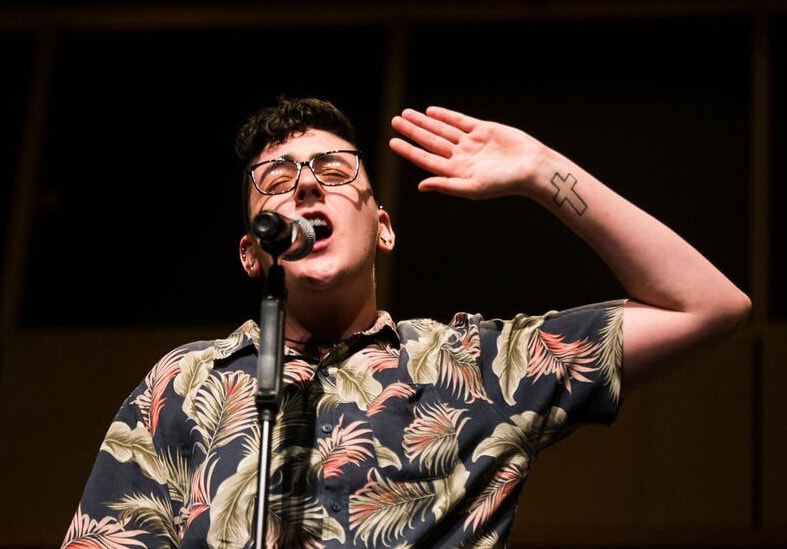
Mention the word ‘poetry’ and the body language can be revealing. Reactions can vary from embarrassed and surprised confusion, to expressions of shock that poetry is even still read. Many emphatically claim they don’t read poetry themselves, they don’t understand it, and haven’t actually read it since school. And anyway they prefer to read fiction.
It could be argued these are odd and contradictory responses because poetry has been around far longer than prose. Stories have been told in verse since before the troubadours of Mediaeval times first picked up a lute, or Chaucer’s pilgrims entertained themselves on the way to Canterbury. Shakespeare’s plays are all written in verse so it’s a writing style with a very long history, and one that evolved in the knowledge that stories would be spoken aloud and performed before an audience.
But civilisations and cultures evolve, and with the advent of the printing press and the availability and affordability of books, the tradition of travelling storytellers declined. The 20th century saw the rise of the popular novel, and poetry fell out of fashion, relegated to the literary fringe. As the century progressed the popularity and promotion of novelists and fiction saw poetry shift further into the realms of perceived cultural elitism, although one notable exception was the high profile beat poets’ movement during the 1950s. So while poetry was still being written and performed, it largely went underground, championed and supported by a small but devoted following.
Australians though have always appreciated poetry, and in Tasmania the poetry scene has long enjoyed a strong profile and been home to several acclaimed poets such as Gwen Harwood, Margaret Scott and Tim Thorne. Tim was responsible for establishing the Tasmanian Poetry Festival in 1985. Held in Launceston, this annual event occurs on the first weekend in October, and is a fixture on the literary calendar.* The Festival’s signature event is the Poetry Cup, where contestants must recite their poem in 60 seconds or less, and the winner is determined by the volume and enthusiasm of audience applause.
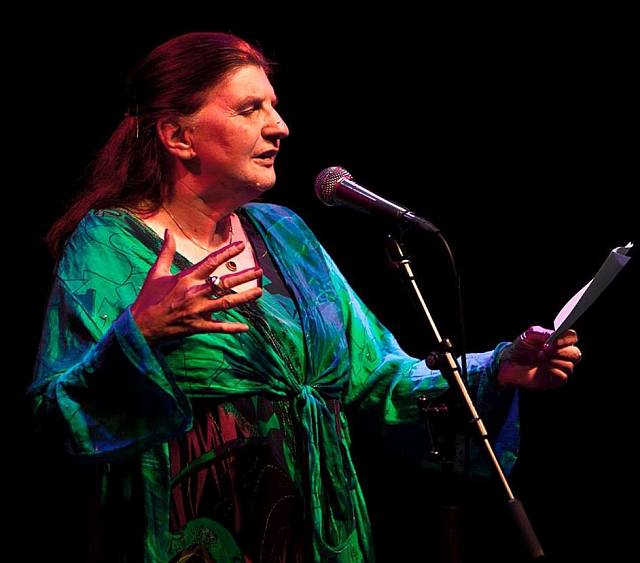
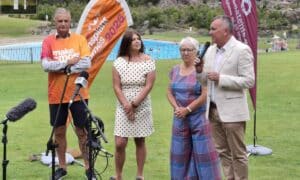
Yvonne Gluyas.
Performance poetry then is nothing new for Tasmanians, so it’s perhaps no surprise that Tasmania was quick to embrace the opportunity to participate in the Australian Poetry Slam. Or that the coordinator of Tasmania’s Slam events, is Launceston-based performance poet Yvonne Gluyas.
The Australian Poetry Slam and ‘Word travels’ event was established in 2005 by Sydney-based writer, poet and performer Miles Merrill. He wanted to offer opportunities for emerging Australian poets to participate in performing their work at spoken word events and festivals.
“Miles was born in Chicago and moved to Sydney in 1986. He brought the Slam poetry movement with him and he’s been instrumental in growing it into an internationally renowned event, and making it Australia’s largest poetry series,” Yvonne explained.
The first Australian Poetry Slam heats to feature Tasmanian poets were held in Launceston and Hobart during 2007, and they were coordinated by the then director of the Tasmanian Poetry Festival, Cameron Hindrum.
“After Cameron retired from the role in 2015 I was asked to step into the position, and I’ve been running the APS heats and finals in Tasmania ever since. These are now held in Burnie, Ulverstone, Latrobe and Deloraine as well as Launceston and Hobart,” said Yvonne, who’s been an APS state finalist several times herself, and travelled to Sydney to represent Tasmania for the 2007, 2008 and 2010 finals.
“Poetry is a great way of getting messages to audiences.
You can voice ideas in performance poetry that would take three or four pages to write down!”
Yvonne has seen positive differences occurring in the lives of many Tasmanians who have chosen to perform in Slam heats, including those who come from challenging backgrounds, or who are dealing with difficult personal or social issues.
“Many of our poets have gone on to become actively involved in their local communities on a range of levels which has brought about practical and social improvements to their own wellbeing, as well as to those they interact with. It’s one of the reasons why I feel Slam events are so important: they give emerging poets a chance to expand their talents.”
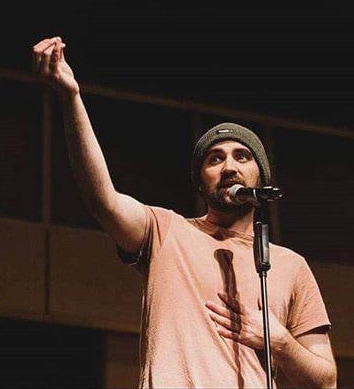
Rohan King at the Sydney Opera House.
The Slam events have certainly provided the impetus for several Tasmanian poets to achieve further success interstate. Among them are Launceston’s Andi Stewart, and Rohan King. Andi was awarded Runner-Up in both the 2018 and 2019 national events, and Rohan attended a Launceston heat. He was so enthusiastic he then entered the Hobart and Deloraine heats.
“Rohan won a place in the state final, and came first in that. Within a couple of months he was in Sydney attending workshops and poetry events before giving a brilliant performance at the Sydney Opera House in the 2019 APS national final where he received wild applause from an appreciate audience. Rohan continues to be involved in poetry in Tasmania, and he was a guest reader at last year’s Tasmanian Poetry Festival.”
One of the youngest Slam entrants was 14-year-old Amelia Neylon who was encouraged to enter the 2017 Hobart event by her family, and then won it with her first poem, written just two weeks beforehand.
“Amelia won a place in the state final and became a ‘sponsored poet’ due to the high scores she gained. This gave her a chance to come to Sydney with myself and the two state finalists to participate in workshops and literary events over the weekend. She went on to become an outstanding political activist for climate change, and performed at all three of Hobart’s climate strike rallies. Her poetry has even been quoted and praised in parliament!”
While Covid has certainly resulted in a need to reorganise the upcoming 2020 Launceston Slam event, the heat is expected to go ahead as planned. The venue is The Royal Oak on the corner of Tamar and Brisbane Streets, but Yvonne warned an early arrival would be essential in order to secure a seat.
“The 2020 Launceston heat is a free event, for both contestants and audience, and everyone is welcome. It will be held in the Royal Oak’s Oak Shed on Sunday 9 August, from 5 pm, although contestants must be signed up from 4.30 pm. Contestants have two minutes in which to impress the judges with their original work – and no props are allowed. This year due to Covid restrictions, only 80 people are allowed to attend so we are encouraging people to get there early.”
Yvonne said it was also important contestants have a second piece prepared because in the event of a tie a ‘slam-off’ is held for the decider. The three placegetters from each of the Tasmanian heats all receive prizes and an opportunity to compete in the Tasmanian final heat, held in Launceston during September. Depending on the Covid situation the two finalists from the state Slam final will then be invited to go to Sydney during October to compete in the national Slam final event.
“The 2020 national finals may be held as an online event. If so then a cash prize will be awarded to the two Tassie state finalists, as well as the offer of mentorship so they can bring their best performance to the virtual stage.”
*Due to Covid-19 the 2020 Tasmanian Poetry Festival has been cancelled.
© 2020 Anne Layton-Bennett
Anne Layton-Bennett is a published writer both in Australia and overseas in both print and online publications. She writes regularly for specialist magazine The Veterinarian, and co-edited: An Inspired Pursuit: 40 years of writing by women in northern Tasmania, (Karuda Press) 2002.