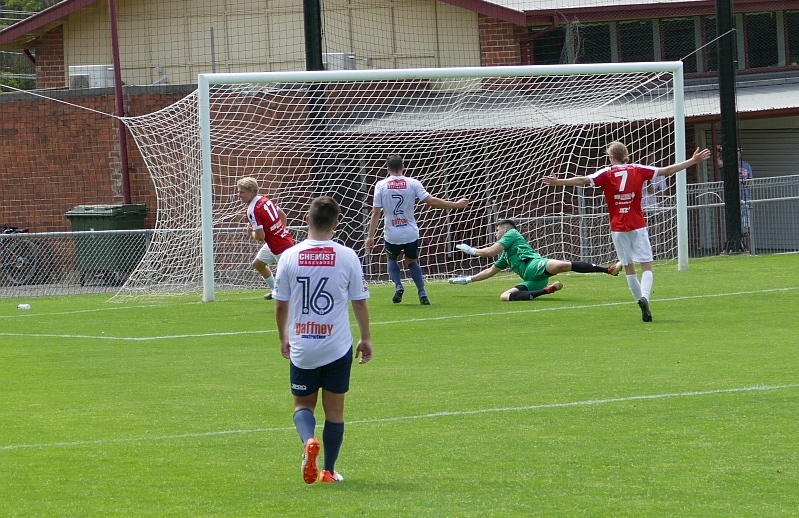
The National Cabinet has endorsed measures for the resumption of sport and recreation activities across Australia, including in Tasmania.
A set of National Principles along with the Australian Institute of Sport’s, Framework for Rebooting Sport in a COVID-19 Environment, are expected to be used to guide the staged return of activity as efforts to stop the spread of the virus continue.
There are separate guidelines for community sport and high-level or professional sport. Guidelines differ between Level A, B and C scenarios, although there is no specific explanation of what those scenarios are.
The Framework incorporates consideration of the differences between contact and non-contact sport and indoor and outdoor activity, noting that “international evidence to date is suggestive that outdoor activities are a lower risk setting for COVID-19 transmission.”
Minister for Youth and Sport, Richard Colbeck, said the announcement signalled an important step as Australia, slowly and resolutely, emerges from the pandemic.
“The National Cabinet decisions map out a careful and sensible road ahead for the safe resumption of sports and recreation in Australia,” he said.
The National Principles make clear how sporting and recreational activities can only happen where stringent, public and personal health measures are observed and required standards met.
The Framework for Rebooting Sport in a COVID-19 Environment was developed by the AIS after extensive consultation with sports organisations and can be found here.
National Principles
The principles acknowledge that there are benefits from the resumption of sport, but that it should not compromise the health of
individuals or the community. Permitted activities should be based on health information and not risk increased COVID-19 local transmission rates.
Although the Principles are a guide, “individual jurisdictions may provide guidance on the timing of introduction of various levels of sport participation with regard to local epidemiology, risk mitigation strategies and public health capacity.
Resumption plans should include people who participate in sport and recreation at all different levels.
Staged resumption might be an initial phase of small group (<10) activities in a non-contact fashion, prior to moving on to a subsequent phase of large group (>10) activities including full contact training/competition in sport. “This includes the resumption of children’s outdoor sport with strict physical distancing measures for non-sporting attendees such as parents,” the framework says.
Special risk mitigation measures (including avoidance and physical distancing) should be applied to all indoor activities associated with outdoor sporting codes (e.g. club rooms, training facilities, gymnasia and the like).
The framework says that at all times sport and recreation organisations must respond to the directives of Public Health Authorities.
“Localised outbreaks may require sporting organisations to again restrict activity and those organisations must be ready to respond accordingly,” the framework says.
“The detection of a positive COVID-19 case in a sporting or recreation club or organisation will result in a standard public health response, which could include quarantine of a whole team or large group, and close contacts, for the required period.”
A strong recommendation is that for the foreseeable future elite sports, if recommenced, should do so in a spectator-free environment with the minimum support staff available to support the competition.
Any further and specific decisions about the resumption of sport will be considered first at a national level by the COVID-19 Sports and Health Committee.