With many families experiencing home isolation and physical distancing, Play Australia is concerned about the impact this is having on children’s mental health, now more than ever. Play Australia has responded to the World Health Organisation’s Draft Discussion Paper ‘Guidelines on physical activity and sedentary behaviour for children and adolescents, adults and older adults’, seeking an increased commitment by governments, schools, the early childhood sector, families and communities to make
changes and encourage children to play outside every day, as a matter of urgency.
A recent global study on teen physical activity, sees Australia performing amongst the worst in the world, ranking 140th out of 146 countries (The Lancet, 2019). Lack of physical activity is a major contributing factor to the poor physical and mental health amongst our children and young people. Anxiety related problems are increasing amongst children with an incidence 10 times that of diabetes. So, what are we doing about it in this time of increased stress?
The Australian Department of Health (Head to Health) reports that 1 in 7 children experience a mental illness. Nearly 14% of Australian children aged 4-11 are reported as having a mental health issue. In our lucky country, this is unacceptable.
Barbara Champion, Executive Director of Play Australia said “I am concerned about the health and wellbeing of our children and young people, particularly during this time of upheaval. We firmly believe that when governments and families recognise the importance of embedding play into everyone’s daily lives, better mental health and life outcomes will be achieved.”
Research demonstrates that building healthy physical activity habits in our children and young people, increases the likelihood of them being active throughout their adult lives.
We also know that the earlier children play, the better, as play can enhance the early development of children by 33% to 67% by improving language skills and reducing social and emotional problems, which contributes to greater resilience when faced with challenging circumstances (Fischer, 1992).
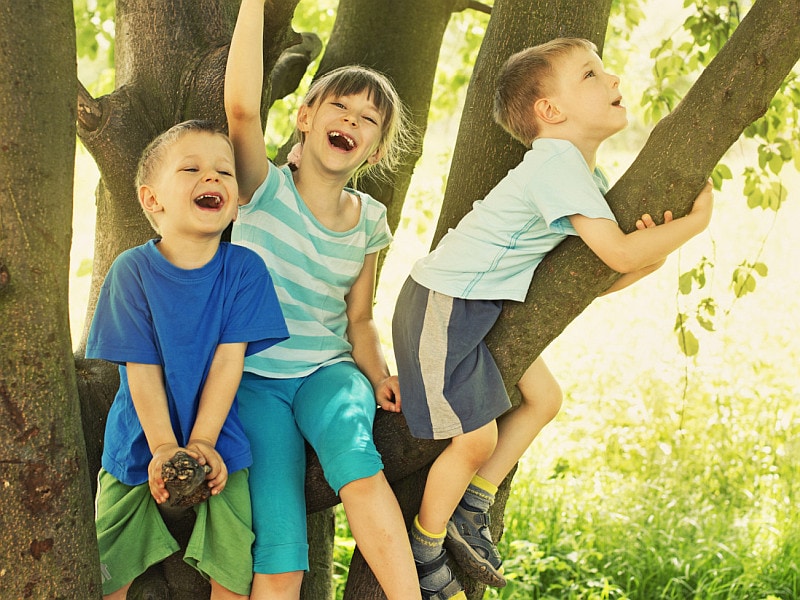
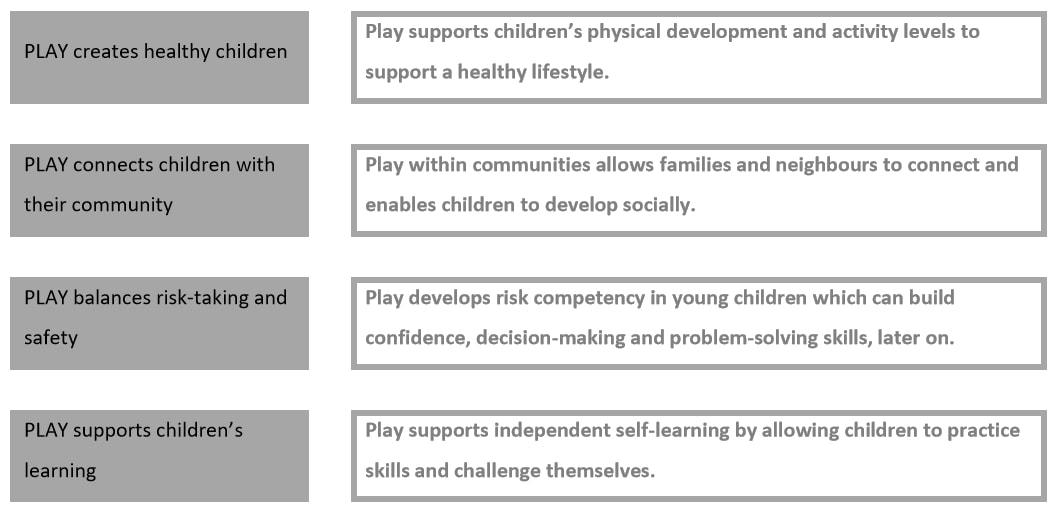
Outdoor play, that is unstructured and not controlled by adults; allows children to self-discover, take risks, and make their own decisions. This kind of play is essential, because it provides children with a foundation of physical literacy in order to establish healthy habits that last a lifetime.
“We have this incredible opportunity to reimagine how we better establish our daily physical activity habits, as we emerge from the COVID-19 pandemic. Supporting our children to have greater opportunity to play outside every day needs to become a key pillar of our national physical activity strategy, if we are ever going to improve the health and wellbeing for our children and young people”, said Champion.
Play Australia urges governments, schools, the early childhood sector, families and communities to prioritise outdoor and unstructured play as a matter of urgency, during and post-pandemic, in order to preserve and enhance the health and wellbeing of our children and young people.