 National registration of the Curiosity bait for feral cats will “support efforts to protect and recover Australia’s remarkable native wildlife,” according to the federal government.
The Department of Agriculture, Water and the Environment (DAWE) announced the decision recently, with Tasmania considering its position.
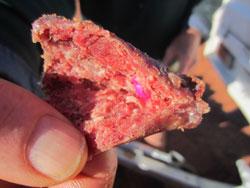
The Curiosity bait for feral cats is a small sausage with a hard plastic pellet containing a ‘humane toxin’ (para-aminopropiophenone, or PAPP). The bait has been designed to minimise the risk to native animals and a hard shell limits access to the pellet by animals other than cats.
“The APVMA has assessed the safety and efficacy of the product, and ensured the risks to native animals, the environment, and the public are minimised,” said a DAWE statement. “Strict conditions set out by the label include training requirements for end users, which ensure that there is extremely low risk to the public and their pets.”
“Curiosity bait for feral cats has been registered by the Australian Pesticides and Veterinary Medicines Authority (APVMA) as an agricultural chemical product for vertebrate pest control,” a spokesperson for DPIPWE said in response to a Tasmanian Times enquiry.
“The APMVA has classified Curiosity bait as one where sales will be restricted, meaning the baits would only be sold to, and used by, appropriately trained and authorised people under permit. The Department is considering the potential for the use of this bait in Tasmania.”
Variations of the bait have been field-tested since 2009 including on Tasman Island. (See video below of the TI cat eradication project.)
DAWE described the bait as a ‘game changer’ for feral cat control in Australia and the threat they pose to native wildlife.
Since European arrival, feral cats have been implicated in the extinction of more than 20 mammal species and threaten a further 124 nationally listed species.
The Australian government invested more than $5 million in the development of Curiosity to develop a cat-bait that would limit damage to other species.
“The baits will also offer another lifeline to our native wildlife in bushfire impacted areas,” DAWE said. “Cats are very effective predators following fires so this humane and effective control tool will boost our ability to actively tackle the threat across our environment.”
How the Curiosity bait works
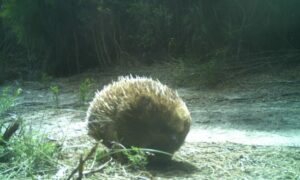
The Curiosity bait for feral cats comprises a small meat-based sausage containing a small hard plastic pellet encapsulating a ‘humane toxin’. Cats do not have molar teeth and tend to chew their food less so they may swallow portions of the sausage including the pellet. Most Australian native animals nibble and chew their food and are likely to reject the pellet. The pellet is designed to dissolve in the cat’s stomach and deliver a rapid dose of the toxin.
The Curiosity bait for feral cats uses a new humane toxin called para-aminopropiophenone, or PAPP, ‘which is considered best-practice world-wide’ according to DAWE. In brief, the toxicant, PAPP, converts the animal’s red blood cells to a form that cannot carry oxygen, causing death through oxygen starvation to the brain and other vital organs. “It is considered to be humane and death takes minutes to hours,” said DAWE.
The RSPCA have indicated that PAPP is a clear improvement in humaneness over previous toxins. The mode of action means that secondary poisoning of any other animals from consuming a carcass of a cat that ate a Curiosity bait containing PAPP is much less likely than when using previously employed toxins.
The final bait composition has achieved claimed efficiency rates (reduction in feral cat numbers) of up to 80 per cent in ideal field conditions. In the controlled situation of pen trials on feral cats for the final formulation and others on preliminary formulations, the testing demonstrated that 97% of the cats voluntarily consuming a Curiosity bait died.
Risks to non-targeted species were assessed in this paper.