
The report was released today by the Tasmanian Department of Health. You can read it in full here.
It relates to cases in what is now generally known as the North West outbreak of COVID-19, largely centred in the North West Regional, North West Private and Mersey Community Hospitals. The report looks at the epidemiological developments and the health response from the suspected first case on 3 April through to 21 April.
Health Minister Sarah Courtney said in this morning’s media conference that she will accept all 17 detailed recommendations in the areas of Structures and Resourcing, and Process and Practice.
“Nothing is more important to the Tasmanian Government than the safety of our staff and patients, and we are determined to ensure that our health system is as prepared as possible,” she said.
“COVID-19 is a highly infectious, potentially deadly disease, and Tasmania is not alone in falling victim to a devastating hospital outbreak.” The Minister declared COVID-19 unlike any other health threat faced in living memory.
“As a jurisdiction we are not alone in falling victim to a devastating hospital outbreak, and we certainly did not foresee one of the size and magnitude that has occurred in North-West Tasmania.
The purpose of this Interim Report is not therefore to criticise the behaviours of any individual, or to apportion blame, but instead to own the lessons learned about this new and extremely infectious disease and to share these across our Tasmanian Health system so that we may do our very best to avoid a similar outbreak in future.” – Kathrine Morgan-Wicks, COVID-19 State Health Commander
The Tasmanian Premier has also promised an independent review of the outbreak at a later date. “This Independent Review will be undertaken by relevant experts following the development of an agreed Terms of Reference,” he said.
Labor Leader Rebecca White said the report released today shows multiple systemic failures ahead of the outbreak.
“This outbreak has been one of the worst in Australia, with 11 of the state’s 12 deaths directly linked to the North West,” Ms White said.
“The real question is why the North West was hardest hit, resulting in the closure of two of the region’s hospitals, the involvement of the military, the quarantining of nearly 5000 people and the effective lockdown of the North West region.”
Later, in Parliament, Labor called for a Royal Commission into the management of coronavirus in Tasmania. Premier Gutwein responded that the Opposition was ‘taking a great leap’ in wanting a Royal Commission at this stage.
The key findings and recommendations of the Interim Report on the North West outbreak are listed below:
Summary
This outbreak was characterised by rapid person-to-person spread amongst staff, with further transmission to patients and household contacts. Factors that potentially contributed to this outbreak included:
Based on the timing of the onset of symptoms, the outbreak likely began with transmission of infection from a known COVID-19 patient to healthcare staff and to patients on the medical ward.
While any shortcomings in infection control practices may have enabled transmission of this very infectious agent in a high-risk setting, this descriptive epidemiological account does not provide evidence of specific infection control breaches that contributed to transmission.
The actions of quarantining staff and patients, and closure of the hospitals were associated with a rapid reduction in the number of new cases over the following days.
Many infectious staff cases (20%) worked for several days whilst experiencing symptoms of COVID-19.
A high attack rate was associated with meetings with staff in confined spaces, such as nursing handovers and discharge planning.
There were several instances when the identification of close contacts was likely to have been incomplete or slowed by the need to locate and interrogate multiple ICT systems, databases and paper records to reconstruct a single patient record or staffing profile on any one day in a particular ward. These indicate the need to establish, resource (with human resources and information technology systems), and train teams to enable immediate responses; and to upgrade over time existing manual and paper-based records. This will enable timely, informed decisions and actions to prevent further transmission from contacts who may become cases in healthcare settings;
Many infectious staff were highly mobile within the health facilities or worked in two or three hospitals at different times. This resulted in transmission within multiple settings within and beyond the NWRH. Transfer of infectious patients between facilities. Transfers of patients not yet diagnosed with COVID-19 from the NWRH to the NWPH or MCH while incubating or infectious with COVID-19 was documented.
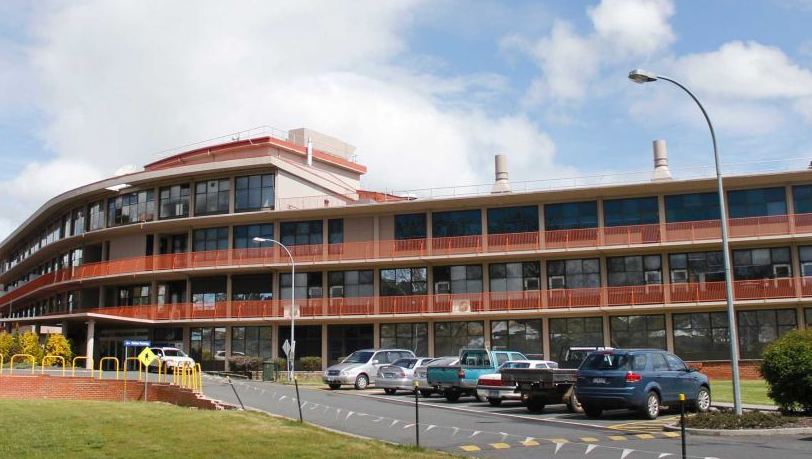
Mersey Community Hospital.
Recommendations
The following areas are worthy of consideration in further analyses of underlying factors that contributed to this large outbreak, and for future management and control of COVID-19 in Tasmanian healthcare settings:
Work to strengthen the culture of safety regarding infection control practices including optimising standard and transmission-based precautions through increased infection prevention and control resourcing and staff education.
Ensure clear governance arrangements for managing future outbreaks in healthcare settings, including dedicated teams for outbreak control whose members are skilled in the rapid tasks required to manage outbreaks, especially the identification and furloughing of close contacts.
Consider the underlying drivers of staff presenting to work whilst unwell with respiratory illness and implement strategies to minimise this.
Enhance and optimise screening of all staff and visitors on entry to the facility (e.g. use of a screening questionnaire) and do so particularly actively during outbreaks. While it may be impossible to identify and exclude people before they become ill, some of these potentially infectious persons may be identified by thorough contact tracing of prior cases.
Implement structural and cultural changes to strengthen social distancing within healthcare workplaces (e.g. meal breaks, meetings, ward rounds, other work-related activities), particularly during outbreaks. Reduce the movement of staff between facilities where this is possible, particularly during outbreaks.
Minimise unnecessary patient transfer within facilities and between facilities, particularly during outbreaks. When transfer is necessary, assess the risk and implement appropriate infection control precautions.
Reactions
Australian Medical Association Tasmania welcomed this morning’s release of the Interim Report.
Professor Burgess President AMA Tasmania commented that it further underscores the need for an independent commission of inquiry.
“The report describes a vulnerable regional healthcare system that was overwhelmed by events, and by a broader governance and public health response that always seemed days behind the curve in its communications and interventions to crush emerging local outbreaks and maintain hospital services,” he said.
“We must remember it is an internal report written at a point in time when we are still progressing through the management of the virus. While it answers some questions, it leaves more unanswered and raises new ones.”
Prof Burgess said there is little doubt that the north-west hospital system and the community were vulnerable from the outset.
“Relatively under-resourced and under trained, a delayed high-level systemic response in the early phase of the emergent outbreak appears to have contributed to the outbreak chain reaction.”
“This report is very factual but offers little insight or evidence of system introspection as to the contribution higher level
bureaucratic processes, communication and responsiveness played in the genesis and progression of the outbreak.”
He lamented the lack of clear insight provided into the governance and Public Health policy and process reforms required to prevent a similar outbreak occurring in the future.
The Australian Nursing and Midwifery Federation Tasmanian Branch (ANMF) today welcomed the COVID-19 North West Regional Hospital Outbreak Interim Report, released by the Premier of Tasmania, Peter Gutwein.
ANMF Tasmanian Branch Secretary Emily Shepherd said the report highlights the most likely cause of the COVID-19 outbreak was from passengers from the Ruby Princess cruise ship who became patients on the North West coast.
“These were the first reported cases at the North West Regional Hospital,” Shepherd said.
“What has been further enforced is that we cannot underestimate the virulence of COVID-19 and the ease with which it can spread. This is particularly true when people are infected but asymptomatic and therefore unaware that they have the virus.”
Shepherd said that along with the Report’s recommendations, ultimately learning and taking immediate action is the most important outcome.
“We are particularly pleased with the findings that prioritise local level infection control as a priority, including infectious disease specialists, Infection Control Nurses, and Clinical Nurses Educators.
“This includes the governance process at the local level, along with position descriptions for the outbreak management team to improve local support and communication with staff and the Emergency Control Centre.”
Ms Shepherd said that both the North West Regional Hospital and North West Private Hospital need increased on the ground clinical support and improved communication, as has been recommended.
“It is pleasing to see transparency around these concerns and what strategies have and will continue to be done to address them.