Recently the Lord Mayor of Hobart, Ron Christie, had the temerity to raise the question of over-tourism. All but one (Dr Eva Ruzicka) of the aldermen condemned him along with Luke Martin, representing the Tourism Industry Council of Tasmania (TICT), in an article in The Mercury on 2 July 2018, and no less than two Mercury Editorials!
UTG applauds the Lord Mayor for raising the over-tourism issue. It is too late to scream ‘Stop!’ when the hordes are already here, as 14 cities in Europe have already decided[1]. The problem is already here – as pointed out by Wendy Pearson in a letter-to-the-editor (Mercury) on 6th June, the process of ‘loving places to death’ has already begun in Freycinet National Park. Meanwhile, the State Government is intent on setting up a private ‘village’ on the shores of the iconic Dove Lake, plus a cable car to ferry people there!
As shown in the first article of this Journal, Issue No. 4, the number of tourists visiting national parks and wilderness areas across the southern hemisphere has exploded over recent years.
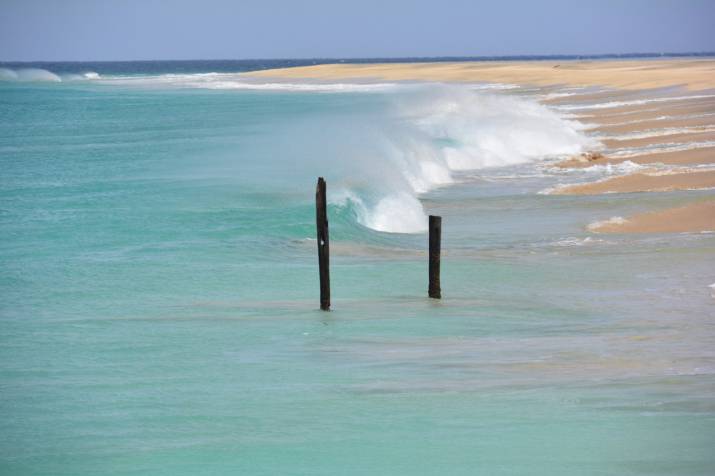
Articles also cover: (1) Changes since the 1970s among the three areas comprising the Gondwana Trilogy of wilderness areas, Patagonia, New Zealand and Tasmania; and the misuse of the term ‘wilderness’; (2) Iceland – then (1978) and now (2016); and (3) A comparative analysis of three island tourism destinations: Iceland, Cabo Verde and Tasmania.
Since its inception in 1972, UTG has argued that tourism could be good for Tasmania, but not at the expense of the integrity and sanctity of our National Parks and wilderness areas. UTG considers that tourism can be best served by a focus on what Dick Jones called ‘knowledge tourism’[2], that is, informing tourists about the unique characteristics of Tasmanian landscapes etc rather than just ‘scenery mining’, and rejecting the purely utilitarian approach that is adopted by traditional, especially corporate, tourism.[3] To this end provision of areas on the fringe outside these areas can be the least damaging. Proposals such as privatisation along the South Coast track, the proposed Lake
Geeves track, Walls of Jerusalem huts and Lake Malbena are not outside fringe areas[4].
There is also good research for believing such fringe area visitation satisfies tourists – for example, Chinese tourists (up 60%) come to Tasmania for a limited period of time, usually 2-3 days, due to leave restrictions; they tend to travel in groups and prefer to visit as many sites as possible within that limited period[5]. Also there is a ‘cultural disconnect'[6] between them and nature (partly due to their urban lives) and they are not likely to be trekking into the Southwest (or other areas for that matter). However, they do like to visit natural areas such as parks, even if only briefly, for the lack of crowds and for the scenery. All tourists are different. Germans, for example, (up 45%), are a different story as they have eight weeks annual leave.
Similarly, cruise ships typically spend only 24 hours in the ports around Tasmania, and the tourists wander around CBDs and then go back to their cruise liners. The ‘pollution’ issue with cruise liners is over-blown, and temporary as using bunker oil is likely to be banned across the world within the next few years. In other words, there is very limited environmental impact from concentrating numbers of tourists on the ‘fringes’, plus these tourists bring economic benefits to small enterprises, especially artists of all types or artesanos.
Tasmania now gets more than double its population in tourists! But the total numbers are not the problem. The real problem with tourism is that it has become the new holy grail in the cargo-cult mentality of Tasmania’s ruling elites and Government Business Enterprises, driven by the Tourism Industry Council of Tasmania (TICT) and the exploit-at-any-cost State Liberal Government, using tourism numbers as another excuse for building exclusive ´shacks´, privatising walking, creating new tracks and destroying any fragile wilderness in Tasmania.
Most of this is being promoted using the new buzzword word ‘ecotourism’ – which is a total distortion of any internationally understood meaning of the word, as discussed in the previous issue of the UTG Journal.
Download UTG Journal …
http://cdn-src.tasmaniantimes.com.s3.amazonaws.com/files/UTG-Journal-4-Online.pdf
[1] https://www.thelocal.es/201804P27/south-european cities-and-stakeholders-join-forces-against-mass-tourism, 27 April 2018
[2] Dick Jones 1975 Senate Campaign Policy speech
[3] Pam Walker, The United Tasmania Group, Honours thesis, University of Tasmania, 1986
[4] A research review of the research (not published here) shows no evidence that providing tracks and huts etc leads to greater consciousness or advocacy on behalf of these areas by tourists using such facilities.
[5] Chinese annual leave = 5 days to 1-10 years of work; 10 days for 10-20 years; and 15 days for over 20 years of work. They tend to travel in groups because it makes it easier for them to get permission to leave China (to an Approved Destination).
[6] See UTG Journal Issue No. 3, extensive footnote 10.
*Dr Geoff Holloway is State Secretary of the United Tasmania Group (UTG) 1974-77 and again since revival of UTG two years ago. He has never stayed in a job for more than five years. Geoff has a PhD (sociology), specialising in social movements, health and research methods; poet (4 books published); climber; traveller – two years in Chilean & Argentinean Patagonia, but also Colombia, Ecuador and Brasil), twice recently to Cabo Verde and Lisbon, fluent in Spanish, understand written Portuguese; focus over past 20 years or so on children with disabilities, child protection and youth justice issues. He has worked with 4 of the past 6 Children’s Commissioners in Tasmania.