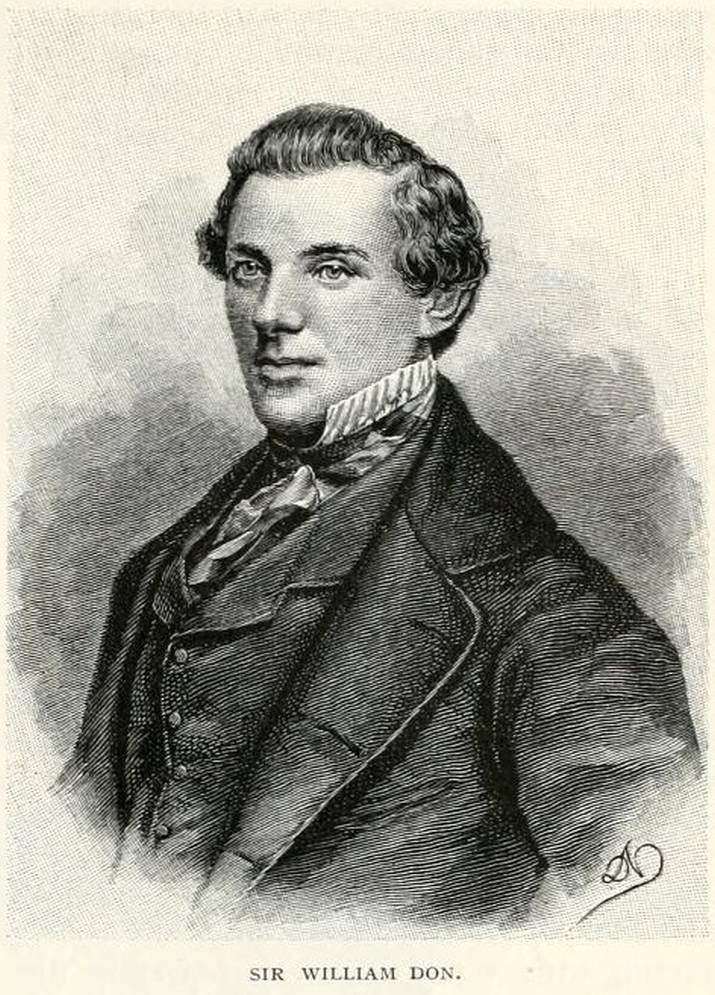
*Pic: Portrait of the British actor, Sir William Don (1825–1862) at unknown age.
The 180th anniversary celebration of Hobart’s Theatre Royal (liftout Mercury March 4) named notable actors who had performed in the theatre. Missing was Sir William Henry Don, seventh Baronet of Newton Don.
Sir William collapsed after a performance in 1862 and died four days later at Webb’s Family Hotel, now Hadley’s Orient Hotel.
Born in 1825, Sir William succeeded his father when a baby and followed an aristocratic path, schooling at Eton followed by a commission in the 5th Dragoon Guards.
He must have been an extraordinarily profligate young man; by 1845 he was bankrupt, which ended his career as a soldier. His estate was sold, for the huge sum of 85,000 pounds, all of which went to his creditors.
Sir William had enjoyed theatrics when at Eton and became a successful professional actor, in Britain and for five years in the United States, but he was always in debt.
In 1861, he toured the Australian colonies with his second wife, the actress Emily Saunders, and his own theatre company, which played in Melbourne and elsewhere before Hobart. By then he was celebrated for playing comedic female characters .
His final performance, at the Theatre Royal, was playing Queen Elizabeth in Kenilworth, a burlesque by Charles James Collins. A post mortem found he died of an aneurism of the aorta. He was 37.
His arrival was newsworthy, his death sensational .

As a tribute, a public house in Elizabeth street, not far from the Theatre Royal, was named Sir William Don. In recent times it traded as The Don. Most people thought the pub was called the Don after Bradman but three years ago, new owners changed the name, to The Homestead Tasmania.
According to the obituary in The Mercury of 23 March 1862: ‘The theatrical profession has lost in Sir William a most enthusiastic member. His admiration of his art was intense, and his success as an actor appeared to afford him more unalloyed satisfaction than his patrician descent.’
Not everyone was beguiled by his story. Colonial pioneer Elizabeth Fenton wrote disapprovingly in her journal, as revealed in my book Mrs Fenton’s Journey (Walleah Press, 2014), in her entry of 23 March 1862:
’The romance of real life has a sad illustration in the Fate of this poor Man – the Seventh Baronet of the name – & drawn by pecuniary embarrassments to exist on the Stage!! … What a tragedy and What a Lesson.’
*Margaretta Pos is a freelance journalist and author. Her biography of colonial pioneer Elizabeth Fenton, Mrs Fenton’s Journey: India and Tasmania 1826 to 1876 is available in Tasmanian bookshops, at Gleebooks and Pages&Pages in Sydney, and Hill of Content in Melbourne. Her most recent book, Shadows in Suriname, was published recently.