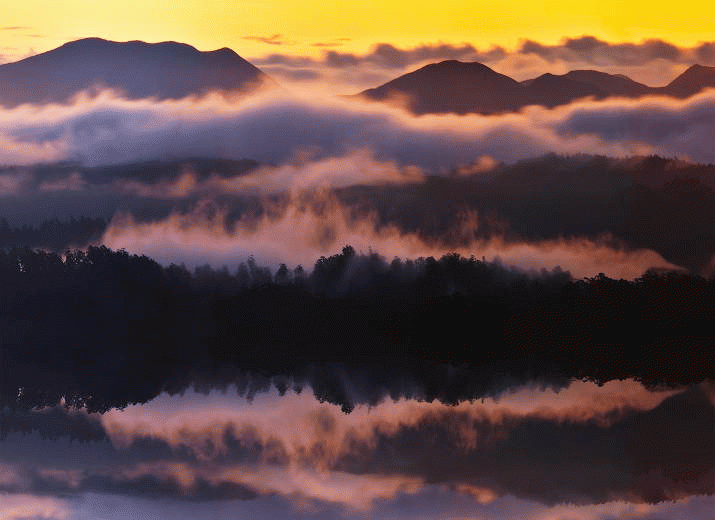
*Pic: Ted Mead’s pic of evening light over the Norfolk Range …

Pic: Nicole Anderson’s shot today (Saturday) of Mt Norfolk, the Tarkine, which Vica Bayley says should be a national park …
This weekend, Tasmanians will celebrate 100 years since our early leaders had the foresight to declare our first conservation reserves, later to be converted into national parks.
Protected for their outstanding vistas, unique flora and fauna and inspiring place in the hearts of lovers of the great outdoors, Mt Field and the Freycinet Peninsula were protected, for all people, for all time.
Since then, these first two national parks have been extended and augmented by the declaration of additional natural and cultural heritage icons that give Tasmania the foundation of an invaluable wild identity and powerfully attractive brand.
Mt Field is now listed as of global importance, part of the 1.5 million hectare Tasmanian Wilderness World Heritage Area that is recognised as meeting more natural and cultural heritage criteria than any other place on the planet.
Freycinet is a centrepiece in our tourism marketing, regularly tagged as the ‘most beautiful’ or the ‘best beaches’ in global travel bibles and so, groans under the number of awe-struck visitors.
Add to these the Franklin-Gordon Wild Rivers, Cradle Mountain-Lake St Clair, Ben Lomond, Southwest, Douglas-Apsley and Tasman National Parks (amongst many others) and its clear Tasmania’s impressive suite of national parks helps deliver a competitive advantage in an increasingly competitive world.
Just this week, the Premier announced survey results showing Tasmania is on par with Queensland in the eyes of our most prospective tourism market, “higher income couples living down the Eastern Seaboard who want to escape, spend time together and explore.”
As Tasmania celebrates the centenary of our first national parks, we should accept at face value the Hodgman Government’s claim, through Environment Minister Matthew Groom, that it “is a strong supporter of Tasmania’s iconic national parks that create jobs, attract visitors to the state and help grow the economy.”
Yes, our national parks are iconic, jobs-rich tourist magnets that underpin the tourism industry. With the undeniable and irredeemable demise of the traditional, extractive industries of logging and mining, tourism in-turn underpins Tasmania’s economy in the 21st century and offers a genuine, viable way forward.
In this context, it’s fair to invite the Government to build on the visionary efforts of their predecessors and expand our national park network.
With regional Tasmania struggling to cope with an economy in transition, it is truly fortunate that special places, on par with the icons we already protect, are distributed across regional areas and well worthy of national park status.
The same community of scientists, advocates, recreationalists and academics who helped build the case for the creation of many the parks we are today celebrating, have long identified other areas equally worthy.
Calls for a Tarkine National Park and World Heritage Area pre-date today’s nature-based branding for the area and the now widespread acceptance of the duel name for the region – takayna/Tarkine.
The case for a Northeast Highlands National Park came well before today’s mountain biking craze.
The request for a Great Western Tiers National Park was made long before the World Heritage Committee called for its declaration at this year’s meeting in Istanbul.
Indeed, all of these areas are embedded in regional communities that are crying out for new futures centred on sustainable, viable, economic growth and job opportunities – like a national park.
These places have iconic landscapes, majestic forests, wild rivers, unique species and a long, ongoing Aboriginal legacy.
All have existing infrastructure that facilitate public enjoyment. Roads access spectacular areas. Bridges cross tannin-stained rivers. Walking tracks open up remote areas to the same, spectacular and wondrous natural and cultural experiences that are celebrated in our existing national parks.
In fact, many of these potential parks languish as ‘unallocated crown land’, unprotected, inadequately managed and hanging out as massive, missed opportunities. Unlocking their potential as conservation assets is a logical and overdue step in finding solutions for regional Tasmania.
Other places remain under-protected. While some will claim over half of Tasmania is protected in a conservation reserve, about 40% of this can be logged or mined. In the vain hope of some finite, extractive opportunity, these ‘reserves’ are hamstrung by a tenure that denies the conservation security, legend and prosperity that comes with national park status.
Meanwhile, the custodians of Tasmania’s national parks and reserves, the Parks and Wildlife Service, has suffered systematic and repeated cuts to its budget over decades. Expected to do more with less, manage more land and more visitors with ever shrinking resources, managers of our parks struggle to properly protect the natural and cultural values in their care.
This reality of unprotected land, under-protected land and an under-resourced land manager presents both risk and opportunity.
The risk is we dent our credibility, are exposed as inadequate and damage both a brand and nature-based future that appears universally accepted as genuine and achievable, let alone one of the few options available.
The opportunities are immense, obvious and appear widely accepted.
Putting aside the job creation, economic growth and visitor opportunities that both Government and conservationists can agree our national parks deliver, there’s a lesson to be learnt from our visionary leaders of 1916.
Some places are so special they should simply be protected forever.
While Tasmania is blessed with a priceless suite of national parks that protect outstanding natural and cultural values and create a growing ‘conservation economy’, we have a responsibility to do more.
Not only is this right thing to do today, but in 100 years, future Tasmanians will repeat our celebrations and offer thanks for another century of sustenance, inspiration and prosperity underpinned by the icon that is genuine conservation offered through national parks.
As we celebrate 100 years of national park success, it begs the question; what’s stopping us unlocking the potential of more?
• Cassy O’Connor: Centenary of National Parks Highlights Failures of Minister