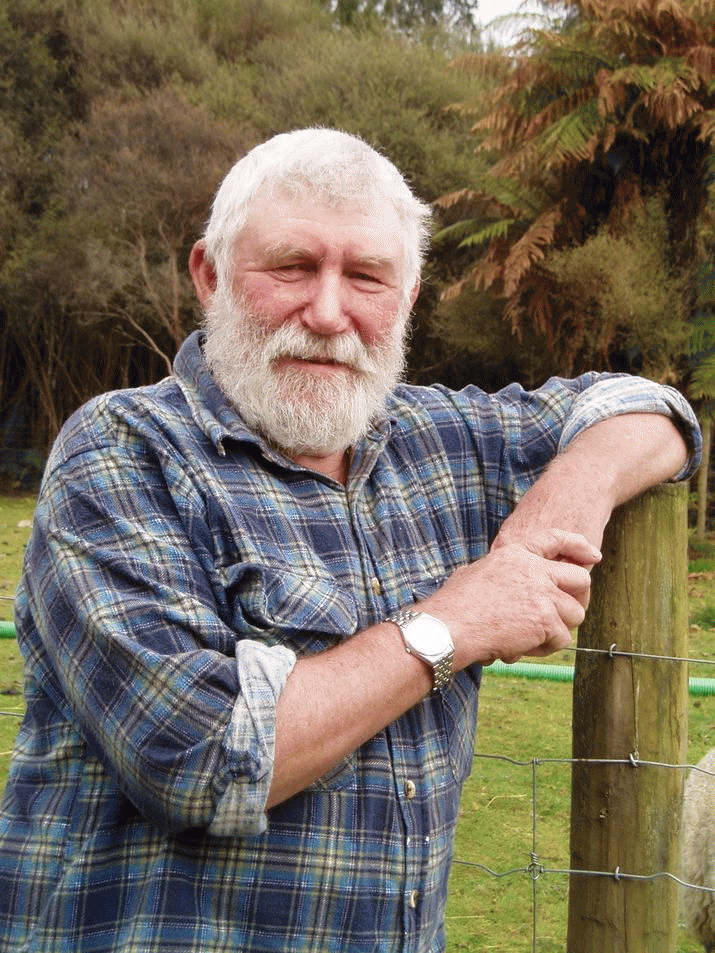
*Pic: Laurie Collins – “Goliath of state control and mass use of poisons.”
The New Zealand government has moved to take approval for the use of 1080 poison from local regional councils and control the toxin’s use totally by government. It is a move that has provoked strong reaction with accusations of “state control” and “removing the public’s right to voice opposition.”
Critics of the government move recently announced by Environment Minister Nick Smith say underneath it was motivated by government’s alarm at mounting public opposition to 1080.
Mary Molloy, a dairy farmer on the South Island’s West Coast and representing Farmers Against 1080 (FATE) said people living in rural areas were becoming increasingly irate at the continued short rotation 1080 aerial drops with toxic pellets ending up in rivers and streams and in recreation areas. The change by New Zealand Environment Minister Nick Smith was to stifle the growing public unease and voiced opposition.
The proposed change in control of the poison would mean not only 1080, but brodifacoum and a fish poison rotenone would be covered by standard controls set by the Environmental Protection Authority, to replace current process of each regional council setting their own pest control rules. Government’s Parliamentary Commissioner for the Environment Dr Jan Wright supported the move by government.
West Coast resident and convenor of the Sporting Hunters’ Outdoor Trust Laurie Collins said government’s commissioner for the environment Jan Wright was not a biologist but a physicist scientist.
“Basically she’s a government employee saying what she’s told to say.”
He said government’s seizing of 1080 poison controls seemed planned to allow government to escalate ecologically damaging 1080 drops while allowing it to ignore growing opposition. A survey of West Coast residents showed 90% of residents were opposed to 1080.
The 1080 was dropped to kill rats supposedly preying on birds and possums claimed to eat foliage and spread bovine tuberculosis. But Laurie Collins said rats were introduced by Maori immigrants 800 years ago and birds were abundant until the Department of Conservation was formed in 1987 and mega-1080 drops began. Possums he said had been blamed for trees dying but a senior Landcare scientist had told the department possums were not “rapacious consumers” of foliage. New Zealand’s vegetation had evolved and adapted to millions of years of browsing by now extinct moas and other vegetarian birds.
Laurie Collins said in the face of the “Goliath of state control and mass use of poisons,” the public needed to “vote with a vengeance” at next year’s general election.
Mary Molloy of Farmers Against 1080 said possums were not responsible for any spread of Tb – the cause lay in an inefficient stock testing regime. She said the move by the Environment Minister was undemocratic and would deny people the right to speak out against 1080 and other poisons.
“People will no longer have any opportunity to question the wisdom of continuing to use a world recognised deadly poison,which is colourless, tasteless, odourless and with no meaningful antidote. Farmers Against Ten Eighty want this poison banned from our water, our land and our air, out of New Zealand before our environment is altered beyond recovery,” she said.
Wairarapa conservationist Bill Benfield said the government’s move was a major concern.
“On the information we have at the moment, the Environment Minister intends to pursue a new Regulation under section 360 (h) of the RMA, that will exempt the three poisons, brodifacoum, 1080 and waterway fish poison (rotenone) from the discharge controls in section 15. I. Further, he appears to not want these poisons to be subject to a National Environmental Standard (NES).”
There would be little or no public notification under the minister’s new controls. He questioned the motive behind the use of a fish poison rotenone.
“Government is ideologically committed to eliminating non-native creatures from National parks, so there is a very real worry that rotenone could be furtively used against non-native trout as they have already done at Wellington’s Zealandia sanctuary.”
Long-time conservationist Lewis Hore of the South Island town of Oamaru said an increasing number of the New Zealand public were now aware of the ecological damage and misuse of vast sums of public money. He believed the rising tide of public concern had panicked Environment Minister Nick Smith into imposing total state control.
The New Zealand Government owned the 1080 factory at Whanganui and ran the 1080 industry as a State Owned enterprise with its paramount task to make maximum profit above other considerations. Basically government move was to take complete control of the toxins’ use produced in the Government-owned factory.