

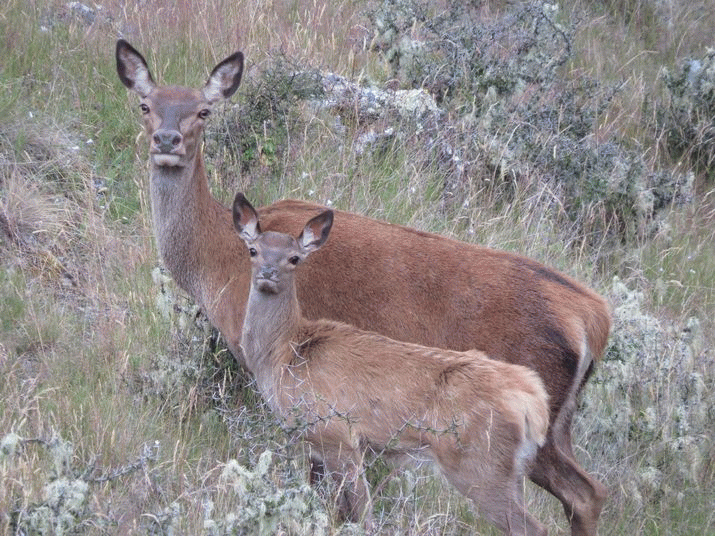
Red deer hind with fawn – there are only a quarter of a million wild deer in New Zealand.

Laurie Collins – “Open slaughter” and “cruelty”
Commercial wild deer recovery operators in New Zealand are killing female deer leaving newly born fawns to die a slow lingering death says a national sporting hunters organisation.
Laurie Collins of the West Coast, spokesman for the Sporting Hunters Outdoor Trust, (SHOT) said reports indicated helicopter operators were shooting adult hinds. He said the Department of Conservation had a responsibility to instruct helicopter operators not shoot hinds. Because of the practice government could be accused of “double standards” over animal cruelty.
“Government is rightly introducing animal welfare laws. And a recent calf cruelty case has been criticised by the Minister of Primary Industries as being due to rogue operators. Wild animals have the same feelings as farm animals.”
In New Zealand helicopter-borne hunters shoot deer that eventually are exported. No rules as to sex of deer shot or numbers of deer to be shot exist.
The Department of Conservation administers “national wild animal recovery operations” (WARO)concessions for the supply of deer, pig, goat and chamois to Ministry of Primary Industries (MPI) approved processors, and live capture of the same wild animals (excluding chamois) to be placed on authorised properties.
“It is open slaughter,” said Laurie Collins. “Unfortunately and sadly the department sees the only good deer as a good one.”
Yet New Zealand’s wild deer populations are relatively light. It has been estimated by Landcare Research scientists there are just a quarter of a million wild deer whereas the UK with a lesser land area than New Zealand has 1.5 million – six times the New Zealand wild deer population. While the Department of Conservation regards deer as pests because they were introduced, a Landcare Research study on public perceptions of wild animals showed 81 percent of New Zealanders regarded deer as a resource to be managed, instead of the extermination policy of government. Deer are not seen as damaging vegetation by browsing foliage as for millions of years, the now extinct flightless moa birds compromising a dozen different species, browsed New Zealand’s vegetation.
Laurie Collins said if the New Zealand government was sincere about animal welfare and stamping out cruelty, it must deal with “rogue” helicopter operators who were responsible for “murdering” fawns by starvation.
“The Department of Conservation should ban the shooting of hinds between November and March,” he said.”If anyone is caught doing that, then heavy penalties should result.”
Laurie Collins said SHOT strongly urged recreational hunters to not shoot hinds during the fawn rearing season.
“There’s no excuse for anyone, commercial or non-commercial, to shoot a hind from November to March,” he said.
New Zealand had low populations of wild deer and there was no over-population problem with the animals. Landcare Research estimated there were 250,000 wild deer in New Zealand, about one-sixth of the UK’s wild deer numbers.
Laurie Collins said allied in instances where commercial operators had been approached by concerned hunters and even farmers about the cruelty, there had been an aggressive reaction.
“This is a cruel, callous practice going on and damaging to New Zealand’s clean, green reputation.”
He said overseas countries which practiced deer management and selective harvesting would be appalled at the indiscriminate slaughter of hinds rearing newly born fawns.










