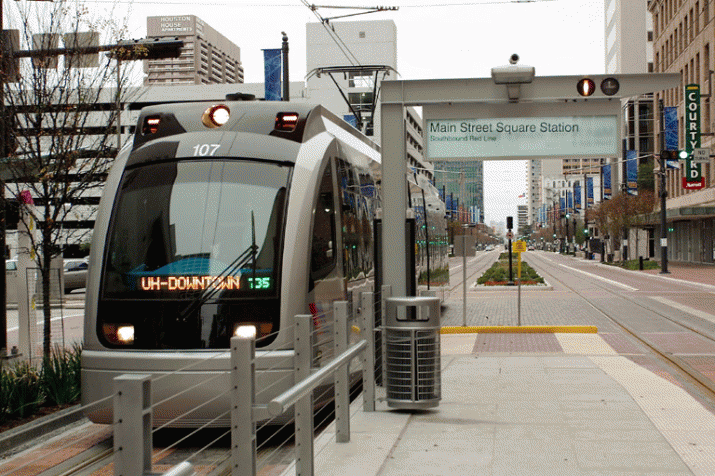
Light rail … as in Houston, Texas
The federal government’s rekindled enthusiasm for public transport has sent state and local governments across the country scurrying back to their light rail plans – even those that many of us thought would never see the light of day.
It now looks as if the two-year effective moratorium on rail spending under Tony Abbott will be just a relatively brief hiatus. Besides the Gold Coast and Perth, the light rail revival could also involve Newcastle, Parramatta, Bendigo, Canberra, Cairns, Darwin and Hobart.
All have drawn up plans that they hope could emulate the success of light rail in European and American cities (not to mention Melbourne, home of the world’s largest tram system) as a focal point for urban development.
The main reason that so many Australian cities have been trying to copy this model is that it works. Europe has been using light rail as a major tool of urban regeneration, especially in France where many smaller towns have been very successful. In the United States between 1993 and 2011, public transport use grew by 23% (and light rail by 190%), while car use growth peaked.
The key reason for this seems to be the extra speed and capacity created when light (or heavy) rail goes around, under or over traffic that has been getting slower and slower in every major city (see the table below). Meanwhile, urban regeneration around light rail corridors allows people to end their automobile dependence, helping cities grow inwards faster than outwards.
Tony Abbott forced the genie back into the bottle by following through on his 2013 pre-election decision to drop all federal rail funding. The move showed scant regard for how modern cities attract talented people to live and work in the knowledge economy jobs that are so necessary for innovation.
Read more, The Conversation here, where there are full hyperlinks
EARLIER on Tasmanian Times …