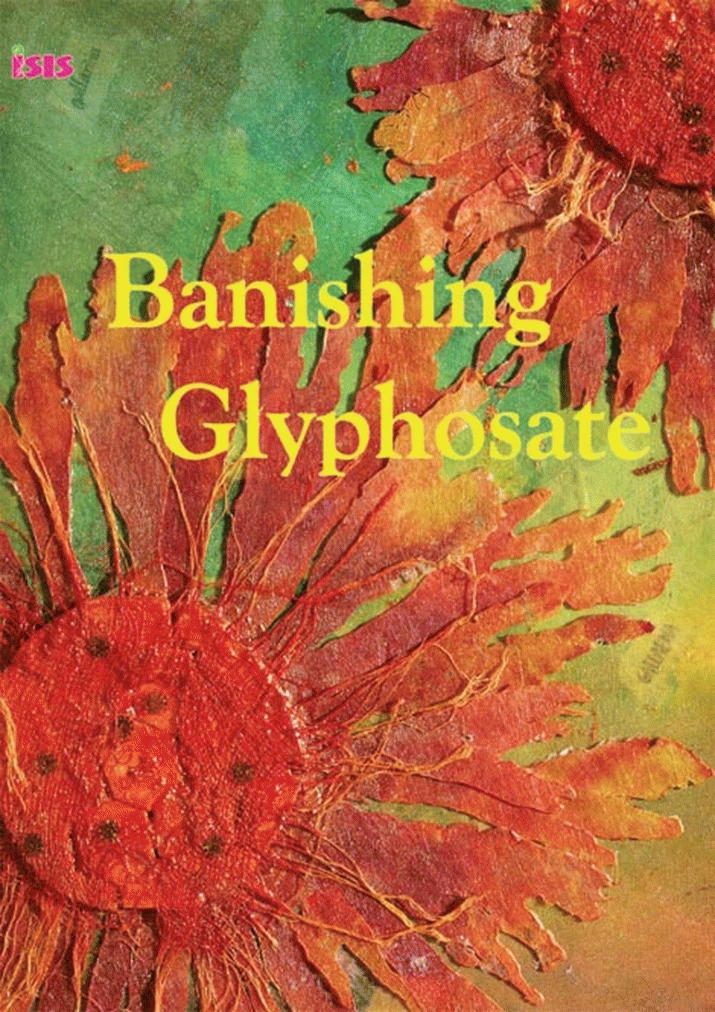
Glyphosate/Roundup, falsely claimed by Monsanto to be safe and harmless, has become the world’s most widely and pervasively used herbicide, especially with glyphosate tolerant GM crops; it has brought rising tides of birth defects, cancers, fatal kidney disease, sterility, and dozens of other illnesses. Read the devastating evidence & ban glyphosate herbicides from you home and local community
Dr Eva Sirinathsinghji & Dr Mae-Wan Ho with Dr Medardo Ávila-Vázquez, Dr Don M. Huber, Dr Rosemary Mason, Ib Borup Pederson, Prof Peter Saunders, & Dr Nancy Swanson
Glyphosate was released as an herbicide in 1974, and rapidly became the world’s most popular herbicide especially since the introduction of genetically modified (GM) glyphosate-tolerant crops in the 1990s. Currently, 85 % of GM crops are herbicide-tolerant, with glyphosate-tolerant crops making up the vast majority of those planted. In the US for example which is the largest producer of GM crops, 93 % of soybean and 85 % of maize crops are glyphosate-tolerant.
A total of 137 glyphosate-tolerant varieties have been approved by May 2015 (see Supplement Table 1 Approved glyphosate tolerant crops). There are 19 varieties of cotton, 115 of soybean and 81 of maize; and in addition, 1 wheat, 2 sugar beet, 4 potato, 3 Polish canola, 8 Argentine canola, 1 creeping bentgrass and 3 alfalfa. 80 % of these crops are stacked, containing additional traits such as tolerance to glufosinate and 2,4-D herbicides and/or pesticidal properties. Of the glyphosate-tolerant crops generated, over 99 % of those grown belong to only four species – soybean, maize, cotton and canola.
According to the new yearly report from industry funded International Service for the Acquisition of Agri-Biotech Applications (ISAAA) [1], “18 million farmers in 28 countries planted more than 181 million hectares [of GM crops] in 2014, up from 175 million in 27 countries in 2013.” This has spurred huge sales of glyphosate, giving it a market value of US$5.4 billion in 2012 with a total demand of 718 ooo tonnes [2]. Globally it is a key ingredient in more than 700 products [3] and is also used to control weed in gardens, along roadsides in commercial and residential areas, and on millions of hectares of farmland. Its presence is pervasive, in the air, in the soil, in our food and drinking water (see Chapter 1).
Read more here, where there are full hyperlinks
Sign the Independent Scientists Manifesto on Glyphosate here:
http://www.i-sis.org.uk/Independent_Scientists_Manifesto_on_Glyphosate.php
Download the report:
http://www.i-sis.org.uk/Banishing_Glyphosate.pdf