I was recently asked my interviewing technique. I don’t really have one – I just try to be myself. The principal art is listening. If possible, I meet the subject of the interview in a place of his or her choosing – ideally, a place that plays some role in their story.
By education, I’m a lawyer. In British law, you’re innocent until proved guilty. In lots of journalism, particularly sports journalism, it’s the opposite. This can lead to malign distortions. I remember the first time I interviewed Nathan Buckley. The tabloid media had given him a reputation for arrogance. I met a man whose personality included a radical humility. He, the AFL star, interviewed me about the travelling I did between the ages of 20 and 30 because he had a sense that, as a professional footballer, he was missing out on discovering the world.
Before I interview anyone, I research them as thoroughly as I can. I never ignore evidence to their detriment and consider it a great mistake, a beginner’s mistake, to do so. Rather than banishing my doubts, I pursue them. A story that can be soon shot down is not the sort of story you want to have your name on.
I now get asked by what authority do I write Aboriginal stories, or books on Aboriginal people? By the authority of the Aboriginal people concerned. Aboriginal actor Ernie Dingo told me years ago the difference between white artists and black artists is that white artists see themselves as rebels reacting against the group whereas black artists are spokespeople for the group.
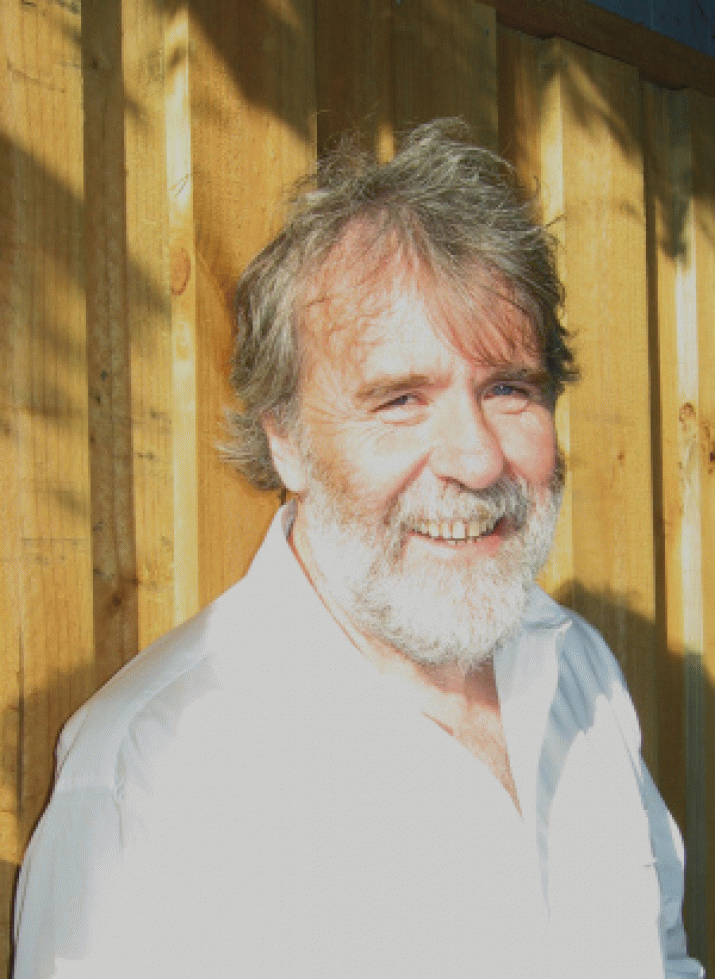
Martin Flanagan is a senior writer at The Age.
• Guardian: Rupert Murdoch succession: reshuffle does nothing to clear up who’s boss