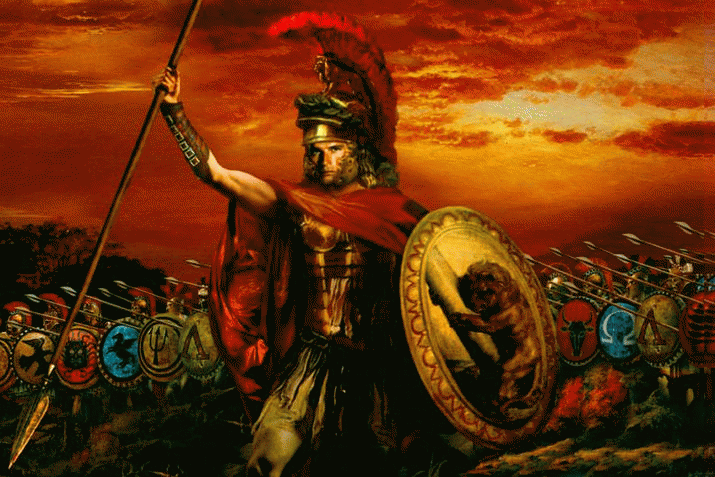
*Pic: All about Alexander The Great, Wikipedia here
The French political philosopher Montesquieu, in his work The Spirit of the Laws, wrote “the Tartars are obliged to put their names to their arrows, that the arm may be known which shoots them”.
In other words, the renowned horseback warriors who formed part of the might of the Mongol Empire would autograph their arrows so you knew who’d shot you when a shaft thudded into your chest. That’s some truth in advertising.
Montesquieu also tells the story of Alexander the Great’s father, Philip of Macedon, who was maimed during a siege and “these words were found on the javelin: ‘Aster has given this mortal wound’.”
This on the other hand, is like mailing a nail bomb to Barack Obama with your return address on the back of the package. Aster was either a fool or a brave man. I’ll go with the latter.
Montesquieu, writing in the 1700s, used these tales to illustrate his thoughts on the grubby business of “anonymous letters” and why we should pay no heed to people who refuse to own the weapon they hurl at another, even if it is just accusatory words.
It’s long been argued when you divorce identity from opinion, not only do you encourage the vile ravings that pollute so much of the internet, the writer’s words become largely worthless.
While anonymity is essential for whistleblowers, espionage and Valentine’s Day missives, most of the arguments you hear from people about why their identity should be protected when attacking another person online are simply cowardice dressed up as probity.
It’ll thus be interesting to see how former Wallaby Clyde Rathbone’s new online venture Karma works out. It’s billed as “a TripAdvisor for humans” or “an open encyclopaedia of reviews and ratings of individuals’ reputation”.
“Karma’s purpose is not to punish, but rather to promote accountability and drive positive change in the future,” Rathbone says, “we believe that Karma could help create more honest and transparent societies.”
The key here is users of the website will have to prove their identity before they can start praising or criticising an individual, which Rathbone rightly insists is the core of accountability, and it’s ugly stepchild, consequence.