The therapy sessions grew in intensity and numbers as the percentage of my aged patients swelled. In my professional years as a counsellor there was a thorny problem which seemingly had no solution to old age … except die as swiftly as possible. What do normal families do with old, worn out, tired, difficult, useless, crabby, expensive, flatulent … and boring parents?
“Oh, don’t misunderstand us, of course we love Mum and Dad,” the concerned counselees always responded quickly as they warmed to the topic of their problematic ‘aged parents’, “it is just that … well, they are getting so … so … redundant. (What I think they meant was ‘unnecessary’.)
“We cannot even plan a decent holiday because one of us has to check on them … and … and they are getting so forgetful. We have to put their pills in boxes so they don’t forget…and then we need to call to see if they took their damn medicines on time.
Dad is 84 and Mum is 82 and they look like they will hang on for a number of years yet. We are at wit’s end.” Such confessions were unacknowledged as deep guilt frequently masked, peppered and flavoured their adult dialogue.
My counselling task was to simply help alleviate the children’s ‘wickedness’ and their concealed irritations that old Mum and Dad had become an age issue. Then the bomb was often dropped. Their parents lived on government pensions. Somehow, parents being ‘pensioned’ was a burden and shame by itself.
Remembered are the tears of guilt, chewing of lips and the red faces of embarrassment as the ‘offended’ counselees recited the problems of caring for their old … really old … parents.
For a bit of background Joan and I have spent the best parts of our lives living on small properties in rural settings, mostly in Tasmania and sometimes in countries like Mexico or The Marshall Islands. We even lived in rural Germany by choice. Our best moments were in our handmade mud mansion in the Australian bush.
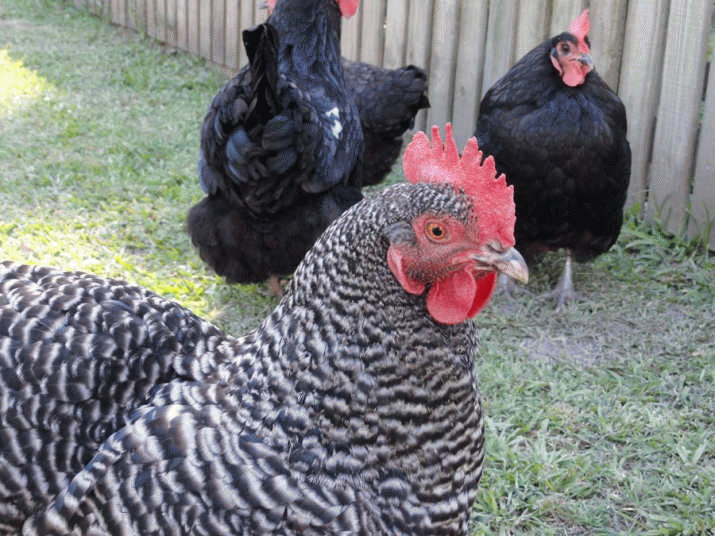
The paramount kindnesses of living rustic were the farm animals: goats, milking cows, geese, turkeys and the myriad of wild animals who cohabited our properties and became common; but especially, the chickens. Chickens, the egg-laying kind, are what we learned to see were really unvarnished and natural humans. Over the years we perhaps lived with a thousand or so. Chooks have no pretence about stealing food from each other, they always fight for advantages of any kind be it sleeping or bathing or scratching in the gardens. Their basic morality is ‘me’, just like many humans.
When one of theirs dies they wait and eat the growing and gathering maggots. They are extreme environmentalists as nothing is left of any value. Chooks find the weakest of the flock and pick on her in order to be closer to Top Chook.
Top Chook is invariably ruthless
Top Chook is invariably ruthless, mean and imperious; sort of the Chairperson of the Board whose top spot on the roosting limb is zealously guarded. Some chooks strut in self-importance, some wish to be left alone and find another place to roost away from the tribe. Others like to just ‘hang around’ the corner drug store and eat what they can and watch the parade.
They are so human-like and comical as they unknowingly act like an important feathered society! Being totally self-interested, their actions reflect not only the chook-condition of the barnyard but imitate the life and style of humans.
And chooks are generous, just like some humans. After they have finished their cute baby period, they move through the large-knuckle period of teen-ages, then they lay eggs. At first, even their eggs are small and cute. Then they get serious and give big eggs … daily!
Now they are paying their way in the barnyard world. They are earning their keep and helping to support the old retired chooks who just laze around and dust-bathe in the sunshine, eating the grains, pellets and hand-outs given freely to them in their retirement.
Mind you, they are not as successful in pushing the young chooks around when the wheat is scattered.
Enter Sweet Joan’s Old Chook Philosophy. Being grandmother of about twenty grandkids she observed many years ago, when we were confronted with dozens of excess (read ‘old’) chooks invading our small farm, ”I cannot kill the old girls … no-one killed me when I quit laying eggs!”
With such a brilliant and undeniably accurate bit of homespun belief, we looked for a solution and discovered an old chook farm where the farmer allowed chook retirees to wander till they dropped. His reward was their droppings. He shovelled, bagged and sold the excreta at the local market. Maggots were sold as fish bait. Good solution. The oldies paid their way during and after retirement! This could become a model for government fiscal policies!
It is this last aspect of ageing that becomes difficult for human society today. Like our chooks we oldies have become a burden on not only our children but also budgets, hospitals, medicine and governments (state and federal).
Stretched pensions are now on the edge of being put in a budgetary column marked “Welfare”. The moment we are moved to that new buttress, watch out, we have become the enemy. As the adage says, “We have met the enemy and he is us”.
Like my former counselees who were filled with guilt concerning the burden of caring for their aged parents, we oldies need to become invisible or easily expendable, but how?
I return to the chicken flock. There are three possible methods to solve the problem of what to do with aged chooks, and by inference, people.
First, we just put them out into a corner of the chook yard and let nature take its course by sheer misadventure but keep up the water to them. In human terms we see this already taking place by the location of many aged-care facilities which are put at the end of the bus line or in small villages with poor infrastructure and meagre hospitals. Who knows the old chooks are even there? We become invisible!
Secondly, before they get too stringy, the old chooks can be euthanized and used on Turkish kabobs. Unfortunately, there is only one human correlation I can imagine for this garrotting exploit. That is to have grandma and grandpa babysit while both parents grind on to pay huge mortgage payments. Second generation babysitting is evisceration.
Thirdly, let the old chooks stay in the chook yard where they can dust bathe, eat bugs and grass and generally enjoy the last part of their formerly productive lives. Bits of kitchen scraps can be given to them when they get too hungry and there are always extras to toss around. Old chooks of Both Kinds do not need much.
They like their old clothes, unmanaged feathers, dust or sagging beds and occasional innocuous presents. They need precious little attention. And they will eventually pass on to that Great Chook Yard eventually with little notice or fuss. Not a big deal … really. Pretend they are not there.
Joan and myself? We have applied for thirty-seven jobs and are expectantly waiting for positive results. One will be in the morning mail. We aren’t dead yet!
*’Chook’ is Australian slang for ‘chicken’.
Buck and Joan Emberg are retired university teachers.