
The Nikitaras brothers’ corner store has a hallucinatory shine, like a set from a period movie. Staff in navy blue uniforms and white net caps smile from behind jars of preserved clementines and glacé peaches, pineapples and cherries. Glass cases present dioramas of stuffed olives, mushrooms and peppers; above them hang fragrant salami; the shelves are packed with Tasmanian wine and crusty loaves. In the fresh vegetables section, greens glisten and truss tomatoes blush. Yet Hill Street Grocer is not some niche big-city organic haven; the shoppers in the aisles are also filling their baskets with canned tuna, washing powder and packets of nappies. This is a West Hobart neighbourhood supermarket, a family grocer the way they used to be.
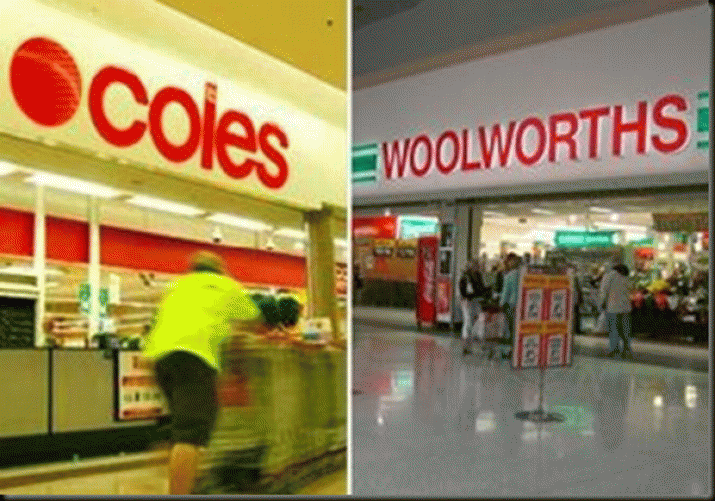
Marco, Nick and Nektarios Nikitaras are simultaneously the throwbacks and the cheeky upstarts of the Tasmanian grocery business. They grew up behind the counters of their Greek immigrant parents’ shops, and Marco and Nick took over this one from Marco’s in-laws. Now a mini-chain, with a second store in Lauderdale (run by Nektarios) and a third in New Town (run by Nick), Hill Street Grocer has its own petrol-voucher discounts and loyalty schemes. It is an island in the highest density of Woolworths and Coles supermarkets in Australia. Look closely, and something has gone amiss with the laws of scale: the checkouts are busier here than at the desperate-feeling Woolworths a few hundred metres away. The fruit is better and cheaper. There is no way this place should exist. Where did it all go so right?
And yet, as if they are magicians and not retailers, in their upstairs office Marco and Nick admit that it’s an illusion. “We win battles,” Marco says, “but we’re losing the war.” They win through the quality of their produce and service, but they are losing behind the scenes, in the farms and the fields, where their supermarket rivals are cutting down their supply options and changing the way Australian food is produced.
A decade ago their region had 12 lettuce growers; it now has two. Across all food production, those who supply supermarkets have enlarged and consolidated, while the others have gone, along with food varieties. “There’s no broccoli, field tomatoes, Roma tomatoes,” Marco says. “There are only two substantial cherry growers. The raspberry growers have consolidated and gone to Woolworths. French beans, runner beans, lots of beans used to be grown, but not anymore. The supermarkets have exact specifications for the fruit and vegetables they want, and if they don’t want them, the growers won’t grow them.”
Woolworths owns the only grocery distributor in Tasmania, which means that Coles imports its produce from the mainland and a small competitor like Marco Nikitaras flies, several times a month, from the food bowl of Tasmania to Melbourne, where he compares prices and seeks better deals. “The situation here is contracting every day. You can’t just go to a wholesaler in Tasmania. They choose you, or not, depending on their existing supply relations with Woolworths.”