I first met this fine young man during a brief social encounter in the Lark Distillery sometime last decade.
I remember it vividly. I was with Donzo ‘The Birdman Knowler’ and – and, as sub-editors on Mercury newspaper – we were sneaking out for a hit of alcohol at supper break, a tradition of journalism which had fallen on hard times.
Hard times because journalism was becoming so debased that ancient traditions of oiling the profession with ale midway through a shift had become frowned upon; smart young incomers and older up-greasy-pole execs frowned upon beer breath and post-supper-break bravado (which often produced the very best headlines); so much so heaven forbid, that the Mercury workplace was, basically, dry; memos flowing from the MD and the Smart New Editor pronouncing that anyone caught with grog would be disciplined.
(I have to confess at this point to a terrible misdemeanour. In the Smart New Editor’s office frig lay a divine Tassie Riesling. It had been there for months (I know because i occasionally snuck a look). One night, parched, with other post-shift carousers, we re-entered Mercury in search of post-closing time grog. I recalled the wondrous Riesling in the Smart New Editor’s frig.
I thought to myself. Mmm a taste would be nice. It was divine and within seconds it had vanished. What to do? Well, obvious, fill it up with water, put the stellan screwcap back on and place it back in the frig, where true to form it would hopefully go unnoticed …. and it did!
I digress. I will be talking solely about James very shortly, honest!
Once, long ago, newspaper offices were not dry and parched.
Once, two decades ago, supper break – at 9.15pm on the dot – was heralded with the Bong.
Not the bong of youth (and one has to confess occasional later age) but the Bong, Bong, Bong.
Let me explain.
The Bong Bong Bong was issued in thunderous tones on the dot of 9.15pm by the gigantic part-Maori Rocky, an intelligent and creative sub from New Zealand, now long dead … and greatly missed, as you miss all rich characters.
A little about Rocky … Rocky was very good at his job. But, what one would term, a character … and journalism used to be full of them. He was memorable for all sorts of reasons; not least for his institution of the bellowed 9.15pm Bong, Bong, Bong. Such was his love of beer that on Sunday nights – with the pubs closed – he would bring in his van in which he had installed a frig; invited guests would sit in the van in the Hobart City Council carpark and drink ale while listening on Rocky’s stereo to his selection of old gospel music … it was after-all Sunday …
Honestly I’ll get to James and his wonderful book, very shortly. Bear with me just a little longer.
Rocky’s Bong Bong Bong preceded a poetry reading from the classics by either me or journalism’s only Honours Graduate in Medieval German Literature Peter Hercus.
Then it was the Hope and Anchor, Maloneys/Montgomerys, The Red Lion (where once the much-loved Guy Parsons threw my book of verse by Gerard Manley Hopkins, brought in for supper-break readings, onto the roaring log fire).
Back to the Lark and the evening I met James. Donzo and I snuck out and installed ourselves in Lark for a quick Moo Brew. And who should I see but friend Paul with a tall young man with a smiling open face. Paul introduced James to Donzo and I … we aled and chattered and James told me that in his life in Spain and Scotland (from where he had recently returned after several years away) he had become an avid reader, and contributor to, a little website I had started a few years before, Tassie Times.
Thus began our rich association.
But before more about that … there is another reason the evening was memorable. Such was the richness of the conversation with Paul and James that Donzo and I ran overtime on supper break. There would be much frowning from our Masters on return.
In our haste to resume duty, we scrambled with some speed up the Lark steps; there was an almighty crash and the Donzo lay in a crumpled heap at the bottom of those three or four steps in the middle of Lark.
Never in my life have I seen a man fall up the stairs; I have seen many men – and the occasional woman – fall down the stairs. Donzo fortunately was uninjured and a little flushed we were able, successfully, to resume our shift. There were severe executive frowns …
Let’s talk solely now about James:
James Dryburgh was born in Scotland in 1981 and moved to Tasmania in 1987. Since 2001, he has lived, worked and studied in Scotland, Spain, Tasmania and Latin America. He now lives in Hobart with his wife Anna and son Santiago.
I said to the Jimbo when he asked me to launch his book … that I was not the best man to do this; I warned him that I would go off-topic and ramble narcissistically.
The best man to launch this book, I said to James, is Pete Hay, poet and academic.
So as punishment to James for choosing the wrong man I shall quote at length poet and academic, dear Mr Hay, because he best summarises this superb collection of writing, in his Foreword to this book.
By the way, I am very familiar with much in this book … as much has first run on www.oldtt.pixelkey.biz over the years …
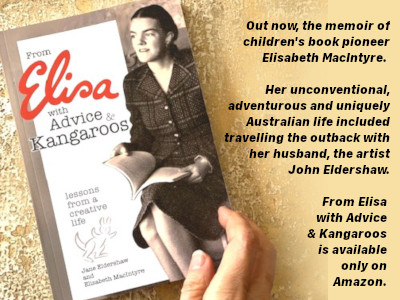
In his forward to this wonderful book – dontcha love the cover – Pete writes:
“We live in cruel times, times in which rapacity is configured as a virtue, when endless, anything-goes personal accumulation is valorised, deemed the supreme goal of human endeavour. Greed is good. Compassion is passé. A refuge, this latter, for the weak of mind and the emotionally soft who can’t make it in the ruthless cut and thrust of the roaring market. A value for losers.
The hard-heartedness of our times manifests in contempt for appeals to social and environmental justice. ‘Fairness’, ‘dignity’, ‘sustainability’ are arcane words belonging to a time
past. An abstract economic engine is all that matters now; development uber alles, along with massive private wealth accrual for the small few in whose interest this works, and that is anything but abstract. The most prominent enthusiast of the ascendant hard-heartedness is the Liberal Party of Australia, and we have decisively elected it all over the country. Our new Liberal governments are led by men who feel little need to soften the expression of their shrivelled-up moral code in what they say and what they do.I live in Australia’s small island state, a land of soaring natural beauty and wonderful knockabout people – yet it is mired within one of the most poisonous political cultures in the ‘democratic’ world. Its public realm is impoverished, its organs of cultural expression marginalised and declining, its mainstream media outlets (with one or two embattled individual exceptions) compliant, complacent, unreflective and unimaginative. The space for critique, for disinterested analysis, for negative feedback – the definitive qualities of democracy its very self – melts away, maintained only by a few people who stoutly insist that these things matter, but whose exclusion from the island’s closely policed avenues of influence renders them mere voices in the wilderness. Sometimes literally.
This is the context in which James Dryburgh lives, works and writes. The results are collected here. They amount to a visceral reminder that justice matters – that, indeed, it is
through our empathetic mergence in the stream of life, human and non-human, that our own species being is realised.We should all read this book. To do so is to encounter a prose of power and a fearless critical intelligence. This book is what the beautiful island’s incongruously deformed public life so desperately needs. I wish it a deep and fruitful absorption into the hearts and minds of my island’s folk.”
I want to talk, briefly, about an essay which really moved me … The Nature of Death, about the tragic early death of James’ friend Leon, while kayaking a river in California,
As i read this I remembered a Pink Floyd Song from so long ago: Shine On, You Crazy Diamond, about a loved early inspirational member of the Floyd, Syd Barratt:
The Lyric in my humble opinion is partly about Leon:
“Remember when you were young, you shone like the sun.
Shine on you crazy diamond.…
You reached for the secret too soon, you cried for the moon.
Shine on you crazy diamond.”
I think James’ summation of his own grief at the death of Leon is beautiful, and powerful:
“Nature is all about life. The very word comes from the Latin nasci (to be born). Yet almost instantly, Leon’s death stirred in me sleeping notions of the natural world. A few long weeks after he disappeared underwater, the river still hadn’t given up his body. I was ill with grief. In the north of Peru – exiled from the solidarity of communal mourning – these words dripped into my diary:
It has been a strange and difficult few weeks dealing with the loss of my oldest friend Leon from afar. We’ve lost a special one, to a river, to nature. Fragile and pensive we made it to Peru, thankful for the warm welcome the country had given us. Another grieving friend, who watched Leon disappear, recommended I seek solace in the natural world. The following night I awoke from a dream in which I was writing the words: ‘Take time to sit with Mother Nature. Let her embrace you, converse with her. Let her family of millions surround you.’
“Many of the greatest times shared were in the midst of the natural world – hiking, mountain-biking, jumping off cliffs into the ocean – so it seemed fitting that my memories of Leon should arrive framed by natural scenes. But it was more than this. Like forest reclaiming a ruined village, my mind had been captured and entangled by nature.
“Then I wondered if, drifting about the Andes, the spirit of Pachamama was influencing me and that perhaps it was really something more specifically human going on. Maybe death and subsequent grief strips us of all we’ve created, all the clothes of progress, and returns us to our most fundamental – an intelligent animal in the wild. Jolted by the raw power of humanity, was it nothing more than a sharp reminder of the complexities of thought and feeling that make us human?”
… ‘within the natural world we find a reality less contaminated, manipulated, deluded – as pure as sadness or joy. Perhaps it is when we converse with nature that our memories are most able to awaken and return to the heart. Memory alive in leaf, stone and water – our story flowing like the river, shaping and shaped by all it touches’.”
James …
You can buy a copy of James’ book here:
http://jamesdryburgh.com/books/essays-from-near-and-far/