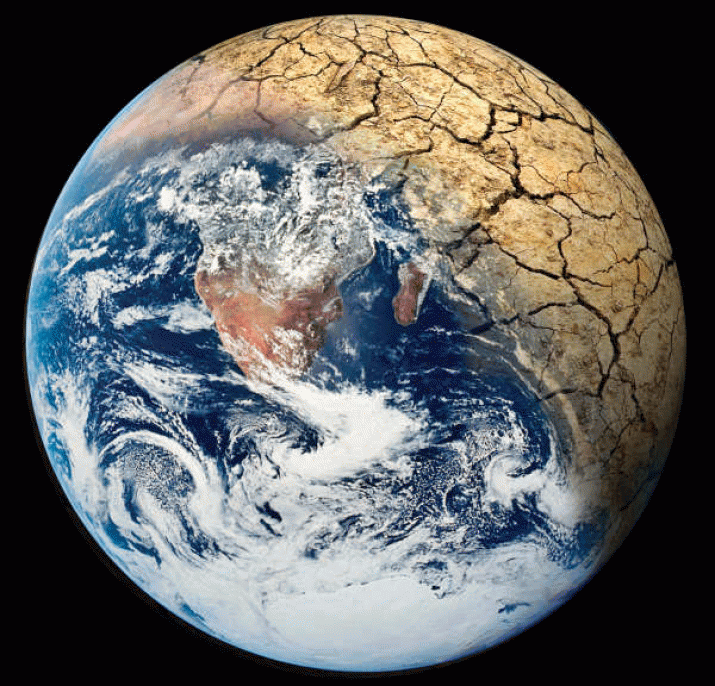
Reptile, bird and mammal species set to vanish along with Kakadu wetlands by end of century, scientists’ report reveals …
Australia is expected to experience a 6C average temperature rise on its hottest days and lose many reptile, bird and mammal species as well as the renowned wetlands of Kakadu by the end of the century, the latest Intergovernmental Panel on Climate Change report (reveals today).
IPCC figures obtained by Guardian Australia show that Australia will experience an average overall increase of 2C by 2065, with that figure slightly lower at the coast. Beyond that, the temperature is expected to rise another 3C-4C by 2100.
The number of days that don’t fall below 20C is projected to rise to 100 a year, with most of these warmer days in the north and on the east coast.
Rainfall patterns are set to change, with annual precipitation, humidity and cloud cover predicted to decrease over most of Australia. But for north Australia and many agricultural areas, rainfall is predicted to get heavier. Soil moisture will decrease, mostly in the south of the country.
These changes will have a significant impact on many aspects of life, according to the comprehensive report, which is released every six years after input from hundreds of scientists around the globe.
In Australia, an increase in the frequency and intensity of heatwaves is expected to lead to more heat-related deaths, while warmer temperatures, changing rainfall and an influx of pests will “negatively impact” many temperate crops, such as fruit and nuts.
Rising sea levels will affect coastal developments and risk causing “extensive loss” of wetland habitat through saltwater intrusion in the celebrated Kakadu national park in the Northern Territory.
A 2C-4C rise in average temperatures will wipe out 21%-36% of Australia’s butterflies, while the loss of nearly half of appropriate habitat in Queensland will spell doom for 7%-14% of reptiles, 8%-18% of frogs, one in 10 birds and 10%-15% of mammals.
Australia has warmed by 0.4C-1.25C since 1901, with most of the rise taking place in the centre of the country.
Globally, there has been a 0.89C rise in average temperatures since the start of the 20th century, the IPCC findings state. There is now a 95% certainty that humans, through the burning of carbon intensive fuels, are responsible for most of the warming.
To keep average global temperature rises below 2C – the internationally agreed upper limit of warming – greenhouse gas emissions will need to be cut by 10% a year, according to the report.
• Guardian: IPCC climate change figures: then and now – interactive
From the world population total to the global temperature mean, find out what has changed since the 2007 report from the UN’s climate panel, the IPCC. Click on the arrow at the bottom of the screen to take a tour of the facts and figures • Guardian: Here
• The Age: Australia has ‘much to lose’ from climate change
• Meanwhile … The First-Ever Bulk Freighter To Pass Through The Arctic Was Carrying Coal