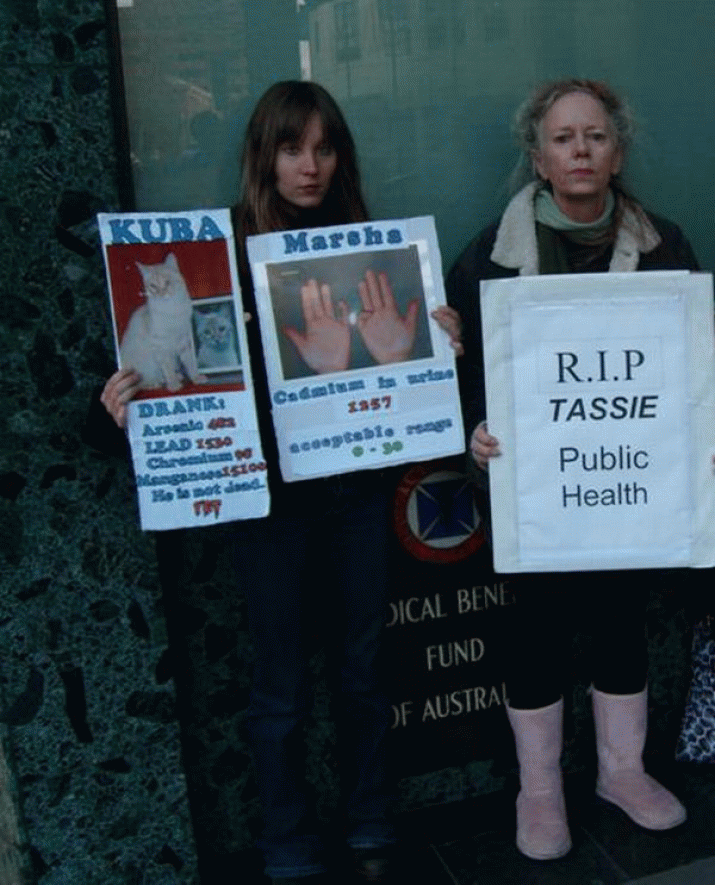
The Toxic Heavy Metals Taskforce Tasmania has recently received a confidential document sent to GPs who have been treating several patients who were diagnosed with heavy metal poisoning by specialist Dr Andreas Ernst.
The letter was sent to the GPs by the Director of Health, Dr Roscoe Taylor, on the 12th March 2010 attached to reports on each patient from Professors Braitberg and Daly.
At the end of this letter from Dr Roscoe Taylor to the GPs it states:
‘If you are no longer seeing this patient, please contact Xxxxxxxx Xxxxxxx on XX XXXXXX as soon as possible’.
At that time (the person named), a lawyer, was working with the DHHS but is now working with the Justice Department.
Our Taskforce wants the Director of Health to publicly explain why he has requested that GPs contact a lawyer in his department to advise if a patient has moved away from their practice.
According to advice we have received from several GPs in Tasmania, not one of them has ever received a letter from the Director of Health requesting this type of information be sent ASAP to a lawyer in his office. They have never heard of this request being made of any other GPs.
We want the Director of Health to explain why he needs to know this and in what capacity Xxxxxxxx Xxxxxxx was acting in to receive this information.
Most importantly we want Dr Taylor to please explain if Xxxxxxxx Xxxxxxx had been instructed to inquire which new practice the patients were going to be transferring to, after being contacted by any GPs about his request for notification of this information?
Our Taskforce considers that Dr Taylor’s actions amount to tracking and surveillance of citizens and we think that this is reprehensible conduct on behalf of Tasmania’s Chief Health Officer.
If Dr Roscoe Taylor was genuinely concerned about our health, and other Rosebery residents, then he would have conducted a thorough and independent public and environmental health investigation in Rosebery as we have repeatedly called for over many years.
Premier Lara Giddings needs to call Dr Roscoe Taylor into her office at once and ask for a very good explanation for his actions — which are interference with Doctor-Patient relationships, have affected the relationship between two patients and a GP and constitute total invasion of our privacy.
“We want Premier Giddings to make a public statement about the outcome of her discussion with the Chief Health Officer of Tasmania about his explanation for his conduct, ” said Kay Seltitzas.
Below, copy of letter from Dr Roscoe Taylor to GPs:

*Main Pic: Kay Seltitzas and Marsha Stejskal outside Dr Roscoe Taylor’s Office.
• Why the secrecy Dr Taylor over the toxicologists reports?
Dr Roscoe Taylor requested to the GPs that his correspondence and Professor Braitberg and Daly’s reports on the ten patients diagnosed by Dr Andres Ernst not be given to the 10 patients. Why would he not want us to see these reports? The level of secrecy involved in Dr Taylor’s discussion with our GPs is more than highly questionable. It is only because we received copies of the reports by Professors Braitberg and Daly that were were able to conduct a thorough review of the reports and the information they based their reports on which was provided to them by Dr Roscoe Taylor.
In our Critique of the reports by Professor Geoge Braitberg and Professor Frank Daly we stated:
Professors Frank Daly and George Braitberg based their assessments on ten patients from
information provided by the DHHS from previous investigations, medical reports, data, test
results and files. The conclusions in their reports based on the information provided show
numerous errors of fact and incorrect assumptions:
Conclusions drawn were made from incomplete, flawed and deficient DHHS and
EPA investigations.
Assumptions on possible diagnosis were made without patient consultations or
examinations.
Assumptions on possible diagnosis were made without access to up to date
medication lists, accurate medical reports, documentation, correct data and
specialist/ diagnostic test results
Incorrect attribution and analysis of data
Conflicting findings between Professor Daly’s and Professor Braitberg’s Reports.
Other than problems described in our patient specific analysis of the reports there are general
examples in the reports that point to inconsistencies and flawed analysis:
TT readers can read for themselves the comprehensive analysis that we were able to produce on Professor Braitberg and Professor Daly’s reports which were based on the information provided to them by Dr Roscoe Taylor.
Why would Dr Taylor not want us to see these reports – because we might review them?
Download:
THMTT_Critique_Of_Toxicology_Reports_.pdf
• Dr Alison Bleaney, in Comments: I cannot fathom why the letters shown did not get copied to the individual patients; why the GPs did not apparently discuss the letter from DHHS with the patients, and why an unknown third person should be notified by the GP, unbeknown to the patient, if the patient is no longer a patient of the GP. What indeed did this mean to the actual care given to the patient by all parties?
• Dr Alison Bleaney, in Comments: #29 It is common these days for routine specialist doctors letters to be sent to BOTH patient and GP. The patient is entitled to have copies of their pathology and see their medical files. Communication is then kept open. However this letter was not routine and was not from a doctor who had examined the patient and yet had toxicologists’ reports about the patient (they had not examined the patient either). Perhaps in this case the need for transparent communication could be seen as crucial to ongoing relationships between the affected parties?