


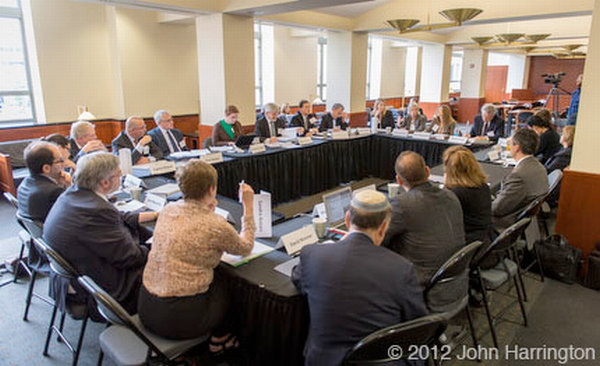
The parties to the Forest Agreement are to be congratulated on their achievement. In addressing the ability of the process to represent all, raises the quation of what is appropriate process?
Some time in the past Tasmanians settled on representative democracy with all its strengths and weaknesses for government. Despite having tried for many years to govern forest use, our elected representatives have come to the view that they are not close enough to the issue to synthesise a lasting solution to the conflict. It seems quite appropriate that they handed solution to the main stakeholders (although one can be puzzled as to why the Tasmanian Conservation Trust did not feel they were represented by Environment Tasmania).
Such delegation by parliament is an interesting innovation in developing solutions to complex issues.
The shared future vision appears be a key tool for raising the conversation above the seemingly implacable and complex differences around the table. If we are to have peaceful and respectful community, we need to get used the idea of holding the tension of difference between stakeholders; as a creative space in which to synthesise solutions that satisfy a previously developed shared vision of the future. On the face of it, we are reminded by this agreement, not to underestimate this power of shared visions of the future to take us out of
the ego space that can trap us all in old patterns of thinking.
Implementing the Forest peace legislation successfully equally will be a question of the stakeholders working to a shared future vision. Working with a process that allows many minds to focus on solutions to that end. A process that must be scoped to embrace not only the technical but the psycho social challenges that any new institutions must deal with.
Challenges that were never addressed by previous planning processes such as the RFA; consequently allowing self aggrandisment, tacit bribery corruption, collusion and deceit to run rampant in the dark corners of poorly designed and unreflective Tasmanian institutions.
Let’s be realistic; existing institutions have failed us, in part because their design had inadequate safeguards agains human and in part because their processes were too narrow to embrace the complexity and magnitude of contemporary needs we have of our forests.
In implementing the new legislation our elected representatives would be wise keeping the process of developing new arrangements at an arms length.
Incorporating a Tasmanian chapter of the Forest Stewardship Council may provide the forum required.
The conversation between stakeholders needs development!
*Duncan Mills is a Social Ecologist concerned with how we learn from experience and deal with change both as individuals and as a community. An environmentlist and
retired farmer, he is familiar with the land use dilemmas society faces. He lives on a forest block near Cygnet.










