

Only 4 of the Tasmania’s 33 catchments do not have plantations … and plantation acreages are increasing rapidly.
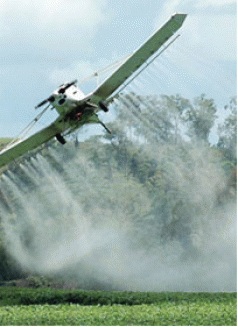
The need to very carefully examine the use of aerial spraying of pesticides, particularly all the endocrine disruptors and persistent organic pollutants, in Tasmania, is of great importance, especially with the comment from Forestry Tasmania: “All instances of detections (of pesticides) are associated with aerial operations. There has been no reason determined as to why this occurs.”
Frankly, we are surprised that Forestry Tasmania has not determined why this occurs, as even endosulfan from the NSW cotton fields is picked up at Cape Grim!
The position of the BODCRG and TPEHN is that NO aerial spraying of pesticides should be allowed in Tasmania- and it is in our original submission to State Government 2005 on Review of Code of Practice for Aerial Spraying of Pesticides.
When DPIWE stated in 2008 that it was proposing a 10m border along all waterways would be pesticide free for any pesticide i.e., zero-tolerance for pesticides 10m from edge of waterays, BODCRG
congratulated Minister Llewellyn, as we realised that this in effect would mean the cessation of all aerial spraying in water catchments. Apart from a letter which implied that we were being deliberately mischievous, we have had no public pronouncements from the Gvt/DPIW since that time.
Aerial spraying of pesticides/toxic chemicals should never be allowed in a small island State, with the topography and weather patterns etc such as exist in Tasmania.
Download: 5-05_ReviewoftheCodeofPracticeforAerialSprayingFDcomments.pdf
Dr Alison Bleaney – TPEHN / BODCRG










