Politics
Cruel and abusive practices at Chinese zoos, says new report

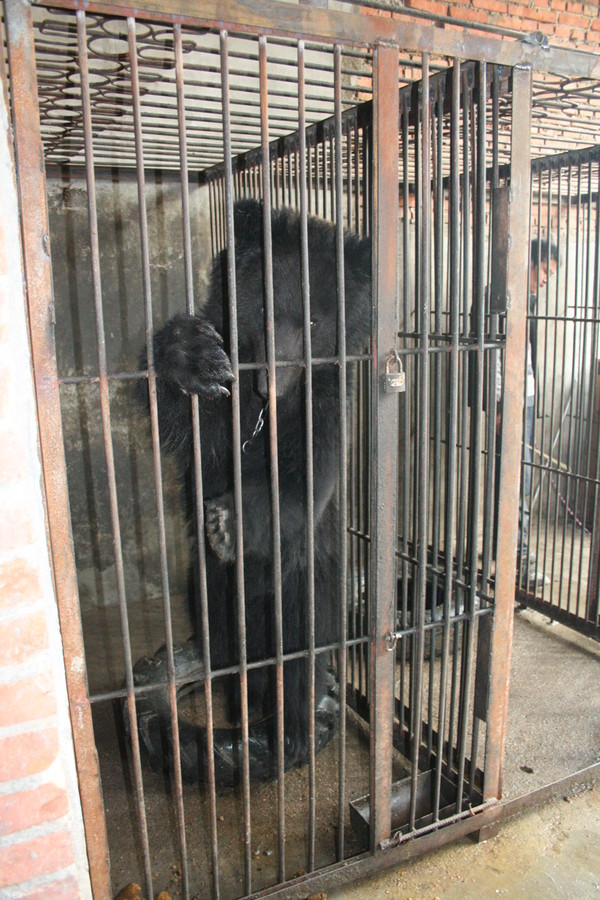

Bears being punched and beaten with sticks and forced to box each other, elephants being jabbed with metal hooks to force them to stand on their heads, and tigers and lions with their teeth and claws removed, causing chronic pain, are amongst the findings of investigations at China’s zoos and safari parks, carried out by Animals Asia Foundation.
A report released today entitled “Performing Animals in Chinese Zoos” details the findings of the investigations carried out at 13 zoos and safari parks in China between September 2009 and August 2010. Animals Asia’s Animal Welfare Director, David Neale and a team of Chinese investigators have documented in the report and, a short film, the barbaric treatment of animals and the poor living conditions they are forced to endure.
A large number of captive animal establishments in China provide animal performances as a form of entertainment for visitors. The techniques used to force such animals to perform tricks are cruel and abusive. Starting with young animals, trainers often beat them until they perform a desired trick. Showmen frequently engage in negative reinforcement, whipping and striking the animals repeatedly, forcing them to carry out tricks that go against their natural behaviour.
Many big cats used in animal performances have had their canine teeth either removed or cut back to gum level and are de-clawed to make them defenceless. Detoothed lions and tigers were evident at 5 of the 13 parks surveyed. This practice causes severe and chronic pain owing to the exposure of the pulp and nerve endings, and leads to potential infection of the surrounding area, including gums, jawbone and nasal region.
The short film, entitled “The Performance” has been produced in conjunction with Environment Films to document the cruelty seen at these parks and zoos. The film is narrated by Terry Waite CBE, with music by Moby, and is available on the website of Environment Films from today (link below).
The animals are housed in small, barren, concrete enclosures often in darkened rooms at the back of the performance areas away from the visitors. The living conditions for performing animals fail to meet their basic welfare needs. Many of the animals have no visible access to water. Animals have no access to a shelter to hide from individuals within their enclosure, and no attempts are made to meet the behavioural needs of these species.
David Neale, Animals Asia’s Animal Welfare Director commented:
“Animal performances portray the animal to the public in a humiliating way that does not promote empathy and respect. There is little educational value in seeing animals in conditions that do not resemble their natural habitat. Teaching animals to perform inappropriate tricks does nothing to educate the public or foster respect for animals. These performances teach the public nothing except for the animals’ size, shape and colour”
This report follows the recent news that the Chinese government is launching a campaign to stop the maltreatment of animals that are held for public display. According to a government statement released on 29 July, The State Forestry Administration (SFA) has accused companies staging animal shows of excessive attention to profit-making, resulting in maltreatment and early death of animals.
Summary of findings
• Asiatic Black Bears are the most popular performance animal, present at 90% of parks;
• 75% of parks visited exhibit performing monkeys;
• 75% exhibit performing tigers;
• 50% exhibit performing sea-lions;
• Five have bird performances; four exhibit performing elephants and two have a dedicated dolphinarium for marine mammal performances.
During the wild animal performances animals are forced through fear, intimidation and in some cases physical force to perform unnatural tricks:
• 75% of parks visited force bears to ride bicycles;
• 50% force bears to perform acrobatics on acrobatic rings;
• three force bears to ride a motorbike over a high wire 30ft above the ground;
• two force bears to ‘box’ with each other;
• one exhibits a human wrestling with a bear;
• 75% force monkeys to ride bicycles;
• 50% monkeys to perform handstands on the horns of goats, often while the goat is balancing on a tightrope some 10ft above the ground;
• the most common tiger acts force tigers to walk on their back legs, jump through hoops of fire and walk on top of large balls;
• Elephants were seen at four parks performing humiliating tricks such as standing on their heads, and spinning on one leg.
Of the lesser-seen animal acts, two parks force pigs off the end of 10ft high platforms into water, and one park exhibits monkeys and dogs jumping over the backs of hippopotami.
Report available on request
The film will be available to view here from 10 August 2010:
http://www.environmentfilms.org/EF/Animals_Asia_The_Performance.html
Methodology
From September 2009 to August 2010, Animals Asia investigators visited 13 safari parks and zoos across China to document wild animal performances. The information and photographs obtained from this investigation are summarised below. Video footage taken during the investigations has been used to produce a short film entitled ‘The Performance’ available via the Animals Asia website www.animalsasia.org
Animals Asia Foundation was founded by Jill Robinson MBE in 1998 and is devoted to the welfare of wild, domesticated and endangered species across the region. Animals Asia is an Asia-based government-registered organisation headquartered in Hong Kong, with offices in Vietnam, the UK, USA, Australia, Germany and Italy and Moon Bear Rescue Centres in China and Vietnam. It has more than 260 staff worldwide.
Our flagship project, the Moon Bear Rescue, involves the ongoing rescue of 500 suffering and endangered bears from bile farms in China and 200 bears in Vietnam. Our companion animal campaign Friends….or Food? focuses on finding solutions to end cat and dog eating in Asia, through our pioneering Dr Dog and Professor Paws programmes that promote animals as ambassadors; working with local groups and communities to effect change from within; and lobbying government departments for comprehensive animal welfare legislation. We also undertake education in schools, and various projects that seek to end wild animal performances in Asian circuses, and endorse “Healing without Harm” principles of traditional Asian medicine.
Further information can be found on our website: www.animalsasia.org
Tim Robinson PR Manager Australia & New Zealand Animals Asia Foundation