Media Release:
23/07/2010
Australia has a huge opportunity to reduce carbon emissions through protecting native forests
A cheap, practical and community supported means of making deep and early cuts to Australia’s Greenhouse Gas reduction targets is by protecting native forests, The Wilderness Society said today.
Research from the Fenner School of Environment and Society at ANU in 2008 found that around 9.3 billion tonnes of carbon can be stored in the 14.5 million hectares of natural eucalypt forests in south-east Australia if they are left undisturbed.
The Wilderness Society spokesman Vica Bayley said through protecting native forests, as was currently being attempted in Tasmania, Australia could significantly reduce carbon emissions and increase its current international commitments.
“Native forests are natures’ own carbon capture and storage option and we need government to recognise this and protect native forests so Australia can reap the climate benefits.
“In Tasmania we’ve been working on ending the old fights over the protection forests, by acknowledging that the protection of native forests can contribute to reducing overall national carbon emissions.
“Unsustainable native forest timber industries have been rejected by the markets. Protecting native forests has been recognised as a means of both reducing our carbon emissions and ensuring we can have timber industries based on sustainably managed plantations.
“Australia made a commitment at Copenhagen to reduce carbon emissions by 5 per cent. We could significantly increase this target through protecting forests. Few people are aware that Australia has some of the most carbon dense native forests in the world.” added Virginia Young, national spokesperson for the Wilderness Society.
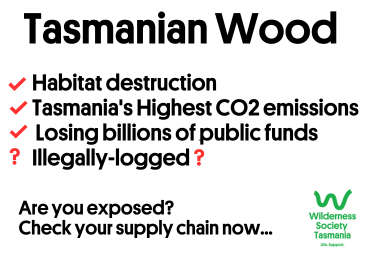
In areas such as the Upper Florentine and Styx Valleys in Tasmania, forests can store up to 1400 tonnes of carbon in a single hectare. When we log, woodchip and convert native forests to paper most of the previously stored carbon is released into the atmosphere within 3 years.
“We have massive opportunity here to reduce Australia’s overall carbon emissions by protecting our natural environment, And, we can do it now,” concluded Mr Bayley.
Vica Bayley, The Wilderness Society