A 100,000-hectare Special Timbers Zone will deliver resource security and benefit the more than 10,000 Tasmanians who are involved in the special timbers sector, Managing Director Bob Gordon said today.
The zone has been established as part of Forestry Tasmania’s Special Timbers Strategy, which will underpin management and sale of special timbers for the next decade.
The strategy sets three key objectives for the management of Tasmania’s special timbers:
– Sustaining the resource
– Maximising value recovery
– Promoting Tasmania’s special timbers to the world
Mr Gordon said the highlight of the strategy, which was launched today, was the 100,000-hectare Special Timbers Zone.
“This strategy recognises the significant contribution the special timbers sector makes to the state. The Special Timbers Zone will ensure the long-term supply of this resource to the Tasmanians who depend on it for their livelihoods.
“Special timbers are an integral part of the Tasmanian ‘brand’, and are renowned around Australia and the world for their quality and beauty.
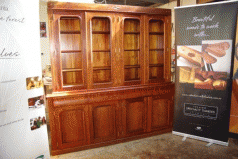
“The special timbers sector is characterised by a significant degree of downstream processing, such as fine furniture making, joinery, boat building, giftware and musical instrument making.
“The manufacture and sale of high value products from special timbers provides employment for more than 2,000 Tasmanians and generates about $70 million for the state each year.
“A further 8,500 people use special timbers in woodcraft activities as a hobby or on a limited commercial basis.”
Mr Gordon said Tasmania’s special timbers were among the last premium timbers being produced from public forests in Australia.
“As they are sourced from forests with many conservation values, predominantly old growth forests, it is essential that this resource is managed to maintain a balance between biodiversity and production values.
“This strategy will ensure biodiversity and habitat are maintained through conservation reserves on state forest, which include 25 per cent of Tasmania’s one million hectares of reserved old growth forest.
“The zone will ensure maximum resource recovery and continued presence of special timbers within regenerated stands, which will be regrown for at least 200 years.”
Mr Gordon said non-clearfell harvesting methods would be used within the zone as much as possible, although healthy forest regeneration and the health and safety of forest workers would remain the primary objectives.
“The strategy will also maximise the value of special timbers through the training of Timber Classification Officers to recognise ‘feature grade’ specifications, increasing contractor skill levels, and improving harvesting practices.
“Increased knowledge of market trends and identification of commercial opportunities are also central to the strategy, as they will ensure that special timbers are marketed to their maximum value.”
The Special Timbers Strategy was released in draft form in 2009, and the document released today incorporates feedback from stakeholders and the broader community.
Pictures: George Harris