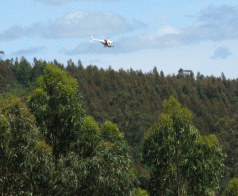
The insecticide intended to be sprayed is Dominix Duo (alpha-cypermethrin – a very toxic synthetic pyrethroid), an endocrine disrupting chemical (EDC) as well as being a neurotoxic and immune system modifier.
See http://www.endocrinedisruption.com/pesticides.permethrin.summary.php
‘Conclusion :The overall pattern shown in Figure 1 reveals a broad range of possible health effects of permethrin. Notably, permethrin appears to exhibit the characteristics of an endocrine disruptor, based on effects found in the female and male reproductive systems. Endocrine disruptors are chemicals that interfere with the communication system of glands, hormones and cellular receptors that control how the body is constructed from conception to birth, and how it functions throughout life. The classic pattern of endocrine disruptors is that they show adverse effects at extremely low doses, even when higher doses show no effects. Disorders that have increased in prevalence in recent years such as unusual male gonadal development, infertility, ADHD, autism, intellectual impairment, diabetes, thyroid disorders, and childhood and/or adult cancers are now being linked to prenatal exposure to endocrine disruptors. In addition, the studies that demonstrated impairment of white cell production (thymocytes, T-cells, and lymphocytes) cannot be ignored in light of the increasing prevalence of immune and autoimmune disorders such as multiple sclerosis, lupus, Crohn’s disease, Type 1 diabetes, and rheumatoid arthritis. In sum, permethrin exists in our homes, on our food, where we work and where we play, and now even in the clothing we wear. Its effects are not immediately obvious, making it appear harmless. However, like many other chemicals we have learned not to fear, it has the potential to cause long term damage to critical systems, including the developing systems of our children. People who are particularly susceptible to the effects of permethrin include children, pregnant women, and people with compromised immune systems or liver problems. Until research proves otherwise, we must be aware of, and use caution, in exposing ourselves to the potential harm caused by permethrin.’
The Endocrine Society Statement (June 2009) recently supported by the American Medical Association, states that no exposure to EDCs is considered safe as parts per trillion exposure can and does cause adverse effects – see above.
Aerial spraying is well known to be the method of pesticide application which produces maximal spray-drift pollution away from the area of supposed application; spray-drift can easily travel many kilometres. It has been mostly removed in many countries – such as the EU – for this very reason.
Why then does our Government condone and continue to allow aerially spraying of very toxic pesticides including this EDC along with hydrocarbons, latex and alcohol ethoxylate (known to be toxic to respiratory systems) onto plantations in water catchments (where people live), from helicopters at 45m above ground level with drift and movement of pesticides onto waterbodies, soil, air, bystanders, animals, crops…
Minister for Health (Lara Giddings) has just said that 3 out of 4 people in Tas have chronic diseases and because of this they cannot work [Lara Giddings says three out of every four Tasmanians suffer from a chronic health condition like cancer, cardiovascular disease, asthma and diabetes (Damien Brown Mercury 7/12).]
The Tasmanian Government can act on this NOW – if they want to. They are responsible for what happens on any of their ground and air, to any of their people from these practices.
Why are they continuing to allow companies to continue with this extremely un-safe practice which can only add to the disease and suffering in Tasmania?
Dr Alison Bleaney
ABC Online
Aerial spraying halt urged
Posted December 16, 2009 09:27:00
Updated December 16, 2009 14:26:00
Gunns says it meets tough government regulations on spraying. (ABC News)
Map: Diddleum Plains 7259
There are calls for the Tasmanian timber company Gunns to abandon aerial spraying of timber plantations this summer in the state’s north-east.
East Diddleum resident Chris Calverley lives 400-metres from a Gunns plantation near the headwaters of the St. Patrick’s River.
He says he was recently notified by the company that it is considering spraying the plantation with insecticides by helicopter this summer.
Mr Calverley is concerned his water supply will be contaminated.
“I’m concerned for the health and welfare of my family,” he said.
Greens MP Kim Booth says streams known to support the threatened freshwater crayfish run through the plantation.
He says the chemicals Gunns uses are toxic to crustaceans.
“It’s not possible to spray in this area without contaminating the water supply,” he said.
A Gunns spokesman says there is no immediate plan to spray the area and Gunns fully meets the government’s tough regulations on aerial spraying.
Tags: agricultural-chemicals, pest-management, timber, tas, diddleum-plains-7259