On a trip to his ancestral homeland, John Rozentals discovers a famous namesake and the world’s finest collection of Art Nouveau architecture.
Pictures: SANDRA BURN WHITE
FOR most visitors to Latvia, the search for 12 Alberta Iela, on the northern fringe of Riga’s CBD, and the struggle up some eight floors of steep, narrow stairs to the Janis Rozentals & Rudolfs Blaumanis Museum, would be low on the list of priorities.
Admittedly, Blaumanis was a celebrated writer and Rozentals was probably Latvia’s greatest artist, but the former’s fame was largely restricted to his native land and you can certainly see much more significant examples of the latter’s work in the Latvian National Museum of Art, just a couple of blocks away in Esplanade Square.
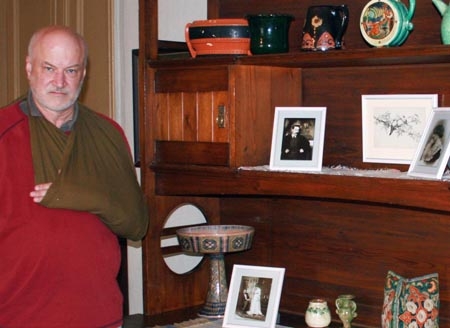
For me, though, the lure of these few small rooms was compellingly magnetic. As well as sharing ethnicity, Janis Rozentals and I share our names, or at least we did until my parents, probably rightly, decided Australian school life in the 1950s would be easier for John than for Janis.
It’s extremely unlikely we’re related, but I did feel strangely comfortable browsing through the apartment where my namesake had lived a century ago, and sitting for a few minutes on a couch he would have spent many, many hours resting on.
There’s a much stronger connection, though, between Janis Rozentals and this part of Riga than just an apartment.
Rozentals was one of leaders of the Art Nouveau movement, which flourished in Europe around the turn of the 20th century and deeply influenced design in general and architecture in particular.
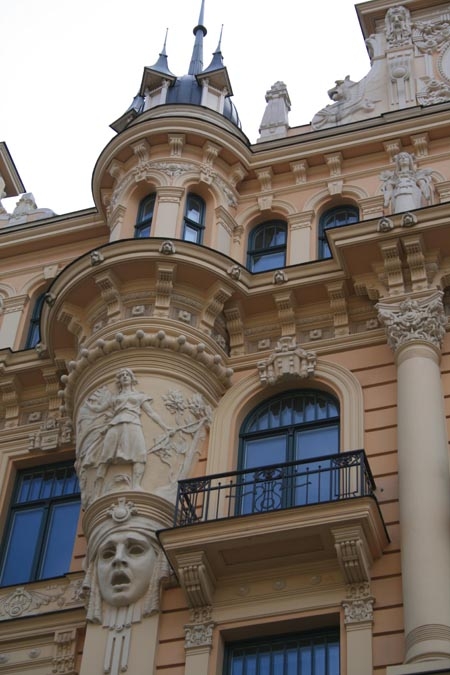
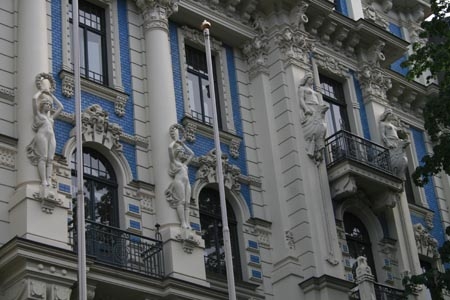
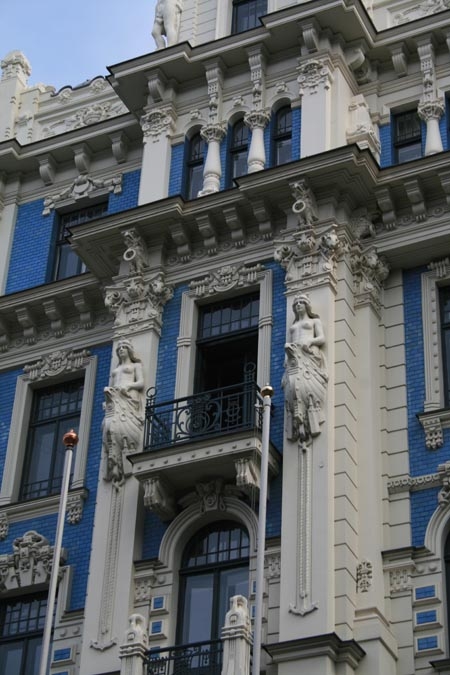
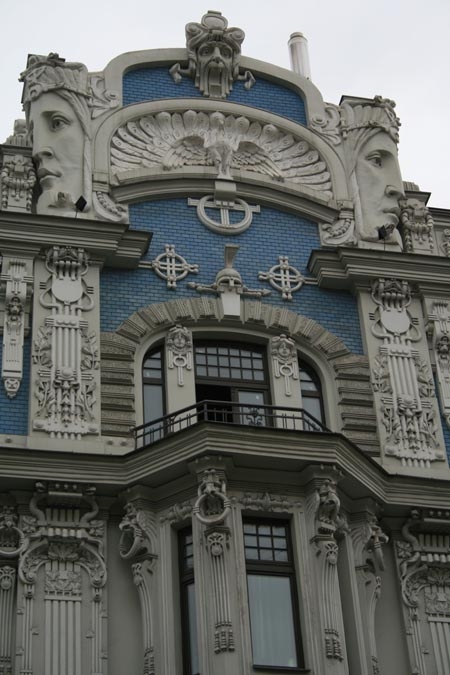
Nowhere was that architectural influence felt as deeply as it was in Riga. The precinct centring on Alberta Iela (“iela” is Latvian for “street”) and including Elizabetes Iela and Streinieku Iela, is widely recognised as having the largest and finest collection of Art Nouveau architecture in the world.
Yes, the world — better than in Paris, Berlin, Moscow and St Petersburg, cities also widely recognised as Art Nouveau centres.
I laughed with sheer joy as we entered Alberta Iela, overwhelmed by the absolutely over-the-top beauty of the buildings and the totality and consistency of the streetscape.
Despite a century of wars, invasions, social unrest and the economic fundamentalism of the Soviet era, the buildings here have survived intact. And the short-lived economic boom times of the early 21st century provided the city’s new-found financial aristocracy with the funds for their meticulous restoration to the grand apartments they once were — or transformation into professional offices, corporate headquarters or national embassies.
Themes of ancient Greece and Egypt, nature and ravishing female beauty seem to dominate. Sometimes, every floor, even every balcony and window, has an individual motif. It is, quite frankly, a spectacular visual delight and the makings of an artist’s or architect’s dream tour.
Alberta Iela is within easy walking distance of many of Riga’s downtown hotels, but one of the best nearby is the Reval, on the corner of Brivibas Boulevarde and Elizabetes Iela.
From its upper levels there are stunning views over the medieval gems of Vecriga (“Old Riga”), the nearby gardens, churches and the broad Daugava River, which wends its way to Riga and the Baltic Sea through the flat Latvian countryside from the industrial city of Daugavpils, near the Russian border.
Make sure that you get a city-view room, though. The outlook from the backside is far less attractive. The rooms are comfortable and well equipped if not grand, the service can be a bit off-hand, but the location is spot-on and the views sublime.
In nearby Vecriga, try the tiny, boutique Hotel Ainavas. It boasts no views, but it’s thoroughly charming, it’s central to the attractions of the medieval city, and the service is absolutely friendly.
Several years ago, hotels such as these were charging 400–500 Euros per night. Following the collapse of the “Baltic Tigers”, it’s more like 100–150 Euros, with breakfast thrown in.
Five other things to do in Riga
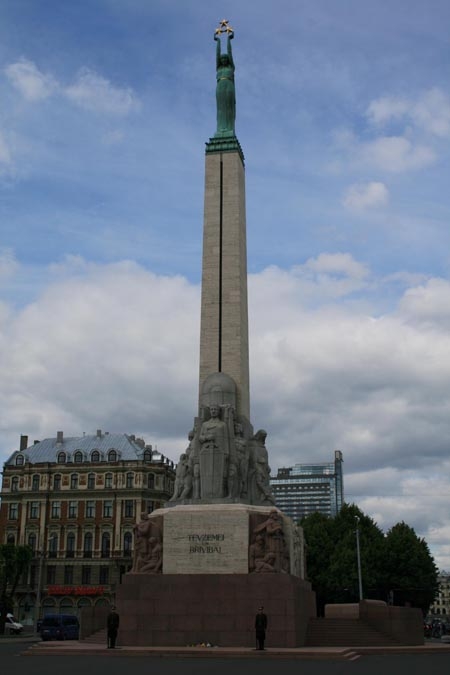
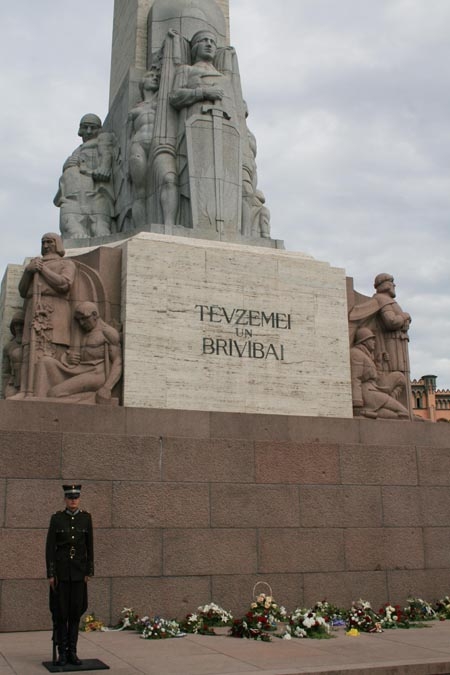
Visit the Freedom Monument in Brivibas Boulevarde. It originally commemorated soldiers killed during the Latvian War of Independence, fought against the new Soviet Union between 1918 and 1920, but is now viewed in a much broader context of battling external oppression. In the Stalin years it was known as the local travel agency, because if you stopped too long in front of it you got a free trip to Siberia. Worth seeing both for its magnificent sculptures and the ceremonial changing of the guard by tall, well trained and handily built local lads. Not far away is the Laima Clock, long sponsored by a local confectioner, and as ever a popular meeting place for young lovers.
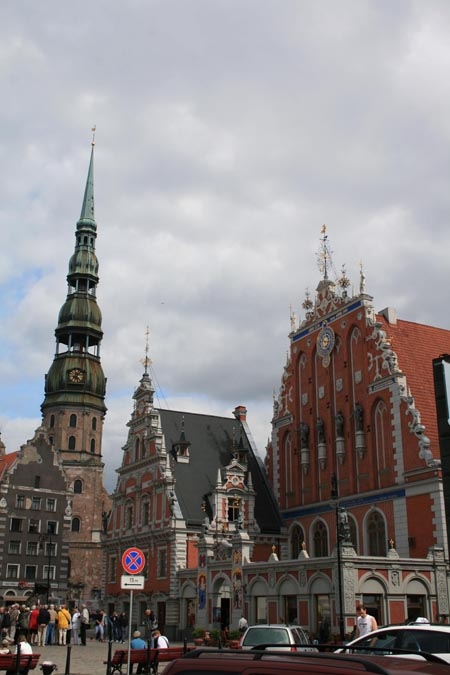
Stroll the cobble-stoned streets of Vecriga (Old Riga), which has been declared a UNESCO World Heritage site. Many of the buildings are of medieval origin, though there are plenty of notable later additions as well. Highlights include the Dome Cathedral (founded by Teutonic conquerors in the 13th century), the ancient Pulvera Tower (a gunpowder store that now houses the Museum of War) and the House of Blackheads (no, nothing to do with zits, rather rented in the 15th century by a guild of foreign merchants of that name, destroyed during World War II and now rebuilt in original form).
Shed a tear while visiting the Occupation Museum of Latvia (located at the south-eastern entrance to Vecriga) and wonder how people could be so cruel to each other. You can’t help but be deeply moved when you see how individuals and communities struggled to survive outright hostility yet maintained their traditions and dignity. Also worth a look is the much smaller Latvian People’s Front Museum (just across 13 Janvara Iela from Riga’s main railway station and the Central Markets), the former headquarters of the country’s independence movement of the late 1980s and early 1990s when the locals succeeded in grabbing power during the break up of the Soviet Union and subsequently resisted some real bullying to hold on to it.
See how the locals eat and try some of their delicacies by devoting a morning to Riga’s Central Markets, housed in a quintet of World War II Zeppelin hangars, not far from the main railway station and rated as one of the largest food markets in Europe. From pigs’ heads to smoked fish to the world’s best strawberries (I swear) — it’s all there.
Try to be in Latvia, but NOT in Riga, for the Ligo (pronounced “Lee-gwa”) and Jani (pronounced “Yani”) mid-summer celebrations every 23–24 June. This is essentially a pagan, rural feast of eating, drinking, singing and dancing. Riga tends to close down so latch on to some locals, head for the countryside and be prepared for a rollicking time and a fierce hangover.
If you’re going
Riga has become a well served post on the European air network. From Australia, you can access it through deals offered by several carriers, including Finnair and Lufthansa. Depending on stopovers and the associated taxes, you should be able to fly with them to Helsinki, Frankfurt or Munich, grab an Asian stopover, and incorporate a Riga sector for about $2100 return all up ex-Sydney.
It’s also relatively easy to get to get to Riga from Helsinki by taking a ferry to Tallinn in Estonia (about two-and-a-half hours) and then a four-hour bus trip through pleasant but fairly boring flat forested country to Riga.
Driving yourself around Latvia is certainly feasible, but do be prepared for some crazies. The accident rate is among the highest in the world and road rules do seem a trifle arbitrary. With a few additional accented vowels thrown in, the Latvian language uses the same letters and script as we do, so translating maps and road signs isn’t generally a problem.
English is widely, though not universally, understood.
Broadband internet is readily available in Latvia, especially in Riga. Free-of-charge wireless connections can be accessed from within a hundred metres of many phone booths in the city’s downtown area.
Captions:
1. Looking out over Riga from the Reval Hotel.
2, 3, 6, 8. Riga’s Art Nouveau architecture … the best collection in the world.
4,7. Riga’s Freedom Monument.
5. Vecriga … “Old Riga” is packed with architecural gems going back to medieval days.
9. John Rozentals … quite at home in the Janis Rozentals & Rudolfs Blaumanis Museum. The sling, incidentally, is a genuine Latvian-Army-issue scarf.