Ruined
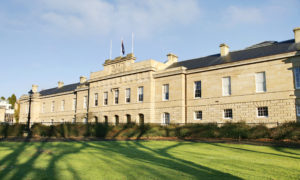
Hobart Bond Store, Tasmanian Museum & Art Gallery
5 April 2009
Of Timbre and Taxonomy
Ross Bolleter. Avant garde composer, archaeologist, social historian and Romantic. The audience is transfixed and transported as he conjures noises, alien and familiar, that stir our imagination. He tells stories that flood our hearts and our memories. Only a labour of love can unearth this kind of magic. Young and old, piano or no piano in our separate worlds, we are connected by a shared history and an extraordinary music.
In the Hobart Bond Store in the bowels of the Tasmanian Museum & Art Gallery stand the many ruined, rescued pianos from Ross Bolleter’s Tasmanian travels. In his Taxonomy of Ruin, he has set up a classification system for us: neglected (including verandah pianos); abandoned (including shed pianos), weathered; decayed; ruined; devastated; decomposed; annihilated. Hundreds of people are being turned away from this popular, free event. The audience is over capacity. Our curiosity builds.
Over two months, with the help of Teresa Beck-Swindale from Tasmanian Regional Arts, Bolleter located ruined pianos from the furthest parts of Tasmania. As he stands before us, his eyes twinkling—a humble and jolly man—he welcomes us to this leg of his Tasmanian journey. He begins by telling us that he was sorry to tell people that their pianos were just “just not ruined enough”. He reckons the Bond Store is a fitting venue for this performance, as the entry point to Tasmania for many of these pianos would have been the docks that lie behind these walls, across Davey Street. He tells us of a bygone era when the piano was the “bearer of European culture”, and delights us with stories about the hardships born by the lovers of these non-portable instruments.
And the pianos. They look decayed and precarious, these uprights with soundboards exposed—one, found at Scamander rubbish tip, lies on the the ground in the far right corner, chopped up and dismembered. Bolleter introduces each one as he plays them, their original owners, and how each was found from in far reaches of Tasmania. Their provenance lay as far as Paris, London, Berlin, and America. One woman from Beauty Point rescued a piano just as it was about to be burned, carrying it away in a horsefloat so it could continue a more stately demise buried beneath books in her shed. Many pianos became habitat for animals, insects and birds. Ross recounts a story of how upon playing one, white ants poured out and began dancing for him in concentric circles on the casing.
Ross Bolleter treats each piano with the love and dignity it must have enjoyed in its prime. Each piano is reborn in a clamorous reverie. The timbre is strange and beautiful as he improvises with experience and virtuosity. He plays them on his knees and sitting upright. He plays sitting below the keyboard on a cushion and with his elbows. Felt hammers knock and clap with no strings left to reach. Some ivories ping, some keys tinkle, some make no sound at all. Soundboard strings twang and resonate as he reaches underneath. Now and then he incorporates recognisable melodies.
Ross improvises for us a finale that incorporates all of the pianos, playing fragments of The Road to Gundagai. These pianos are now endeared to a loving audience, for a moment restored to their former cultural glory and to the centre of our consciousness.
Sara Wright is an artist based in Hobart, Tasmania
…
Ruined
Tasmanian Museum and Art Gallery and Tasmanian Regional Arts
Tasmanian Museum and Art Gallery
27 March to 5 May
Reviewer: Stephenie Cahalan
Everything old is new again
What does a musician do when he has mastered his instrument, his material and has succeeded as a performer and practitioner? If you are Ross Bolleter, you seek out the unplayable piano.
Ruined is an exhibition of pianos rescued from death row. Abandoned, neglected, forgotten, discarded and partially decomposed pianos have been hauled out of sheds, from under trees and off bonfires. Ross Bolleter, a musician and improviser from Western Australia, travelled Tasmania investigating responses to his call for unwanted pianos.
Bolleter and project coordinator Terese Beck-Swindale chose eighteen pianos from the eighty they scrutinised, and have assembled them in the Bond Store at the Tasmanian Museum and Art Gallery.
There they are played by visitors of all ages and ability, people who gradually overcome their shyness of the instrument to take delight in tinkling the ivories or picking at strings. They marvel in the beauty of the woodwork and inspect the internal mechanisms that are usually tucked away behind the face-boards.
When Ross plays his refugee pianos, he does so with a smile working the corners of his lips. The hammers dance releasing tones that could have come from a Carillion, but some notes offer no sound at all. At times Ross kneels so that he can twang the exposed strings below the keyboard, using his elbows to coax sound from reluctant keys, or slapping at strings like a jazz man playing a double bass.
Through Ruined, Ross Bolleter invites us to look at old things in a new way, and challenges the prevailing disposable mentality which has us constantly replacing worn items. When the installation finishes the pianos may not return to the centre of the living room, the place they would have occupied in their early days, but Ross Bolleter has undeniably given them a whole new lease on life.
Stephenie Cahalan is a writer an editor based in Hobart