
A new statewide A new statewide A new statewide A new statewide poll has revealed 4 in 5 Tasmanians want poker machines poll has revealed 4 in 5 Tasmanians want poker machines poll has revealed 4 in 5 Tasmanians want poker machines poll has revealed 4 in 5 Tasmanians want poker machines reduced in number or removed entirely from clubs and hotels; reduced in number or removed entirely from clubs and hotels; reduced in number or removed entirely from clubs and hotels; reduced in number or removed entirely from clubs and hotels.
The independent polling conducted last week by EMRS was released by Anglicare today.
84% of those polled disagreed that the Tasmanian community benefits from having poker machines in hotels and clubs. 66% strongly disagreed.
“It’s important that community well-being is prioritised when it comes to decisionmaking about gambling in this state,” said Anglicare CEO Chris Jones. “This survey shows Tasmanians want action taken to reduce the harm caused by poker machines”.
In the past 12 months, Tasmanians lost a total of $194.6 million on poker machine gambling. “We know that the more prevalent poker machines are in a community, the more problems there are,” said Dr Jones. “It’s appalling that some of the highest concentrations of poker machines – which are deliberately designed to encourage addiction – are in the poorest postcodes”.
Poker machines have been allowed to operate in clubs and hotels in Tasmania since 1997.
“This poll shows that Tasmanians believe putting poker machines in hotels and clubs has not been good for communities,” said Dr Jones. “People are well acquainted with the results: family breakdown, depression, financial hardship, health problems, legal matters, work issues and suicide”.
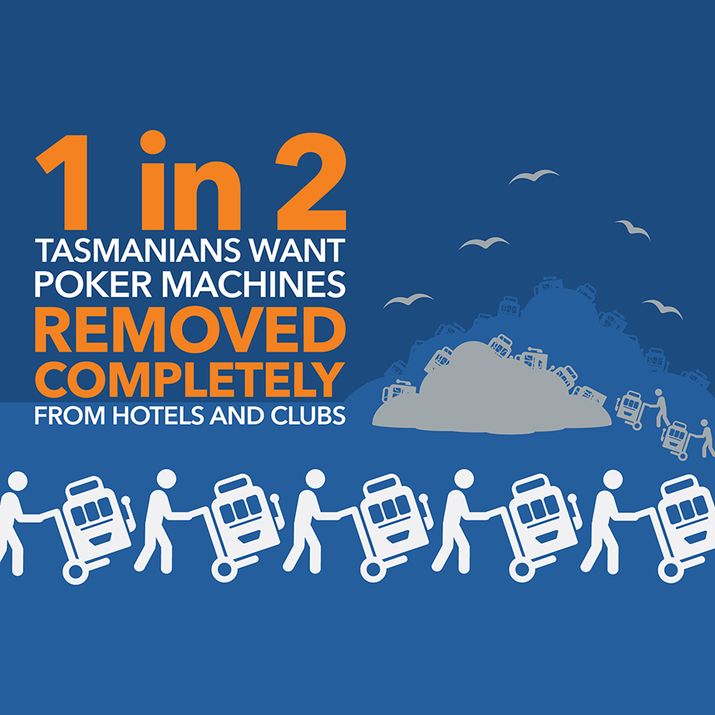
One in two poll respondents (50%) said that poker machines should be removed completely from hotels and clubs, while around one-third (32%) believed that the number of poker machines in hotels and clubs should be reduced.
“The Government has expressed interest in knowing community attitudes about poker machines,” said Dr Jones. “This poll clearly shows that people want action taken to reduce the harm. At a time when decision-makers are considering a range of gambling-related matters, this is their opportunity to listen and respond to the views of the people and communities they represent”.
A coalition of community organisations recently called for poker machines to be phased out of hotels and clubs, a reduction in the maximum bet limit to $1, and a measure to allow people to set an enforceable limit on their losses. “These are things that would help to prevent damage from happening – it’s like addressing a disease outbreak at its source,” said Dr Jones.
The EMRS poll surveyed a sample of 1000 Tasmanian residents aged 18 years and over. The polling was conducted November 1-5.
Anglicare Media and Communications Bronwen Hayes