Dr Varuni Kulasekera
Dr Varuni Kulasekera interviews Diane Caney, Graham Gourlay and Alison Smith about their latest book, The Shocking Truth About Workplace Bullying.
Varuni: So, you’re an unlikely mix – Diane, you’re a poet by night with a PhD in English, and a health bureaucrat by day. You also have a background in Industrial Relations and have always been interested in workplace safety. And, you write books for teenagers about gender, bullying, and surviving trauma.Your PhD thesis is in the MONA Library?
Diane: I donated a copy to the MONA Libraryto assist scholars researching Sidney Nolan. And, also because I love MONA which is the epitome of the way I recommend reading art and literature. My thesis is aboutallowing meanings to float and mix, without worrying too much about contexts.
David Walsh has such a large collection of Sidney Nolan paintings, it’s astounding, and he loves Patrick White. My thesis focused on the art and literature of White and Nolan, so there’s a lovely symmetry in that too.
Graham – you’re a retired executive who’s doing a PhD onhow to prevent bullying. You have two Masters Degrees (in Public Administration, and Organisational Change and Human-Centred Consulting). You run a coaching business, and you also lobby to ensure awareness is raised about the need for team-building in the workplace to promote respect.
And, Alison, you are a proud Palawa woman, descended from Fanny Cochrane-Smith. You love the AboriginalCommunity and strongly advocate for the continuation of your people’s culture. You’re a teacher who set up and ran a wonderfulAboriginal Children’s Centrefor Aboriginal children in Tasmania, and their families. You ran theCentre on evidence-based practice for almost two decades before the Tasmanian Government dreamed up theirChild and Family Centre model.
How did the three of you meet?
Diane: Alison and I met when we travelled together to the SNAICC conference in Alice Springs in 2010. I was the evil bureaucrat, and I’m sure Alison was not looking forward to the trip.
Alison: I wasn’t! From memory, the Department botched our accommodation, or something went wrong, and we ended up staying in a glorified caravan park when everyone else was in the lush casino. But, we clicked and have stayed in touch ever since.
Diane: It was a great conference. I don’t think I’d laughed so much in a very long time. Over the past few years, I found thatAlison was very interested in building respect in the workplace. I have postgraduate qualifications in industrial relations, and have worked as a union organiser, so workplace safety has always been very close to my heart.It was a logical step to invite Alison to join me when I started writing a book on bullying a few years ago, but we shelved the idea, waiting for the right time. Then, when we met Graham, through an event at MONA, wasn’t it?
Graham: The Think Tent, run by Natasha Cica. We started to brainstorm about all the stories we’d heard about bullying, and what could be done about it.
Alison: The ideas came thick and fast, and it wasn’t long before the plan to writethe book was taken off the shelf, and the idea to write more than one book was born.
Varuni: Are you writing a series?
Diane: We threw around a lot of concepts. In the end, we wanted to tell people’s stories in a way that wouldn’t identify them, but would be an engaging way to share the essence of what it’s like to be bullied.
Graham: There are so many definitions of bullying, a huge array of theories, and a lot of books out there, but we didn’t think any of them gave the sort of hands-on, practical help that people in crisis really need.
Alison: I agree – we’ve all seen people really struggling with being bullied, and they simply don’t know what to do. They’re in agony, crying out for help, but many of the available books seem to talk ‘about’ bullying, rather than explaining how to deal with ‘the bully’.
Diane: The definitions are confusing too. Who cares what the technical definition is? If a person is suffering, they’re suffering, and their health will be damaged too. Bullying can be a hundred tiny humiliations or a few big ones – it doesn’t matter which.
Graham: Having coached people for many years, I can vouch for that. Being disrespectful or ‘uncivil’ in the workplace is a really fast-track that almost always leads tofull scale bullying. That’s why we encourage people to learn how to speak up early about poor behaviour.
Varuni: Have any of you been bullied?
Diane: I think everyone has been bullied at some point in their life – but we’ve said in the book that we won’t disclose anything about anyone who’s told us their story – and that includes ourselves.
Varuni: Fair enough. It’s a difficult subject. Everyone’s experience is so personal, and what can be acceptable to one person is not to another. I notice that you want people to ‘nip in the bud’ any uncivil behaviour. Can you explain that a bit more?
Diane: This is Graham’s idea, and much of the theory in the book, and the handbook, is thanks to Graham. A good way to think about is this:imagine that you are snappy or offish with a colleague (perhaps someone you were managing), and rather than letting you know that he or she found your behaviour disrespectful, the person started keeping a diary, and noted down example after example of your poor behaviour. You have no idea that they are upset and have felt bullied by you. And then, one day, HR visits you to say, ‘Sorry, there’s been a formal complaint of bullying made against you.’
How would you feel?
Wouldn’t you prefer that the person had simply had the courage to say, ‘Look, I’m sorry but I found what you just said really disrespectful – could you please consider how it made me feel?’
Graham: Diane’s right there – a bully – no matter how awful they’re being – cannot know that their behaviour is causing offence if they’re never told. And, many an abrupt senior executive has used this fact as an excuse for their ongoingpoor treatment of a colleague.
Alison: I don’t tolerate disrespect from anyone any more – not even from shopkeepers or my children. I just calmly and respectfully let them know that I found their comment, or whatever, disrespectful. I’ve raised a few eyebrows over the past year.
Varuni: So, are you against reporting bullying?
Graham: Not at all – sometimes bullying must be reported. Especially in the case of the workplace sociopath or psychopath. Their ‘empathy levels’ are SO low that they are almost incapable of experiencing empathy at all, and studies have shown that they actually gain pleasure (or experience no conscience pangs at all) over harming workmates.
Alison: We’re going to be lobbying industrial watchdogs everywhere to provide workers withthe ‘attributes of workplace sociopaths’. We think people need to be made aware about how a sociopath or psychopath behaves. People like this can cause serious injury, especially if they are left unchecked.
Graham: John Clarke’s book, Working with Monsters, has a good checklist on the sociopathic bully. We also want recruitment strategies put in place to ensure that sociopaths are less likely to make it through into the workplace, especially into positions of power, which are the positions to which they most aspire, of course.
Varuni: And the title of your first book: The Shocking Truth About Workplace Bullying. Are you willing to let us in on the secret? What is the Truth?
Diane: Of course – The Truth is two-fold – bullying in the workplace can cause serious harm – we liken it to electrical shocks or asbestos – bullying is not ‘less harmful’ simplybecause it’s not a tangible hazard – a chemical or a slippery floor – victims shouldn’t feel like they need to harden up over bullying. And, the second part of the truth is that there IS something we can do about it. We need to educate people aboutspeaking up early. It’s not the best idea to simply store up endless examples of bullying and then report it – usually nothing is done after a report is made. And sometimes, the bullying gets worse after a report is made. It’s far better to have the courage to speak up immediately – to nip the bullying in the bud, so to speak.
Alison: We’ve developed a great handbook which teams can use to build respect in the workplace and rehearse how to nip bullying in the bud. Some people think that the word ‘bullying’ is over-used, but we think that any form of disrespect opens the doorway to bullying.
Diane: That’s what makes bullying so evil – it starts off in a way that’s barely detectable, but by the time it’s taken hold, it’s like an octopus – the victim feels trapped and, sometimes almost unable to explain what it is that the bully does to make them feel so damaged.
Alison: Some of the people I have spoken to over the years have had all their confidence robbed. We want to return their confidence to them – to empower people through insight and information.
Graham: The books will go a long way to doing that, but we will also be offering coaching and seminars. So as people can stay in touch with us, we have a website: www.empathyandcourage.com
Diane: Actually, www.courageandempathy.com works as well.
Varuni: Seriously, two websites?
Diane: Two URLs and just the one website. We want those who lack courage to learn how to speak up early and often; and those who lack empathy to be required to build it. We want to make it unfashionable to be disrespectful in the workplace.
Alison: Being respectful is going to be ‘the new look’ – everyone’s going to want it.
Graham: We certainly want recruitment firms and interview panels to be very much on the lookout for people who have a track record of being respectful to their colleagues. It should be just as important as their qualifications and experience.
Alison: If not more so – the other things can be taught!
Varuni: What about laws to make bullying illegal? You’ve heard of Chloe’s Law?
Graham: We support everyone who’s working in the bullying sphere, to make people’s lives more bearable. But, we’re focusing on workplace bullying. Bullying in the workplace is already covered by Australian Legislation and it’s named up in Codes of Practice as a psychosocial hazard. What we want to see is people learning to be more courageous, as we said, so that they speak to the bully as soon disrespectful or uncivil behaviour happens. That way, we’ll see a major culture change in our workplaces.
Diane: Reporting may still be required, obviously – some cases are so far gone already that the victim has to report the behaviour – and some workplace psychopaths won’t listen to a person who tries to nip their behaviour in the bud.
Alison: But, over time, that will change.
Varuni: Sounds good. When’s the Launch?
Graham: The launch of the first book and the first handbook is at 11am on the Winter Solstice – Saturday 21 June at the Baha’i Centre.
Varuni: During Dark MOFO?
Diane: We’re not officially part of Dark MOFO? But, we think that bullying is a Dark Force, and the Winter Solstice is the time when we are the farthest away from the warmth and light of the sun – which is symbolic of how bullying victims feel – so cold and alone.
Alison: We’re hoping that our books will help create safe, nurturing workplaces. And that the many tips and insights we’ve provided will help individuals to find their way out of the dark maze of being bullied.
Varuni: If you could condense your message to one sentence what would it be?
Alison: Being respectful at work is not optional.
Graham: Actually, we want to see a world where being respectful anywhere is not thought to be optional.
Diane and Alison: Absolutely!
Varuni: And, you, Diane?
Diane: We want to make it seriously unfashionable to be disrespectful in the workplace.
Varuni: Sounds good.
The Launch is at 11am on the Winter Solstice – Saturday 21 June at the Baha’i Centre. More information can be found here: http://courageandempathy.com/events-2/
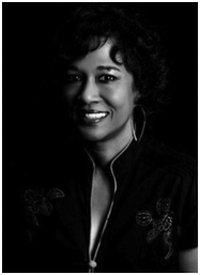
Dr Varuni Kulasekera has a PhD in Entomology from the University of Maryland, USA, and is currently completing a Masters in Nutrition and Public Health at Deakin University. She has a keen interest in the complexity of conditions required to promote health and wellbeing.