Russia, Ukraine and China scupper plans to protect ‘last intact ocean ecosystem on earth’
Talks to create the world’s two largest marine reserves in the Antarctic have broken down, with conservationists branding Russia a “repeat offender” for blocking an international agreement.
Delegates from 24 nations and the European Union have been locked in talks in Hobart for the past 10 days at the annual meeting of the Commission for the Conservation of Antarctic Marine Living Resources (CCAMLR).
But the negotiations have ended in frustration for the nations, including Australia and the US, that proposed vast protected zones around Antarctica, with Russia, Ukraine and China refusing to back the plans.
The US and New Zealand had proposed a 1.3m square kilometre protected area in the Ross Sea. A separate plan put forward by Australia, France and the EU would have kept 1.6m square kilometres of East Antarctica off-limits to fishing. Consensus among the nations was required to ratify the plans.
The failure of the talks is the third time in the past year that the proposals for protected zones have failed to find agreement among the commission’s nations. Previously, Russia and Ukraine questioned the legal status of the protected areas.
Andrea Kavanagh, the director of The Pew Charitable Trusts’ Southern Ocean sanctuaries project, told Guardian Australia that the failure of the talks was “incredibly disappointing”.
“It’s a bad day, not just for Antarctica but for the world’s oceans, because so many fisheries are over-exploited and this was the one place we could create a reserve,” she said. “The fact it can be blocked by a few nations with interests in fishing is very hard to take.
“Russia and Ukraine filibustered until the end. They wanted to open up more areas for fishing and set a time limit of 10 years. Given that it has taken that amount of time to draw up the protected zones, we would’ve spent more time planning this than protecting it, which is ridiculous.
“I think conservation-minded countries need to take a stand and tell Russia this is unacceptable. There’s no reason why fishing nations such as Australia can put up protected zones only for other fishing nations to block them.”
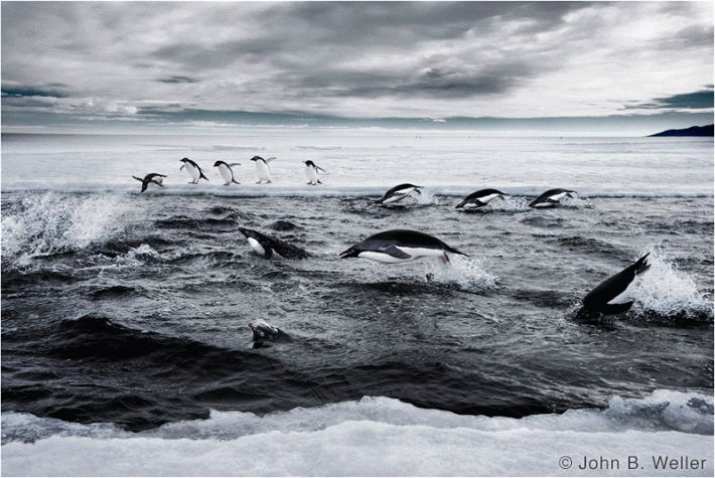
The Antarctic waters are home to more than 10,000 unique species, including most of the world’s penguins and the rare toothfish.