We choose to live on an island. No-one forces us to. We make that choice, knowing that the isolation of being surrounded by sea has both advantages and disadvantages.
Living on a relatively small island, we are dependent on transport and communications links with the outside world. When they become disrupted, we get a reality check of our vulnerability.
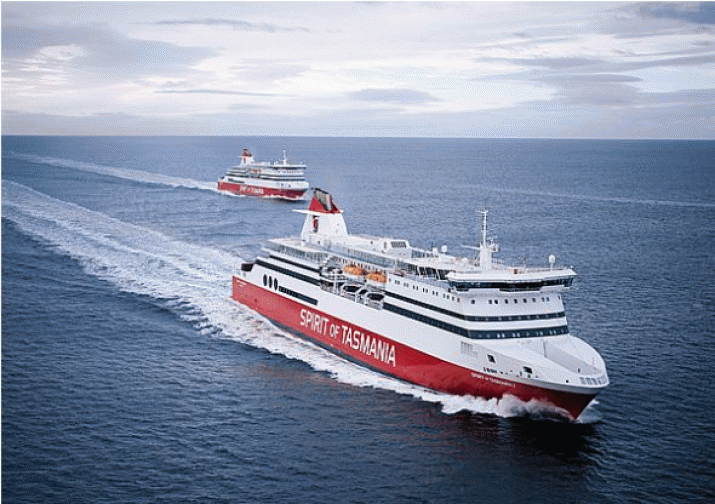
The dispute between Qube freight logistics company and its employees that has disrupted operations of the Spirit of Tasmania in Melbourne over the past week has reminded us of the fragility of our physical connection to the outside world. For Tasmania, the Bass Strait is akin to a national highway, so this breakdown is the equivalent of shutting down all road access into, say, Melbourne.
Everyone is pointing the finger at everyone else. The Maritime Union of Australia says it has not been party to the blockade of freight going on and off the ship in Melbourne; the TT Line says it is not a party to the dispute; the Tasmanian government says it is impotent to intervene.
The innocent bystanders caught up in this situation don’t care what the dispute is about, nor do they care who is at fault. They just want it sorted – and quickly.
And there are many innocent bystanders, including Tasmanian farmers who rely on TT Line to get their fresh produce to market; their customers, who may come to see us as an unreliable supplier; and consumers in Tasmania, as supplies of fresh products shipped from the mainland run out.
The TT Line has been at pains to point out that no southbound cargo has been held up, because alternative emergency arrangements were made with other freight and logistics operators to get cargoes (including fresh produce) to Tasmania. That’s a short term fix, but it is not sustainable over any length of time.
The situation with northbound freight is more serious. Tasmania is a major exporter of a huge range of fresh produce: fruit, vegetables, meat, fish, dairy products – the list goes on. The Spirit of Tasmania is one of the key transport options for fresh produce leaving Tasmania. It is trailer accessible, allows for late loading of freight, and arrives on the mainland earlier in the day than alternative freighting options.
Farmers are already counting the costs of this dispute. Seafood valued at many hundreds of thousands of dollars has spoilt waiting transhipment. More than eight tonnes of lamb products are sent to the mainland on TT Line every day. That cargo has to connect with international flights out of Tullamarine, bound for the Middle East. If those connections are missed, our producers lose about $100,000 a day. This week, that export product has had to go via SeaRoad, doubling the freight cost. Shipments of Scottsdale onions and north-west potatoes are also being held up and missing on-shipment to international markets.
If this matter is not resolved urgently, and business as usual is not resumed, the costs will continue to mount. These costs are both actual financial ones and also intangible ones, like reputational damage.
Continued delays will mean the other services that transport freight across Bass Strait will not be able to handle the increased volume of freight that they face. This will cause a backlog that results in many fresh products perishing, resulting in significant losses for producers. Our early estimates show that these losses could quickly mount into the millions of dollars. In these tight economic times, where the A$ exchange rate has already pushed us out of competitive range and margins are miniscule, no farmer can afford to take hits like these.
Tasmanian farmers can guarantee the quality of their product. However, our customers have to have faith that we will deliver, on time every time. If we can’t meet their expectations, those markets will be compromised.
Perhaps by the time this article goes to press the Victorian Supreme Court may have settled the dispute. Nonetheless, the dispute leaves a damaging legacy. Whatever happens, it is important that efforts be made to minimise these impacts. From our point of view, that means we have to have reliable freighting services – and while disruptions continue, perishable product must be given priority.
Importantly, this situation has shown that we simply have to have back-up plans in place when things go wrong.