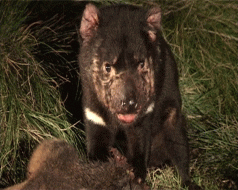
I DON’T notice it at first, enthralled as I am by the unique beauty of the sleek, black creature meeting my gaze with wild, unfathomable eyes. But then I see it: a tiny lump less than a centimetre across, the only blemish on an otherwise perfect specimen of Australia’s wildest native animal: the Tasmanian devil.
That lump appears inconsequential, but we know otherwise. The mood changes – this is not what we had hoped to see here, in the bush at the northern extremity of the devils’ island home. For this young devil, the lump speaks of horrors ahead: a slow death from starvation or organ failure as over the next three to six months it grows and spreads, defiling a petite, bear-like face with a mass of grotesque tumours.
For the wildlife biologists with me, trapping devils in the Narawntapu National Park, a strip of coast at the top of Tasmania, that little lump is further confirmation that Devil Facial Tumour Disease has now claimed this remote outpost. It is just the latest domino to fall as this mysterious and seemingly unstoppable plague slowly envelops the island. Since the mid-90s, DFTD has wiped out 80 per cent of these unique marsupial car.
Finding so much DFTD in this national park is heart-breaking for devil expert Nick Mooney, who has been coming here for decades to study a species about which we still know relatively little. “Come here again in six months and this population will be crashed – gone,” sighs Mooney. “It’s a real bastard.”
But for now there is a more pressing issue. It is ¬sitting in the lap of Mooney’s colleague, Sam Fox. That beautiful devil with the ugly lump is patiently submitting to Fox’s methodical, professional health checks. The devil responds to the handling with a Zen-like tolerance at odds with its species’ belligerent reputation.
The humane thing to do would be to put this devil to sleep, saving her from the cruel fate that awaits. But it is not that simple. Fox gingerly turns the animal over to examine its underside, revealing a pouch occupied by four jelly-bean, hairless young. “They’ll need to be in the pouch for another three months – and then dependent upon their mother for another four,” explains Fox, doing the maths as she speaks. “So it’s touch and go whether she will live long enough for the young to survive alone. It would be a close-run thing.”