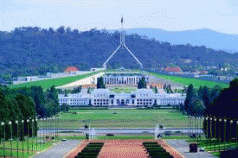
THE Greens secured more than 11 per cent of the popular vote, but won only one seat in the lower house out of 150.
Could it be time for Australia to introduce proportional representation?
The direct effect of PR would be to lead to parliamentary outcomes that more closely reflected the popular vote.
But it would also transform our political landscape.
To begin with, it would eliminate the focus on marginal seats. That focus is a perennial of Australian politics, but has become more pronounced as manipulating elections has evolved from an art to a science.
It is a focus that is as distorting as it is corrupting.
In particular, it leads major parties to emphasise visible give-aways to voters in the seats most likely to swing. Inevitably, these give-aways cannot be programs that would be implemented in any event. Rather, what makes them give-aways is precisely that they would otherwise never have been chosen, and hence the greater the extent to which they deviate from sensible policy settings, the better.
Little wonder that the areas chosen for initial implementation of the national broadband network were all marginal seats.
Moreover, because these benefits need to be highly targeted, they invariably involve spending increases rather than tax cuts, which cannot be laser-beamed to particular electorates. And all too often, those spending increases involve building infrastructure in areas where costs are high and benefits low, as that is the form of spending that is most visible and localised.
The overall result is that we build infrastructure where it is not needed and not where it is needed; we invest too little in maintaining what infrastructure we have, as filling potholes and repairing bridges is less politically salient than ribbon-cutting; and we skew the focus of political competition away from needed tax reform to spending initiatives that make the nation worse off.