2026-27 Annual Plan and Budget Estimates
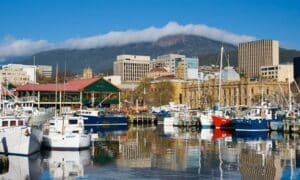
The City of Hobart has adopted its 2026–27 Budget, delivering a $3 million surplus while keeping rate increases among the lowest in Tasmania. The Budget includes total revenue of $188.9 million and expenditure of $185.9 million, alongside a modest 3.5% rate increase. Hobart Lord Mayor Anna Reynolds said the City had worked hard to balance cost pressures with affordability for residents. The 3.5% rate increase is below Hobart’s CPI, which was 5% to the end of April. Council’s rates reflect the cost of delivering a high level of services and maintaining kunanyi / Mt Wellington, a major tourism asset largely funded by Hobart ratepayers. Unlike other councils, local residents carry the cost of this state‑level asset. The City is actively improving efficiency, identifying more than $3 million in savings in the draft 2026/27 budget and maintaining lower rate increases than comparable councils in recent years and have embarked on a state-leading service review program for the organisation. The Budget includes a $33.7 million capital works program to support roads, parks, community facilities and other critical infrastructure across the City. This includes $560,000 for the installation of two new Gross Pollutant Traps to help preserve the Hobart Rivulet, $1.2 million for new spa, sauna and steam room facilities at the Doone Kennedy Hoabrt Aquatic Centre, more than $600,000 on stormwater renewal, and $1.2 million to replace the synthetic track at the Domain Athletic Centre. While the total capital works budget is slightly lower than last year, the City’s contribution has increased due to a reduction in state and federal grants. Cr Reynolds said the Budget ensured the City can continue delivering the wide range of services the community relies on.
Wellesley Park Dog-Off Lead Exercise Area – Community Engagement Outcomes
Community feedback has prompted a change in approach for the proposed fenced off‑lead dog exercise area at Lower Wellesley Park, with strong opposition indicating the project should not proceed at this location. Engagement on this proposal attracted 185 submissions, with approximately 80 per cent opposed. Feedback highlighted concerns about the loss of open green space, impacts on park amenity and wildlife, increased traffic, and reduced flexibility for broader community use. This outcome reflects what the City of Hobart heard from the community and reinforces the important role of community engagement in shaping decisions for and with, our community. As a result, the park will remain an unfenced off‑lead area. Planned fencing improvements at Upper Wellesley Oval will proceed, without any change to existing dog access.
Salvation Army Street to Home Program – Partnership Proposal
A three-year partnership with the Salvation Army’s Street to Home program will strengthen support for people sleeping rough across Hobart and Southern Tasmania, at a cost of $35,000 per year, indexed annually. As the region’s only dedicated outreach service, Street to Home plays a critical role in connecting vulnerable individuals with housing, health and support services. This agreement will fund an additional outreach worker, improving response times, increasing engagement in public spaces and enabling closer collaboration with council staff. A recent trial has demonstrated clear improvements in service delivery, data sharing and outcomes, reinforcing the value of a coordinated, evidence-based regional response to reduce rough sleeping.
Housing Action Plan
The 2026 Housing Action Plan has been adopted and will guide a coordinated response to growing housing challenges across Hobart, where affordability, supply and diversity have become critical concerns. Shaped through extensive engagement with the housing sector and community, the plan outlines, practical, within scope actions for local government help stimulate new housing and better utilise existing stock. Key initiatives include targeted planning controls, continued development incentives, investigation of suburban infill opportunities and support for partnerships that expand affordable and social housing. Most actions will be delivered within existing resources and implemented progressively, with further reporting on major initiatives as required. The plan will also be monitored and reviewed to ensure it remains effective and responsive to community needs.
School Access Travel Plans – Albuera Street Primary, Lenah Valley Primary, and Mount Nelson Primary Schools
School Access Travel Plans for Albuera Street Primary, Lenah Valley Primary and Mount Nelson Primary have been adopted following extensive engagement with students, families and school communities. The plans provide a coordinated, school-specific approach to improving safety and access for students, while supporting greater uptake of walking, cycling and other active travel options. Practical projects and behaviour change programs tailored to each school’s needs and catchment will now be developed as a key initiative under the Hobart Transport Strategy 2024. Actions will be progressively considered through future annual budgets, with the program set to expand to additional schools across Hobart as funding becomes available, supporting healthier, safer and more sustainable school travel. The School Access Travel Plans will include summaries of solutions, actions and recommendations from relevant Local Area Mobility Plans. The City of Hobart has previously endorsed three School Active Travel Plans at Goulburn Street Primary School, South Hobart Primary School, and New Town Primary School.
Halls Saddle Visitor Hub – Master Plan Options Analysis (June 2026)
The Halls Saddle Visitor Hub Master Plan Options Analysis (June 2026) has been received as a key input to guide future planning, design and business case development for improved access to Kunanyi / Mt Wellington. With visitation already around 583,000 annually and heavily concentrated at the Pinnacle and the Springs, the analysis highlights growing pressure on infrastructure, safety and environmental values. It confirms Halls Saddle as a strategic lower foothills gateway to better manage access, support a shift to shuttles and active transport, and enhance visitor experiences. A compact three-level hub integrated into the quarry face (Option 3) has been identified as the preferred approach, with a larger five-level, higher-capacity alternative (Option 4) also considered pending further assessment of future vehicle access and parking needs. This is not a final design, but the beginning of a broader conversation with the community about the site’s future. Any next stage would include community and Palawa engagement to help shape a careful, collaborative path forward.
Live Sites Notice of Motion – Cr Ryan Posselt
The City of Hobart will develop a policy to support regular live sites, fan zones and watch parties linked to major sporting and cultural events, creating a more consistent and coordinated approach to city activation. A further report will examine the costs and benefits of different delivery models, including a permanent screen, mobile infrastructure or contracted services, alongside insights from other Australian cities. The work will consider long-term value for ratepayers and opportunities to boost local economic activity, support hospitality and tourism, and strengthen community connection, ensuring Hobart is well positioned to deliver vibrant, inclusive events year-round.
Regatta Quay Concept Notice of Motion – Cr John Kelly
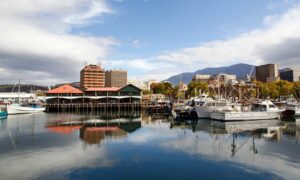
The Hobart City Council have agreed to receive a briefing from proponents for the Regatta Quay concept. The mixed-use proposal could help meet demand for parking, housing, services and jobs, complement the future stadium precinct, and generate long term rates revenue, while requiring no public land sale or government funding. Further detail will inform Council’s consideration in due course.
Polluter Pays and Protecting Ratepayers Notice of Motion – Cr Zelinda Sherlock, Cr Gemma Kitsos, Cr Mike Dutta, Cr Anna Reynolds, Cr Ryan Posselt, Cr Bill Harvey and Cr Ben Lohberger
The Hobart Lord Mayor will write to the Federal Minister for Climate Change and Energy and Clark MHA Andrew Wilkie to advocate for stronger national action to address the rising cost of climate impacts on communities and local government. The advocacy calls for the establishment of a Climate Compensation Fund, supported by a levy on major fossil fuel exporters, to help fund adaptation, resilience and disaster recovery. It also seeks a dedicated funding stream for councils, a parliamentary inquiry into national adaptation planning, and ongoing legislated funding to support local climate responses. This approach responds to increasing pressure from climate events and aims to ease the financial burden on ratepayers while strengthening infrastructure, supporting communities and progressing a fairer, more sustainable funding model.
Protecting Local Post Offices across Tasmania Notice of Motion – Cr Zelinda Sherlock and Cr Ryan Posselt
The Hobart City Council will write to the Local Government Association of Tasmania seeking Statewide advocacy on the closure of Licenced Post Offices, requesting that concerns be raised with Australia Post and relevant Federal Ministers ahead of LGAT’s August 2026 meeting. The correspondence will call for a parliamentary review of the Australian Postal Corporation Act 1989 to broaden community service obligations beyond letters to include essential services such as parcels and banking. The move reflects growing concern about the loss of critical local services, limited transparency around closures, and the need to maintain a well distributed network that supports communities, businesses and regional resilience across Tasmania.
Public Consultation and Engagement Charter Notice of Motion – Ald Louise Bloomfield
A strengthened approach to community engagement will enhance transparency, accountability and public confidence in how decisions are informed across Hobart. While one-on-one discussions are uncommon, any such engagement may be recorded, with participants able to confirm accuracy. The upcoming review of the Community Engagement Framework will examine technology, consent, privacy and verification practices to better capture community input, ensuring engagement is meaningful, clearly documented and trusted, and that community voices are not only sought but accurately reflected in decision-making outcomes.
If you’re interested in this article, please join our mailing list. It’s all free … and we won’t share your information with anyone!
If you have any comments you’d like to add to this article, please contribute via this form. We’re trialling this while we work through replacing our comments section.
Truly independent media is a cornerstone of democracy.
Remember: once they gain power the first action of every despot in modern history is to take control of the media, so please consider supporting us.
Your kids will thank you and so will your Granny, but the aspiring despots won’t…