
Advertisement / Sponsored Content
This content is paid advertising and has been prepared in collaboration with the advertiser.
This post remains active as a legacy issue and is being phased out from January 2026.
Tasmanian Times no longer accepts requests for paid content or advertorials.
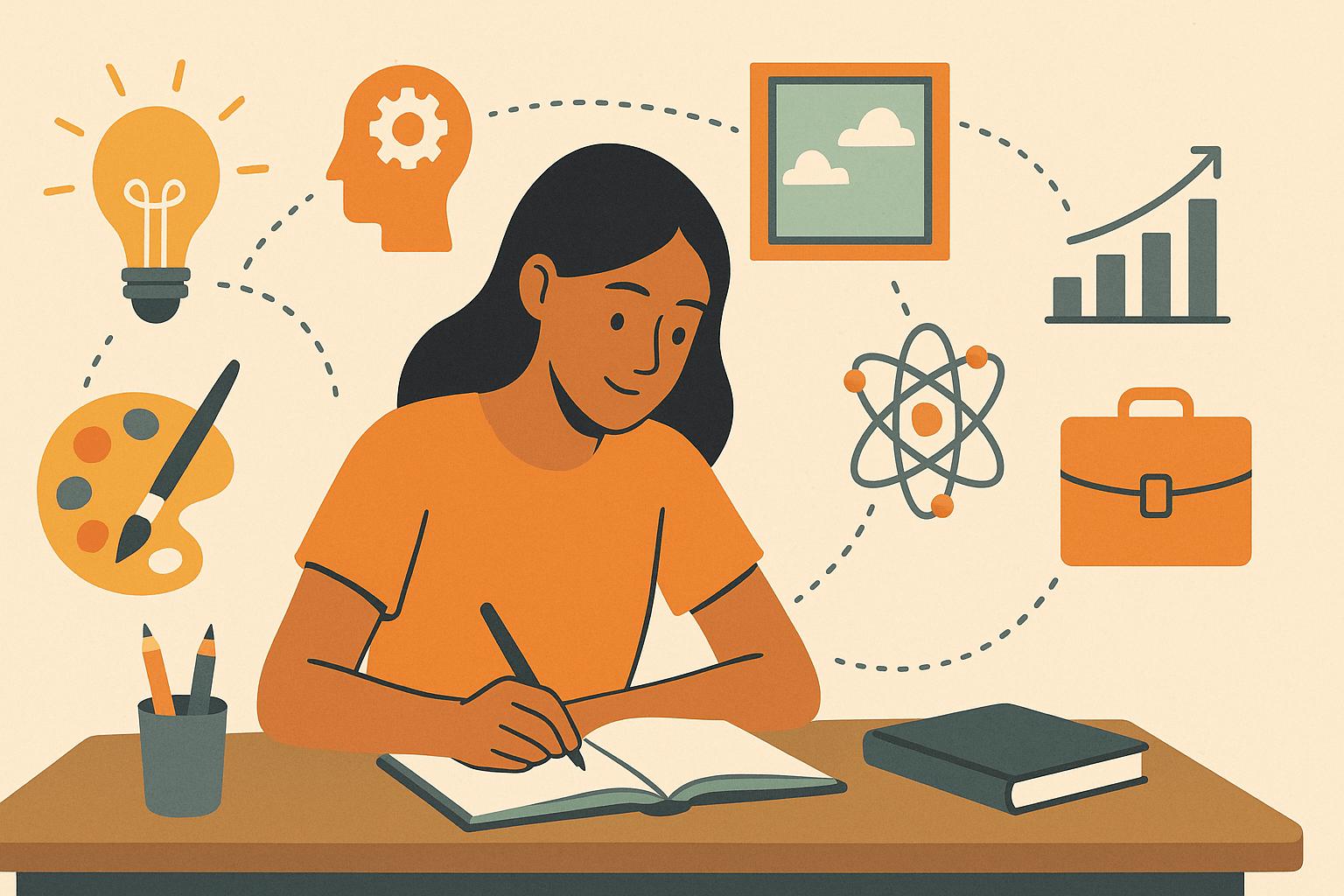
Creative study equips you for a wide range of career paths by strengthening innovative thinking skills that employers across all industries highly value. The ability to generate original ideas and solve problems creatively makes you a strong asset in today’s competitive job market.
Although many students question the practical value of creative education, this article explains how creative thinking directly supports career success, regardless of the field you choose.
Understanding Creativity’s Role in Modern Education
Rethinking the Arts and Science Divide
For decades, education systems have drawn a clear line between arts and sciences. This division has reinforced the belief that creativity belongs solely to the arts, while science focuses only on data, formulas and memorisation.
Contemporary education increasingly challenges this outdated separation. Many institutions now adopt integrated learning models that combine artistic expression with scientific investigation.
Courses such as the Bachelor of Visual Arts at LCI Melbourne show how visual practice develops skills including observation, conceptual thinking, spatial awareness and problem solving. These competencies extend well beyond traditional artistic roles. Students learn to work within constraints, interpret complex ideas visually and communicate meaning clearly, skills equally relevant in scientific, technological and design-focused professions.
Project-based learning further illustrates this integration. Students may examine mathematical structures in music or investigate the chemical properties of painting materials. These approaches help learners understand that creative problem solving applies across all disciplines.
Creativity’s Importance in STEM Fields
STEM disciplines rely heavily on creative thinking to progress. Major scientific advancements rarely result from rigid processes alone. They emerge from curiosity, experimentation and the willingness to explore unconventional ideas.
Computer programming offers a clear example. Coding requires creativity at every stage, from developing algorithms to designing user interfaces. The most successful technologies blend technical expertise with imaginative solutions that address real user needs.
A future in STEM depends not only on technical knowledge but also on the ability to apply that knowledge creatively. Employers increasingly seek professionals who combine analytical skills with innovative thinking.
Why Creative Thinking Deserves Greater Focus
Educational researchers in Australia and the Netherlands have emphasised the importance of deliberately teaching creative thinking. Their findings suggest creativity is a skill that can be developed through targeted learning practices rather than an innate talent.
A strong education should provide opportunities to practise creativity intentionally. Courses and activities that encourage multiple solutions, cross-disciplinary collaboration and unconventional problem solving help prepare students for complex professional environments.
The Evolving Landscape of Creative Careers
Growth of Digital Creative Industries
Digital transformation has reshaped the employment landscape, giving rise to entirely new creative professions. User experience designers craft intuitive digital products by combining visual design with psychological insight. Virtual reality developers create immersive environments used in entertainment, education and healthcare.
Social media content creators merge storytelling, visual communication and marketing strategy to build online audiences. Digital fabrication specialists use 3D printing and computer-controlled tools to transform digital concepts into physical products.
Success in these roles requires both technical capability and creative vision. Learning coding fundamentals or specialised software can significantly expand career options. Employers value individuals who comfortably navigate both creative and technical domains.
Digital marketing continues to grow, creating demand for creative strategists who understand artistic principles and consumer behaviour. Mobile app designers influence how people access services and information every day.
The gaming industry has become a major employer of creative professionals, from concept artists to narrative designers. Augmented reality also relies on specialists who can seamlessly integrate digital content into physical environments.
Networking and Collaboration as Core Skills
Professional networking often begins during your studies. Group projects offer valuable experience in teamwork while helping you build connections with peers who may become future collaborators. Industry events provide opportunities to meet mentors and employers in less formal settings.
Creative work is rarely done in isolation. Most impactful outcomes are the result of collaboration, making teamwork an essential skill. Portfolios should reflect both individual achievements and successful group projects.
Digital platforms make it easier to network regardless of location. Professional profiles allow you to share your work and engage with international communities. Online forums related to your field also support idea exchange and constructive feedback.
Sustaining professional relationships requires consistency. Periodic check-ins help maintain connections without appearing intrusive. Offering support or insight before requesting assistance fosters trust and goodwill.
Cross-disciplinary collaboration often sparks innovation. Being open to working with professionals from different backgrounds increases your value to progressive organisations. Familiarity with the language of adjacent fields also improves communication and collaboration.
Preparing for Future Career Success
The Value of Cross-Disciplinary Knowledge
Today’s job market rewards professionals who integrate knowledge from multiple disciplines. Career progression often accelerates when skills from different fields are combined. For instance, marketing professionals with data analytics expertise make more informed strategic decisions.
Cross-disciplinary learning allows you to connect ideas that initially appear unrelated. A journalist with a background in environmental science offers deeper insight into climate reporting. Likewise, a graphic designer with psychological knowledge creates more persuasive visual communication.
This adaptability is especially valuable when addressing complex challenges. Drawing from diverse knowledge areas enables you to develop more comprehensive solutions. Employers increasingly favour candidates who demonstrate flexibility and intellectual range.
Understanding multiple disciplines also strengthens communication with specialists across departments. As careers progress into leadership roles, the ability to coordinate diverse teams becomes essential.
Multi-Skilled Professionals in Journalism and Beyond
Journalism has changed significantly, with modern professionals expected to bring a broad skill set. Successful journalists now write engaging stories while managing photography, video production, social media and data visualisation.
Media organisations prefer professionals who can create content across platforms. Combining traditional reporting skills with digital expertise greatly improves long-term career prospects.
Advertisement / Sponsored Content — This content is a paid advertorial published in consideration of payment or other commercial benefit. The views, claims, statements, offers and representations are those of the advertiser and do not necessarily reflect the views of the publisher, which does not endorse or verify them. This material is provided for general promotional information only and does not constitute legal, financial, medical, investment or other professional advice; readers should make their own enquiries and seek professional advice before acting. Claims, testimonials and performance statements have not been independently verified unless stated. Offers and availability are subject to change and additional terms. This advertorial may contain links to third-party websites and the publisher may receive commissions or other benefits from reader engagement; the publisher is not responsible for third-party content or fulfilment. To the maximum extent permitted by Australian law, the publisher disclaims liability for reliance on this content, and nothing limits rights that cannot be excluded under the Australian Consumer Law. Where applicable, this advertorial is authorised by the advertiser and does not constitute independent editorial content.