After a public consultation period that saw the Environment Protection Authority (EPA) address concerns ranging from economic viability and visual impact to the contamination of the former Tioxide industrial site, the divisive Marinus Link interconnector proposal has been given conditional approval.
The 1500MW electricity link, a major component of the ‘Battery of the Nation’ project, has faced ongoing political and community scrutiny over its soaring costs, projected impact on Tasmanian power prices and potential environmental effects, which the EPA now deems manageable through strict conditions.

Media release – Environment Protection Authority, 27 November 2025
EPA considers Marinus Link proposal
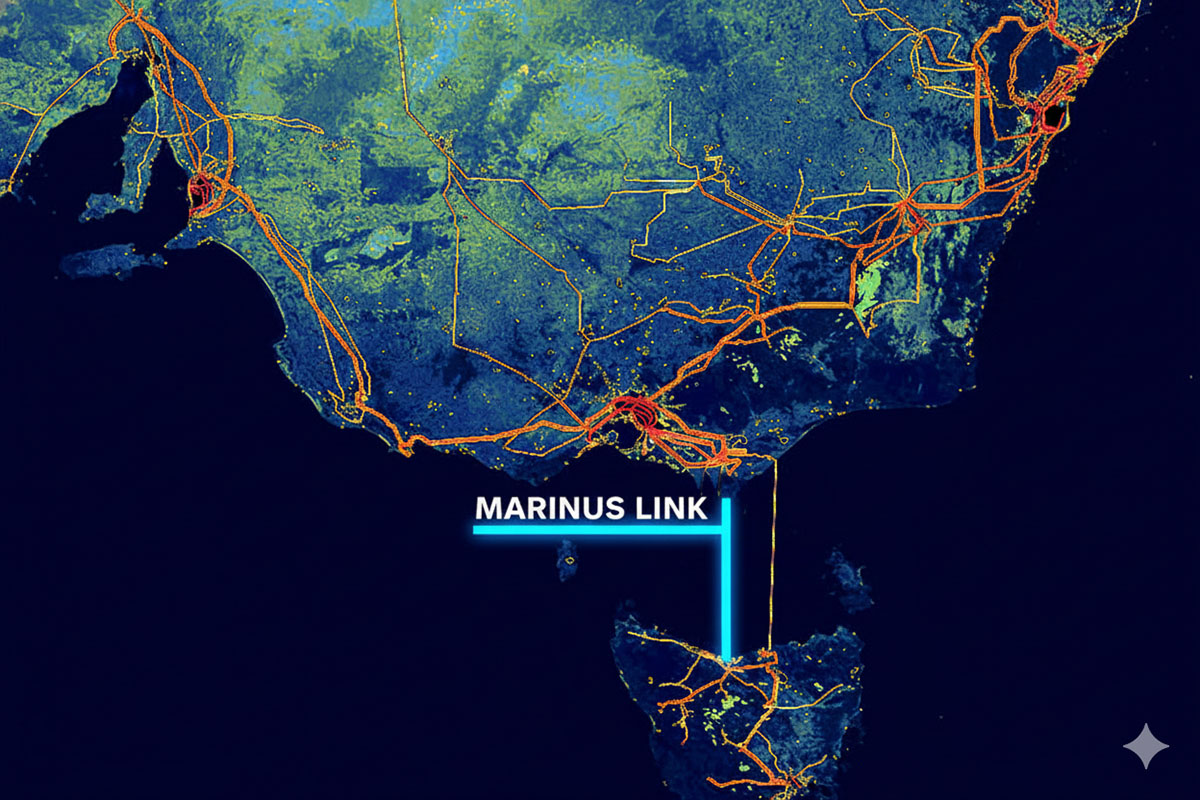
The Board of the Environment Protection Authority (EPA) has concluded its assessments of a proposal by Marinus Link Pty Ltd (Marinus Link) to construct and operate a 1500-megawatt (MW) high-voltage direct current (HVDC) electricity and telecommunications interconnector between Heybridge in northwest Tasmania and Hazlewood in the Latrobe Valley, Victoria.
The proposal includes two components in Tasmanian state waters and the Burnie municipality, which were separately assessed by the EPA Board, namely, the construction and operation of two subsea cable circuits, and the construction and operation of two converter stations and a high voltage alternating current (HVAC) switching station.
Public consultation was open for 42 days commencing on 4 January 2025. 19 representations were made in relation to the converter and switching stations component of the proposal, and 3 representations were made in relation to the subsea cable circuits component of the proposal.
Key issues raised included economic and social impacts, contaminated land, noise and vibration emissions, impacts on natural values, cumulative impacts and electric and magnetic fields.
The EPA Board has considered the relevant issues and determined that the proposal can be managed in an environmentally sustainable manner, with conditions imposed.
The proposal will be constructed on the site of the former Tioxide plant in Heybridge which operated between 1948 and 1996.
EPA Chair Andrew Paul said Marinus Link is required to engage a Site Contamination Specialist to prepare and implement a Contaminated Materials Management Plan.
“Due to the low levels of contamination within the soil and groundwater associated with the former Tioxide plant, Marinus Link will have to adhere to best practice standards and guidelines for the management of contaminated materials.”
“Marinus Link will have to develop and implement a Construction Noise and Vibration Management Plan in order to comply with noise management levels and to ensure appropriate noise levels are adhered to during the construction phase,” said Paul.
The conditions also require Marinus Link to undertake noise surveys, prepare and implement an Operational Noise Management Plan, and comply with noise emission limits during operation of the converter and switching stations.
A requirement to capture all groundwater inflows during construction for offsite disposal and prevent groundwater discharge to the environment has been imposed, and Marinus Link is also required to develop a Groundwater Management Plan demonstrating how the final design of the proposal and construction approaches will ensure groundwater is adequately managed on site.
The proposal will also involve undertaking construction activities in Tasmanian state waters.
To manage any potential impacts on marine natural values, Marinus Link is required to develop and implement a Marine Fauna Management Plan that includes mitigation strategies for minimising artificial light, as well as soft start procedures, specifications for designated caution zones around vessels and the deployment of marine fauna observers on vessels. Once operational, the subsea cables will emit electric and magnetic fields which have the potential to impact marine fauna. Marinus Link is required to undertake surveys of electric and magnetic fields prior to operation of the subsea cables to validate the modelling undertaken during the assessment and may also be required to prepare and implement an Electric and Magnetic Fields Monitoring Plan. An Underwater Noise Impact Assessment Report and the results of underwater noise verification measurements must also be submitted to the EPA Director for approval prior to construction commencing.
“Conditions have also been imposed by the EPA Board to manage any potential impacts on marine water quality as a result of turbidity plumes or the unexpected release of drilling fluids and cuttings during horizontal directional drilling,” said Paul.
“These conditions require Marinus Link to prepare and implement a Frac-Out Prevention and Management Plan and to undertake real-time turbidity monitoring during construction in the marine environment.
“The Construction Environmental Management Plan for the proposal must include appropriate monitoring triggers and responses to manage sediment plumes,” said Paul.
The EPA Board undertook assessment of the proposal in accordance with the Environmental Impact Assessment Principles defined in Section 74 of the Environmental Management and Pollution Control Act 1994.
This decision and all assessment documents can be viewed on the EPA website at Marinus Link Pty Ltd, Marinus Link Heybridge Shore Crossing, Heybridge and Coastal Waters | EPA Tasmania and Marinus Link Pty Ltd, Marinus Link Heybridge Converter Station, Heybridge | EPA Tasmania.
Tasmanian Times (TT) is a community-based news and current affairs service covering the island state of Tasmania. It exists to provide a diverse presentation of Tasmanian issues. TT creates and supports independent media content utilising the best of modern technologies and tried-and-true practices of public-interest journalism.
Support us in expanding our coverage and developing new content by and for Tasmanians.
New initiatives on the way include … what our contributors and readers suggest! Please get in touch with your suggestions.