
Advertisement / Sponsored Content
This content is paid advertising and has been prepared in collaboration with the advertiser.
This post remains active as a legacy issue and is being phased out from January 2026.
Tasmanian Times no longer accepts requests for paid content or advertorials.
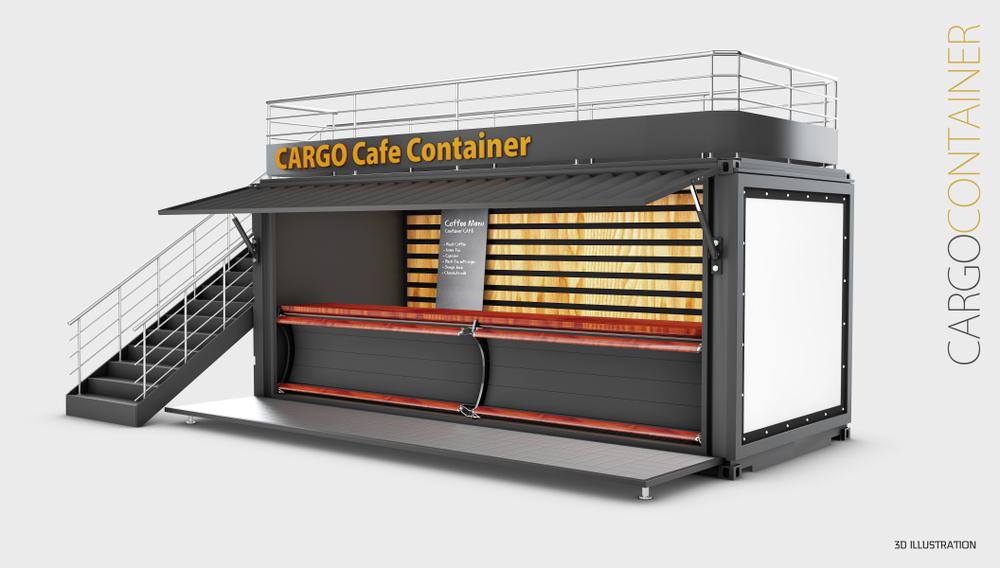
You’ve seen them stacked at ports, rolling down highways or parked behind warehouses — the standard steel shipping container, designed to carry goods across oceans. But look a little closer and you’ll find them in places you’d never expect. Tucked behind beachside car parks serving flat whites. Perched on rooftops as design studios. Converted into homes, galleries and even portable saunas. Somewhere along the way, the shipping container stopped being just cargo — and started becoming architecture.
It’s easy to see the appeal. With their industrial strength, clean lines and ready-made proportions, containers offer a blank canvas that’s far more flexible than most materials. They’re stackable, moveable and built to handle just about anything. And while their rise in construction and design circles may seem sudden, it’s been building quietly for years — especially in Australia, where space, heat and cost all shape how people live and build.
This shift isn’t about novelty. It’s about using what already exists, and giving it new purpose. The shipping container might’ve started in transport, but its second life is proving to be just as practical — and a lot more creative.
Function First: Why Containers Work So Well
There’s a reason containers are catching on in places far removed from ports or freight yards. At their core, they’re designed to be strong, portable and stackable — traits that happen to make them incredibly useful for construction and design. A single container is engineered to withstand salt air, heavy loads and long-distance travel. That kind of durability is hard to match in standard prefab materials.
Because they’re modular, containers also offer repeatability and precision. You know exactly what you’re getting — a steel rectangle with known dimensions — which makes them easy to design around. This consistency reduces guesswork, shortens build time and allows for flexibility across a range of projects. Whether it’s a single-unit site office or a multi-level cafe, the bones are already there.
It also helps that they’re mobile. For remote areas or temporary sites, containers offer plug-and-play solutions. They can arrive ready to go or be customised off-site and dropped in by crane. That means less on-site labour, faster setup and the option to relocate if needed.
From Port to Plate: How Hospitality Embraced the Box
Some of the most creative uses of containers are showing up in hospitality. Cafes, food trucks, bars and kitchens are turning these industrial shells into compact, functional venues. For small business owners, the appeal is clear: containers cost less to set up than full-scale fit-outs, they’re easier to relocate and they give you a visual point of difference right away.
In Melbourne laneways and regional towns alike, shipping containers are being retrofitted with service windows, stainless steel kitchens, rooftop seating and even built-in solar systems. Their clean, modern shape fits well with minimalist branding, and the industrial feel gives them a raw, adaptable edge. For pop-up events or seasonal operations, they offer something permanent without the overheads of a lease.
And because they’re designed to operate in tight spaces, containers suit the fast-paced needs of food and beverage. A café can be open in weeks, not months. Power, water, ventilation — it all fits neatly inside a box that’s been used a thousand different ways before.
Housing, Offices, and Affordable Builds
Outside of hospitality, containers are increasingly finding a place in both residential and commercial construction. Tiny homes, studios, site offices and even Airbnb cabins are all being made from retired freight. For younger buyers or renters looking for low-cost living that doesn’t skimp on design, container builds offer a practical entry point into property without the usual debt load.
In cities, architects are turning to containers for smart infill projects — backyard studios, rooftop extensions, even micro-housing developments. In regional areas, they’re used for temporary accommodation, mobile clinics or farm-based dwellings where cost, speed and durability are key.
The appeal lies in simplicity. You’re not starting from zero — the shell is already there. With some smart insulation, cladding, and interior work, a steel box can become a genuinely comfortable, liveable space.
Upcycling with Purpose: Sustainability in Design
Container-based builds aren’t just about cutting costs. They’ve also become part of a broader shift toward sustainable design. Reusing materials that already exist means less construction waste and a smaller carbon footprint. Instead of demolishing and rebuilding, you’re adapting and extending the life of something that might otherwise sit unused.
In Australia, where interest in eco-conscious building continues to grow, containers offer a low-impact alternative to traditional site builds. They require fewer raw materials, use less water during setup, and can be fitted with sustainable systems like solar, greywater and passive cooling. That makes them especially attractive for off-grid living, remote tourism or community spaces where utility access is limited.
Design Challenges and Smart Solutions
Of course, containers aren’t a magic fix. Their size is restrictive — a standard unit is about 2.4 metres wide — and without proper insulation, they can feel like ovens in summer and fridges in winter. But these limitations are now well understood, and the solutions are getting smarter.
Builders are lining interiors with insulated panels, adding cross-ventilation and even cutting multiple units together for larger floorplans. Hybrid builds are becoming more common, where containers form the core of a structure, supported by traditional framing or additional materials to boost comfort and flexibility.
The key is treating the container as a starting point, not a complete solution. With the right design approach, the quirks become features — part of what makes the final result feel unique.
Final Thoughts: A Box That Keeps Opening New Possibilities
What started as a practical object — a strong steel shell for moving goods — has turned into one of the most versatile platforms in modern design. Containers aren’t just functional, they’re flexible. They invite reuse, rethinking and creativity. And in a building industry that often struggles with waste, cost, and speed, they offer something surprisingly rare: consistency with room for imagination.
Across Australia, containers are finding new life not by accident, but by design. They’ve moved from ports to paddocks, from transport yards to main streets, without losing their practicality. Whether you’re after a tiny home, a mobile café or a weekend studio in the bush, the simple steel box continues to prove it’s more than just a passing trend — it’s a framework for building what’s next.
Advertisement / Sponsored Content — This content is a paid advertorial published in consideration of payment or other commercial benefit. The views, claims, statements, offers and representations are those of the advertiser and do not necessarily reflect the views of the publisher, which does not endorse or verify them. This material is provided for general promotional information only and does not constitute legal, financial, medical, investment or other professional advice; readers should make their own enquiries and seek professional advice before acting. Claims, testimonials and performance statements have not been independently verified unless stated. Offers and availability are subject to change and additional terms. This advertorial may contain links to third-party websites and the publisher may receive commissions or other benefits from reader engagement; the publisher is not responsible for third-party content or fulfilment. To the maximum extent permitted by Australian law, the publisher disclaims liability for reliance on this content, and nothing limits rights that cannot be excluded under the Australian Consumer Law. Where applicable, this advertorial is authorised by the advertiser and does not constitute independent editorial content.