There are so many reasons for not building a stadium in Hobart, or indeed Tasmania writes Suzanne Curry.
THE ELEPHANT IN THE ROOM
Here are three indisputable reasons why not, and it’s a lot about elephants.
Australia has an elephant in the room. He is so gigantic that if he sat on his rear end and tucked his tail and trunk in, he might just squeeze onto the ground at the MCG.
That elephant is the biggest gambling debt in the world – $31.5 billion annually. Despite the cost-of-living crisis, the amount of money lost to gambling is increasing and rising faster than the cost of education, housing and inflation. Anglicare’s Social Action and Research Centre states that Tasmanians lose an average of $1676 per year, and Tasmanian gamblers lose over $1million per day.
Gambling losses is the hidden, unspoken black hole in household budgets that government cost-of-living policies have failed to address.
The appointment of former Australian Football League boss Gillon McLachlan as the CEO of Tabcorp exposes the insidious link between professional sports and gambling. The AFL, just like cash-strapped state governments, is addicted to profiting from gambling. In 2023, more than a million gambling ads aired on free-to-air TV in just 12 months.
AFL has the highest volume of TV-based sport gamblers in Australia.
I doubt that the AFL gives a continental about how this stadium impacts on the city of Hobart and Tasmanians.
The gambling elephant has a damn big mate. He is the huge budget blowout in major Australian public infrastructure projects – ranging from 25% to a massive 75%. Why? The National Chair of the Australian Cost Engineering Society, Abhijnan Datta, says that ‘engineers are concerned with three major goalposts: cost, time and scope. It’s all in the planning – the common denominator in trouble -plagued projects is a lack of thorough early planning’.
The proposed stadium is another example of planning on the run, and of a potential billion dollar plus blow-out for an unnecessary piece of infrastructure.
Furthermore, ratepayers should be very concerned.
It has been proven that the flow-on effect on employment and economic benefits does not come close to covering the investment and ongoing maintenance required for stadiums. In Dunedin, New Zealand, taxpayers are now levied and continue to provide financial support to a supposed self-sufficient stadium.
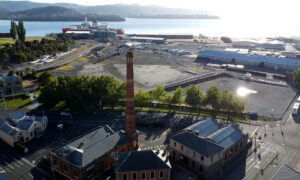
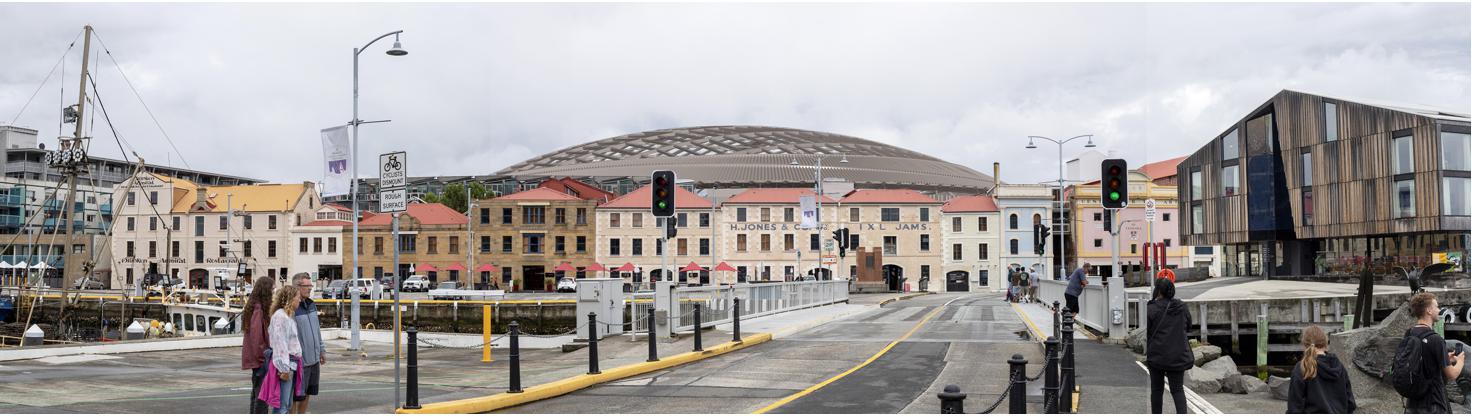
Putting all that aside, there is another equally important concern – the disastrous visual amenity of a stadium in the historic city of Hobart.
This year, the ‘Unshackled’ Tour at the Hobart Convict Penitentiary was awarded number one by Tripadvisor for both Australia and the entire South Pacific. This is a stunning achievement. I have been volunteering at the Penitentiary over the last 18 months. Over that time, I have spoken to hundreds of visitors from the mainland, across the globe and locals. Time and time again I’m told how fantastic our beautiful city is, with its exceptional sandstone buildings that reflect the city’s past as a major port and a penal colony. They love the built heritage and lack of high-rise buildings, the direct connection to our fabulous waterfront, Mt Wellington and our surrounding diverse, vegetated hillsides.
When I ask them what they think about having a footy stadium on prime real estate in our unique and stunning historical city they are aghast. As am I. The next question is often: “can’t it be built elsewhere?”
There are many cities around the world that protect their ‘Old Town’ from modern infrastructure.
Although Hobart is young compared to European ‘old towns’, it is easy to see parallels and the more time passes, the more its significance will increase. Are you aware that the Australian convict record is inscribed on the UNESCO Memory of the World? Why? It tells a significant part of our history and Hobart’s convict history and concentration of stunning convict- built buildings represent some of the most beautiful and significant in Australia.
Tasmania can renegotiate with the AFL and utilize and upgrade an existing stadium for the Tasmania Devils.
There are stadiums in Launceston to consider. Tasmania can employ people through spending the equivalent money on housing, public transport infrastructure within and between Hobart and Launceston, education, health, hospitals including a major hospital on the eastern shore of Hobart, tackling the insidious gambling problem, helping regional Tasmania, the list goes on and on and on.
Macquarie Point could build upon our maritime history. For example, it could incorporate a world class Maritime and Antarctic Museum, sympathetic housing, a stunning waterside community precinct for everyone to enjoy and that the world will envy. If you want to see how successful such a venue can be, look at the Titanic Museum in Northern Ireland.
There are so many layers to the shambles of government in Tasmania.
The original move of no confidence in the Premier exposed the dire state of Tasmania’s financial position. The continuing debacle of the Bass Strait ferry project shows upgrading the Devonport terminal has grown from the original $90 million to $493 million, never mind the storage costs.
The Premier didn’t immediately resign as convention would dictate but called an unnecessary, disruptive and costly second election. I believe most of the community is tired of this situation. I believe most of the community are not comfortable with the stadium project.
If we want money available for all Tasmanians for essential public services and infrastructure, we must not progress this development.
Suzanne Curry with a background in conservation was one community voice of many, working to protect the Rosny Parklands from development. Her vision is to transform the parklands into a world-class inner-city green space.
Tasmanian Times (TT) is a community-based news and current affairs service covering the island state of Tasmania. It exists to provide a diverse view of Tasmanian issues. TT creates and supports independent media content utilising the best of modern technologies and tried-and-true practices of public-interest journalism.
Support us in expanding our coverage and developing new content by and for Tasmanians.
New initiatives on the way include:
- a weekly podcast covering current affairs
- a revamped website
- a monthly cartoon competition
- a user-friendly app for both Android and Apple devices
- a weekly roundup of key stories