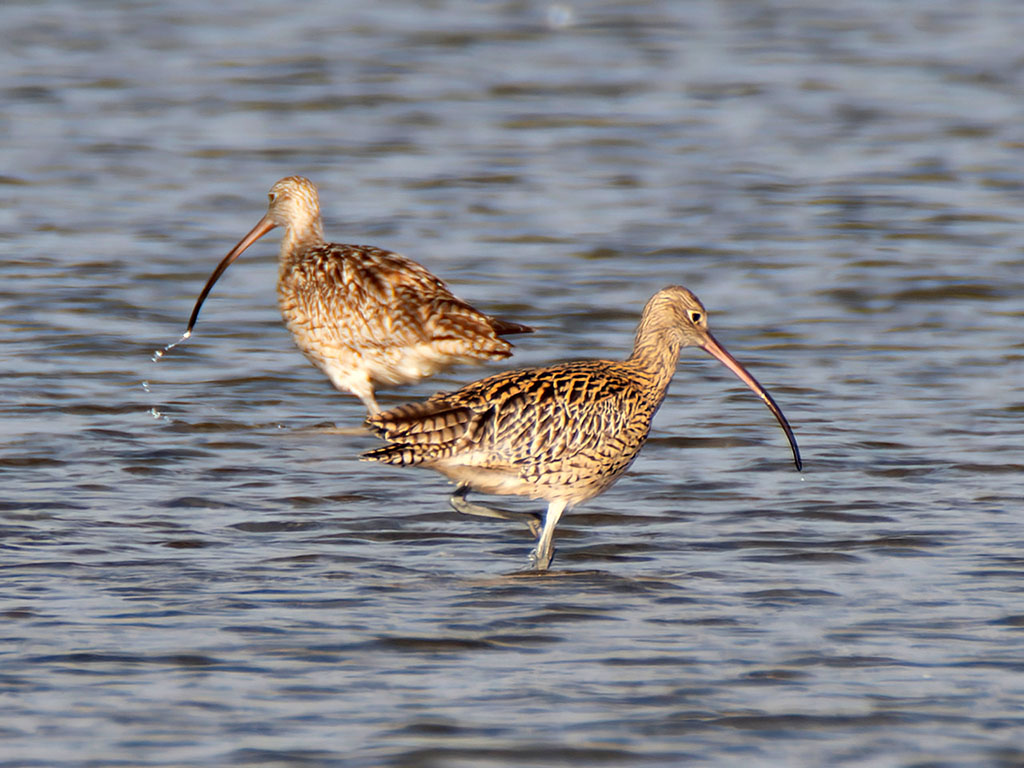
Volunteers are being recruited across Tasmania to help track the critically endangered far eastern curlew. Through the CallTrackers project, volunteers will use acoustic recorders and AI software to listen for the bird’s distinctive cries.
 Media release – University of Tasmania, 12 August 2025
Citizen scientists called to help listen out for curlew cries
Over the coming months, citizen scientists across Tasmania will help track down the haunting call of one of the world’s most threatened migratory birds, the critically endangered far eastern curlew.
The CallTrackers project, launched by the not-for-profit Bookend Trust together with the University of Tasmania in 2022, involves an exciting new phase of wildlife monitoring, using acoustic recorders and advanced AI software.
This technology is made available to the public via local libraries to monitor a range of threatened, and potentially threatened, wildlife by their calls.
Throughout National Science Week, from 12-22 August, workshops across the state are introducing more of the public to the technology and inviting them to join in the project.
Dr Clare Hawkins, University of Tasmania Adjunct Researcher with the School of Natural Sciences and the Citizen Science Coordinator at the Bookend Trust, was excited to announce that the project has now added the far eastern curlew to its repertoire.
“These curlews are the world’s largest shorebird, and they face numerous threats across the world as their migratory journey each year takes them from Australia, New Zealand and south-east Asia to breed in Russia and China. They fly around 10,000 km in around a week to breed,” said Hawkins.
The global population of far eastern curlews has dropped by around 60 per cent in 25 years, with pollution, loss of habitat and disturbances the leading threats.
This project allows anyone with an interest in wildlife or conservation to get involved, as citizen scientists monitor population trends of various species across Tasmania.
The group also monitors the impacts of habitat restoration efforts at the Mersey Estuary in northern Tasmania by the Cradle Coast Authority with the Devonport City Council, which is federally funded as part of the Urban Rivers and Catchments Program.
“Community members can register to become a CallTracker online, and book acoustic recorders to set up at selected locations. They can then upload their recordings onto the British Trust for Ornithology’s Acoustic Pipeline software, which uses automatic recognisers to identify the Curlews and other species by their calls,” said Hawkins.
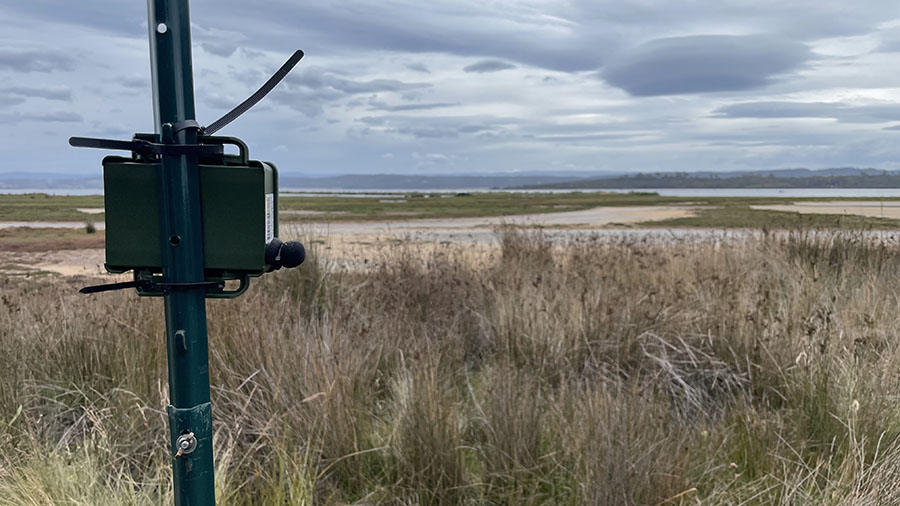
The software flags sounds that could be the cry of the curlew, which can then be checked by a human ear – cutting down this monitoring work from hours to just minutes.
“Several experienced bird-watchers, familiar with far eastern curlews, told us they’d never heard one call in Tasmania,” Hawkins said.
“So we were thrilled when our very first test recordings with the new technology picked up numerous curlew calls. It was a breakthrough moment.
“Very encouragingly, after a successful effort to restore wetlands in Tasmania’s central highlands in recent years, CallTrackers’ recordings last year identified that the endangered Australasian Bittern has returned after a 40-year absence from the region.”
Hawkins hopes that, with the new curlew recogniser, similarly positive results may be detected by CallTrackers for both curlews and bitterns at the Mersey Estuary, as habitat is restored.
Additionally, previously unknown sites in the state may be picked up from the Tasmania-wide monitoring efforts. The technology could also be used on sites across mainland Australia where curlew populations have reduced.
Image courtesy UTAS, photographer Elaine McDonald
Tasmanian Times (TT) is a community-based news and current affairs service covering the island state of Tasmania. It exists to provide a diverse view of Tasmanian issues. TT creates and supports independent media content utilising the best of modern technologies and tried-and-true practices of public-interest journalism.
Support us in expanding our coverage and developing new content by and for Tasmanians.
New initiatives on the way include:
- a weekly podcast covering current affairs
- a revamped website
- a monthly cartoon competition
- a user-friendly app for both Android and Apple devices
- a weekly roundup of key stories