Media release – Adrift Lab, 4 March 2023
‘Plasticosis: New disease in seabirds caused by ingestion of plastic’
A new study has described a previously-unknown disease in seabirds caused by the ingestion of plastic, which has been named ‘plasticosis’. Plasticosis is the formation of extensive scar tissue within the birds’ proventriculus (stomach), as a result of plastic repeatedly injuring the soft tissues after being consumed.
This discovery was made by a cross-disciplinary team from the UK and Australia, including a human health and inflammation scientist, and ecologists specialising in plastics and seabirds. The scientists from the Adrift Lab classified this disease in young flesh-footed shearwaters from Lord Howe Island, Australia, some of which have been fed plastic by their parents since hatching.
Hayley Charlton-Howard, a researcher at the Adrift Lab, said “This is the first time a plastic-related illness has been classified in wild animals, and demonstrates the devastating consequences that ingesting plastic can have on our threatened species.”
Similar to silicosis, which has been making headlines recently, plasticosis is caused by plastics acting as persistent inflammatory stimuli and causing permanent tissue damage. Repeated injury and scarring can lead to the organ becoming fibrotic, or overrun with scar tissue. Scar tissue does not function like healthy tissue, and can negatively impact organ structure and function.
In addition to causing fibrosis, the ingested plastic is also damaging vital digestive glands. This may mean the birds are unable to secrete necessary digestive fluids to digest and absorb nutrients, or prevent infection or parasites. During digestion, small fragments can also break off and become embedded in the tissue, causing further inflammation and damage.
Scientists from the Adrift Lab have been studying the flesh-footed shearwaters from Lord Howe Island for over a decade. These birds are known to be highly impacted by plastic ingestion, with up to 90% of chicks found with plastic in their digestive tract. In severe cases, many of these chicks with severely high plastic burdens starve to death.
Ms Charlton-Howard added, “Recently, the Adrift Lab team has found that when plastic is consumed, it can impact so many aspects of physiology and health – affecting the birds’ size and blood chemistry, and causing inflammation and tissue damage in several major organs.”
Through this study, flesh-footed shearwaters are acting as an important indicator species for the health of the oceans. Over 1,200 marine species have been noted to ingest plastic, and as a ‘hidden disease’, these species may be similarly affected by aspects of plasticosis.
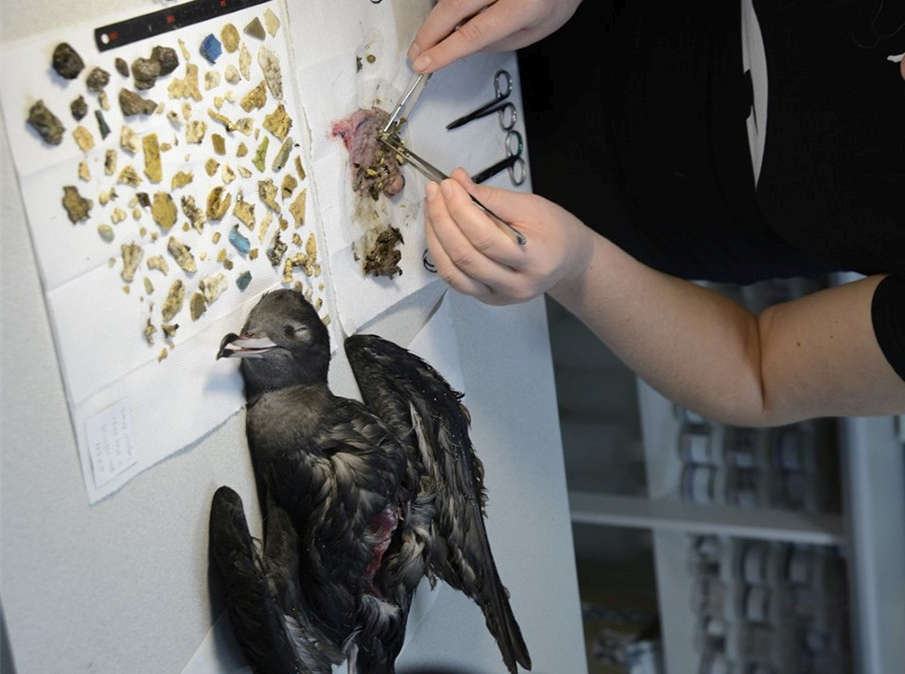
Featured image above: flesh-footed shearwater necropsy with ingested plastic. Image courtesy Silke Stuckenbrock.