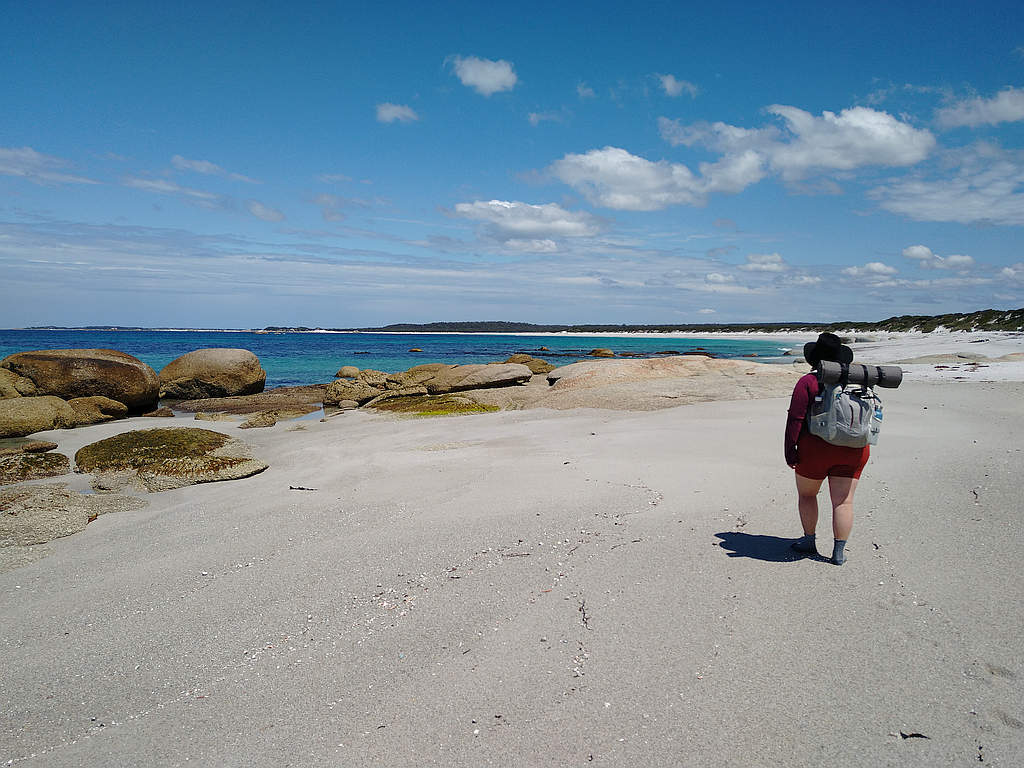
Beachgoers to Tasmania’s east coast are being urged to stay on wet sand whenever beach-walking to help protect the shoreline nests and chicks of one Australia’s most threatened birds, the hooded plover.
The warmer weather heralds a season of heavy traffic to the east coast, one of the last strongholds for the bird in Australia, but the increase in human activity poses a threat to the nesting success of ‘hoodies’ which lay well-camouflaged eggs in a shallow scrape on the soft sand above the high-tide mark. The ‘Defending the hood’ program aims to increase community awareness of beach-nesting birds to maximise nesting success.
When disturbed by humans, animals, or vehicles, hooded plovers leave their nests. Frequent or prolonged disturbances can result in eggs and chicks perishing, some lasting only 15-20 minutes if left unprotected by parents.
NRM North Biodiversity Program Manager, Kate Thorn, said protecting the nesting sites of hooded plovers and other shorebirds during summer is critical.
“Beachgoers can easily reduce their impact by sticking to the wet sand, keeping dogs on leashes, and keeping vehicles off the beach. This summer, you can give these new families the space they need to succeed,” she said.
Thorn said sharing the shore responsibly is the best way we can contribute to their survival.
“As you share the shore, you may spot other resident shorebirds, such as pied and sooty oystercatchers, red-capped plover, fairy terns and little terns. These birds also depend on the beach for feeding and raising their chicks.”
More information on the ‘Defending the hood’ program, and ways to reduce impacts on nesting areas can be found on the NRM North website: www.nrmnorth.org.au/biodiversity/hooded-plover-project/.