Media release – Invasive Species Council, 24 May 2021
Landmark Senate report calls for action on feral deer, pigs and goats
The Australian Senate has delivered a landmark report on the increasing impacts of feral deer, pigs and goats across the country and a roadmap for reform, one that all state and federal governments should heed.
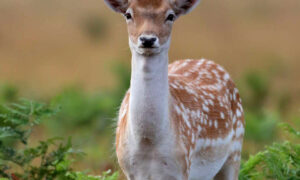
“This is a wake-up call to governments that hard-hoofed feral animals are driving an environmental and rural crisis across Australia, especially from rapidly expanding deer numbers,” Invasive Species Council CEO Andrew Cox said.
“Most of the Senate report recommendations centre on feral deer, where six species presently occupy less than 10% of Australia, but are projected to spread to almost the entire continent.”
The major recommendation from the report is to declare feral deer an environmental pest across all jurisdictions to ‘enable more appropriate and coordinated control actions’.
“Despite historical notions of deer as a valued species, the overwhelming evidence of the inquiry shows deer in many areas are in plague proportions, causing major environmental damage and costing some landholders $100,000 or more a year,” Mr Cox said.
“Deer will pose an increasing risk of livestock diseases, road accidents and occupation of urban areas. A 2019 Australian Bureau of Agricultural and Resource Economics and Sciences pest animal and weeds survey found that feral deer were the most commonly reported recently-arrived pest animal.
“The report is timely. The Tasmanian Government is doing nothing to remove deer that have recently invaded the Tasmanian Wilderness World Heritage Area, instead opting to release new areas for hunting, and deer remain protected as a hunting resource in Tasmania and Victoria,” Mr Cox said.
Other key recommendations of the inquiry include:
All jurisdictions to remove impediments to feral deer control on private and public lands.
The elimination of feral deer from all World Heritage Areas and other areas of environmental significance.
Implementation, supported by long-term funding, of a national pig and deer action plan.
Feral deer and pig coordinators to report yearly to national, state and territory parliaments.
Listing of feral deer as a key threatening process under federal environmental law.
Provision of funding beyond 2022 for the research body Centre for Invasive Species Solutions.
The Commonwealth to hold a Productivity Commission inquiry into invasive species management.
The report found that while national feral pig and deer coordinators have recently been appointed and some progress has been made in NSW and Victoria, the Environment and Invasives Committee needs to improve its national oversight to better drive invasive species management.
The inquiry concluded that recreational hunting is ‘not an effective standalone control measure’ and declaration of deer as a pest species will not limit recreational hunting.
The report, handed down by the Senate environment and communications committee last week after a three-year review, contains 17 unanimous recommendations.
DEER SHOULD BE CLASSIFIED ‘PESTS’ – SENATE COMMITTEE
After a three-year inquiry, the Senate’s Environment and Communication Committee has called for deer to be classified as a pest throughout Australia. Bob Brown Foundation says the Gutwein government should heed the call and drop the absurd ‘partially protected’ status it gives to this rapidly spreading pest in Tasmania.
The Senate committee estimated the annual cost to agricultural businesses from the three feral species, goats, pigs and deer, “runs into hundreds of millions of dollars”.
“This comes together with studies showing deer are spreading rapidly across Tasmania, including through the Tasmanian Wilderness World Heritage Area, Tarkine, Freycinet and Bruny Island while this government is sitting on its hands. The cost to Tasmania of continued inaction will run into many millions of dollars annually for future deer control both of farmlands and national parks. Deer are a feral species which damage crops as well as native vegetation and compete with native wildlife for food resources,” Bob Brown said today.
“Deer are also increasingly the cause of traffic accidents. There is an urgent need for the premier to take action to save Tasmania from the increasing economic and environmental burdens of feral deer,” he said.
The committee recommends that the Australian Government, in conjunction with relevant stakeholders, develop national priorities for data gathering to address gaps in knowledge about the prevalence, range and impacts of feral deer, pigs and goats, identify emerging threats and avoid further range extension of these species.
The committee recommends that the Australian Government commit to providing significant long-term funding to support the implementation of the National Feral Pig Action Plan once it is finalised, as well as the proposed National Feral Deer Action Plan.
The committee recommends that the National Feral Pig Management Coordinator and National Deer Management Coordinator each provide an annual report to Commonwealth, state and territory parliaments, outlining progress made under the proposed national action plans.
The committee recommends that the Commonwealth, states and territories review the role of the National Biosecurity Committee and Environment and Invasives Committee in respect of feral species management, to ensure that these forums are operating effectively to help coordinate and drive species management outcomes across Australia.
The committee recommends that the Australian Government undertake an immediate review of the Environment Protection and Biodiversity Conservation Act 1999 (EPBC Act) Threat Abatement Plans for feral pigs and feral goats, in light of their perceived ineffectiveness.
The committee recommends that a standalone Key Threatening Process listing for feral deer under the EPBC Act be adopted, accompanied by a Threat Abatement Plan, to elevate the focus on controlling deer impacts.
The committee recommends that the Department of Agriculture, Water and the Environment report annually to Parliament on the status of all Key Threatening Processes (KTPs) listed under the EPBC Act, along with information on what monitoring and management activities have been undertaken under Threat Abatement Plans associated with KTPs.
The committee recommends that Commonwealth, state and territory governments should commit to eliminating feral deer populations in World Heritage Areas, areas of national environmental significance, and national biodiversity hotspots.
The committee recommends that all Australian jurisdictions implement frameworks to support the commercial harvesting of feral deer as part of an overall deer management strategy.
The committee recommends that the national feral species coordinators appointed to date (for wild dogs, feral pigs and deer) meet regularly to review successful programs and share best practice in relation to measurement, coordination, control methods, methods of engagement with stakeholders and community messaging.
The committee recommends that the national coordinators work with Commonwealth, state and territory governments and other stakeholders to develop community education initiatives that address the knowledge gaps in the community about feral species impacts.
The committee recommends that the Australian Government:
support the implementation of the forthcoming Model Code of Practice for the humane control of feral deer, with associated Standard Operating Procedures; and
update the current Model Codes of Practice for feral pigs and goats and relevant SOPs in relation to pigs and goats to ensure best practice.
The committee recommends that the Australian Government commit funding towards a second long-term grant agreement for the Centre for Invasive Species Solutions (CISS), to provide for ongoing research activities by CISS beyond the expiration of the current agreement in 2022.
The committee recommends that as priority control programs for feral deer, pigs and goats are identified, Commonwealth, state and territory governments should ensure that adequate long-term funding is appropriated to enable successful implementation of these programs. This will include programs developed under the National Feral Pig Action Plan and proposed National Feral Deer Action Plan.
The committee recommends that the Australian Bureau of Agricultural Resource Economics and Sciences conduct an updated Pest Animal and Weed Management Survey to provide current information on pest species impacts on agricultural values and control measures being undertaken by landholders.
The committee recommends that the Australian Government direct the Productivity Commission to review the costings and funding models necessary to appropriately manage invasive species in Australia.