Should only Tasmanians try to write novels set in Tasmania?
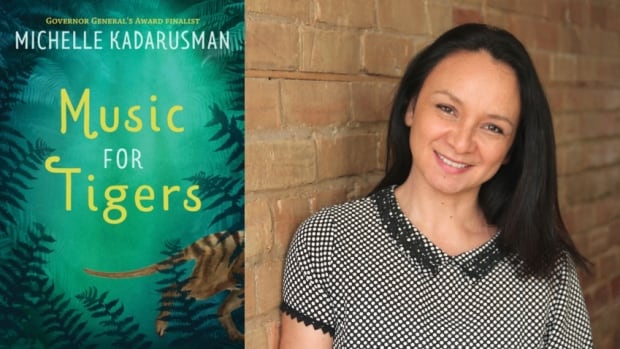
Music for Tigers might make you feel inclined to have a bob each way. The book – targeted at ‘middle grade’ readers (and the definition thereof might well vary between nations) – tells the story of a young Canadian violinist who is sent down here to spend her summer holidays with her mother’s Tasmanian relatives.
“…life at the family’s remote camp in the Tasmanian rainforest is intriguing, to say the least. There are pig-footed bandicoots, scary spiders, weird noises and odours in the night, and a quirky boy named Colin who cooks the most amazing meals. Not the least strange is her Uncle Ruff, with his unusual pet and veiled hints about something named Convict Rock.” – blurb
Set in takayna / Tarkine, the impression of remoteness is well crafted. Internet is not really a thing, ‘neighbours’ are miles away, and the company most likely to join protagonist Lou(isa) are various animals whose appearance and disappearance is the very theme of the book.
Lou follows what turns out to be a thylacine trail through the contemporaneous diary of her great-grandmother, who established a sanctuary for the animals as extinction loomed large on the horizon. She passes her time both practising her instrument and incidentally learning about Tasmania through her relatives and their friends, all ‘soft-green’ types interested in various facets of conservation.
Author Michelle Kadarusman is certainly able to convey a sense of wonder for the living environment, and skilfully so given the target readership:
I walk slowly under the groves of blue gums. The canopy is dotted with gaps where fallen giant trees have given way, crashing to the forest floor, allowing the smaller trees to flourish. Spiderwebs in the fern fronds catch the sunlight, illuminating the dew clinging to the webs.
Sundry Tasmaniana makes its appearance, from hand-reared devils Waltz and Matlida to dusty bush accommodation to Huon piners and convict legends of the wild west coast.
One (of us, at least) might find the usual tropes of Australians-are-all-eccentric, everything-here-will-kill-you and so a bit tiresome, given its been our staple identity to the world since Mick ‘Crocodile’ Dundee valiantly protected the love interest from everything out to get her.
Four decades on from that and we still get served up a main character whose head is full of “all the snakes, spiders and fungi I read about. All the poisonous and deadly creatures that live in this forest and that can bite, sting and kill you.” The mundane reality is that more Tasmanians die falling off ladders or simply lost in the bush – or dare we say in hospital emergency waiting rooms because there is insufficient capacity to deal with them – than from Kruel Kritter and Friends.
That would make for a less interesting story, given that Lou is an adolescent trying to work out how to deal with panic attacks and how they affect her ability to function in the real world. In this she finds friendship, reciprocated, with the Autism Spectrum Disorder teenager Colin. Trying his best to be a guide out in the backblocks, he is still having trouble fitting in with his peers despite a savant-like interest in multiple things, including cooking and animals. The placement of Colin sometimes feel awkward, radiating from the boy himself, as if he is a spoonful of teenage identity medicine we are obliged to consume along with the lush backdrop.
The plausibility of the main plot is hokum, which might be fine if it had dived into that stretch of water and kept swimming for dear life. Unfortunately this novel is over-earnest in trying to insert biology factoids and snippets of historical context, as if trying to bulwark its own sketchy proposition.
The overall effect is an odd lurching from magical realism to the spectre of actual environmental destruction: ghost stories, diaries travelling through the ages and extinct species dropping in to listen to violin concerts give way to the brutal reality of forests trashed and sacred places blown up to put in a bridge for the resource extractor baddies.
All this might not matter too for the intended readership, who will rightly enjoy what are in the end some interesting characters and a decidedly exotic tale with a mostly happy ending. And along the way they’ll certainly learn quite a bit about Tasmania, both throughout the story and in a few end-notes.
It reads slightly less well for Tasmanians, but them’s the breaks. If you’re looking for a wistful, easy-to-read story with a bent towards conservation and the power of dreams to set the world right, this might be your thing.
Music for Tigers is released in Australia by New South Books.
- Paperback | 192 pages
- 140 x 203 x 14mm | 200g
- 08 Apr 2021
- Pajama Press
- Toronto, Canada
- English
- New edition
- 1 Maps

Alan Whykes is Chief Editor of Tasmanian Times, and sadly a thylacine sceptic.